
Qualcomm Patents an AI System That Lets You Ask Questions About Any Audio Recording
Qualcomm has filed a patent for a system that lets an AI answer specific questions about audio recordings, pulling together acoustic details and descriptive metadata before responding.
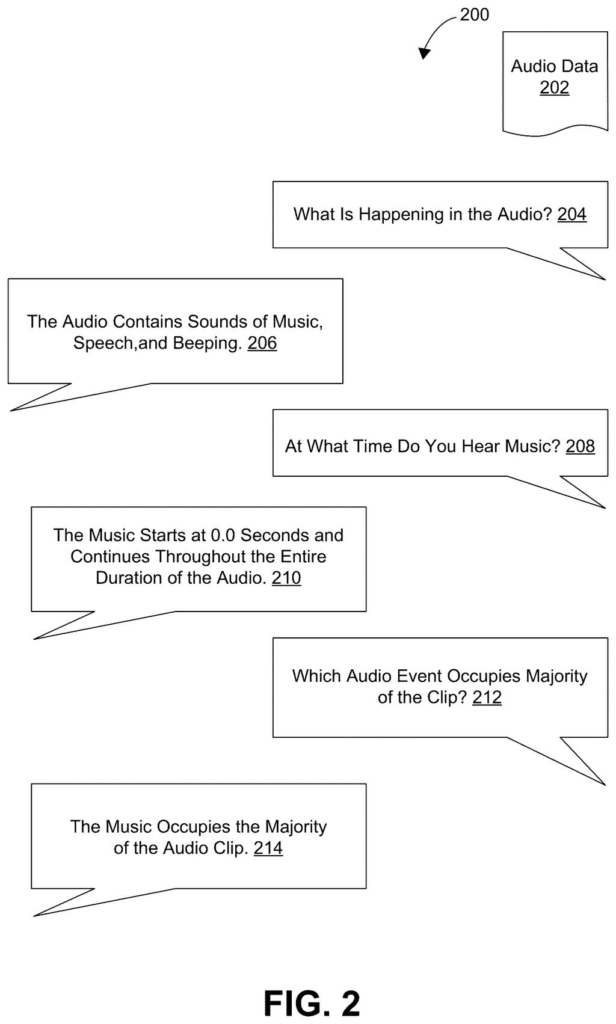
What Qualcomm's audio question-answering system actually does
Ever tried to describe a sound you heard in a video and get a straight answer about it? Right now, AI assistants are pretty good at reading text and decent at transcribing speech, but asking one a nuanced question about a recording, like "who is speaking here" or "what instrument plays in the background," tends to produce frustrating results.
Qualcomm's patent describes a pipeline that processes an audio clip through several stages, building up a richer picture of what the sound contains before an AI model ever reads your question. The system produces both a translation of the audio into a form the AI can read and a separate set of descriptive notes about the audio, then hands all of that to the AI together with your query.
The result is a system designed to answer questions about any kind of audio, not just speech. Music, environmental sounds, and conversations could all theoretically be queried in plain language.
encode the audio data to generate first audio embeddings; adapt the first audio embeddings to generate second audio embeddings; combine the first audio embeddings and the second audio embeddings to generate third audio embeddings; …
Translation: The system breaks down and transforms the sound recording into multiple layers of computer-readable data.
How the three-layer embedding pipeline handles your audio
The patent describes a multi-stage process for converting raw audio into something a large language model (an AI text engine) can reason about.
First, the audio is encoded into "embeddings" (numerical representations that capture the acoustic properties of a sound). Those embeddings are then adapted, meaning a second processing step reshapes them to pull out higher-level features. The system then combines both versions, the raw encoded form and the adapted form, into a third merged representation. That combined set is then projected into a text-compatible format, essentially translating audio concepts into tokens the language model already understands.
In parallel, the adapted embeddings are used to generate audio metadata: structured descriptive information about the clip, such as what kind of sound it is or what events it contains. Think of this as auto-generated liner notes the AI can consult.
Finally, the language model receives three inputs at once:
- The text-projected audio representation
- The generated metadata
- The user's question
With all three in hand, the model produces a grounded response, one that is tied to actual content in the recording rather than a generic guess.
… processing the text projections, the audio metadata, and a query using a machine-learning model to generate a response to the query.
Translation: An artificial intelligence model uses the processed audio data and descriptions to answer questions about the recording.
What this means for voice assistants and audio search
For everyday users, this kind of system could let a voice assistant actually understand a clip you share with it, not just transcribe the words. Asking "what style of music is this" or "does this recording have background noise" could get a real answer rather than a shrug.
several Qualcomm filings on on-device AI processing this year suggest the company is positioning its chips as the right hardware for this kind of real-time audio intelligence. If this system runs efficiently on a device processor rather than in the cloud, it could show up in headphones, phones, or hearing-assistive hardware that need fast, private audio analysis.
Qualcomm's third filing we've tracked in our voice and speech AI coverage since May builds on earlier applications covering acting on mixed inputs and training speech from your own voice.
Running the audio through two separate processing paths before combining them gives the system a richer picture of the sound, but that extra work costs battery life, which is a real problem for the phones and earbuds this would actually live on.
The bigger risk is the auto-generated descriptions of the audio that feed into the final answer. If those descriptions are wrong, the system will produce a confident, fluent response built on bad information, and nothing in the design appears to catch that mistake before it reaches the user.
Both choices favor accuracy over speed and efficiency, which is defensible in a research setting. The open question is whether the hardware people carry in their pockets can actually support what this design demands.
There are more where this came from
We read every patent application Big Tech publishes and send you the ones worth knowing. Plain English, free, every week.
The drawings
16 drawing sheets from US 2026/0300386 A1 · click any drawing to enlarge


Want this weekly breakdown for a company we don't cover? Patentlyze Pro →
Be the first to weigh in