
Nvidia Patent Covers AI Scheduler That Ranks Requests by Detecting User Mood
What if the server handling your AI request could tell you were frustrated and bump you to the front of the line? That's the idea behind Nvidia's latest resource-scheduling patent.
How Nvidia's mood-aware AI queue actually works
Imagine you're using a company's AI assistant and you've asked the same question three times in a row, getting slow or wrong answers each time. Right now, the system treats your fourth attempt exactly like everyone else's first one. Nvidia's patent describes a way to change that.
The system uses three small models working together: one estimates how much computing power a request needs, one predicts how long a response will take given current hardware, and a third one reads signals about how frustrated or engaged you are. That last part, the sentiment score, can push your request higher in the queue.
A control panel lets IT administrators decide how much weight each factor gets. They can dial up the importance of user mood, or keep it mostly about compute efficiency. It's a configurable system, not a one-size-fits-all rulebook.
How the three models vote on request priority
The patent describes a scheduling system with three distinct models feeding into a single priority decision.
Compute estimation model: This lightweight model looks at your incoming query (broken into tokens, the small text chunks AI systems process) and estimates how much processing power generating a response will require. A simple yes/no question scores low; a request to summarize a 50-page document scores high.
Response time estimation model: This model takes the same query and predicts how long the response will actually take, factoring in current hardware allocation. Think of it as a real-time traffic estimate for the server.
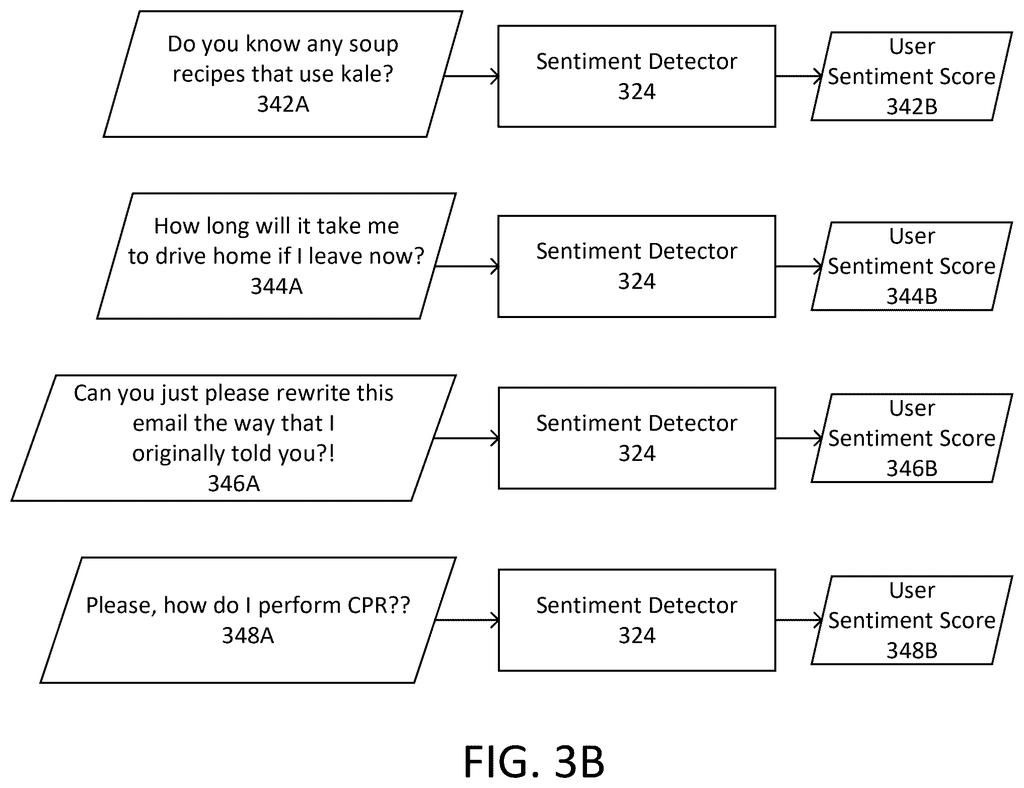
User sentiment model: This is the unusual piece. The system evaluates user engagement metrics and feedback to produce a sentiment score reflecting the user's emotional state. The patent doesn't specify exactly which signals feed this model, but the claim language references the query itself as an input, meaning tone and word choice in the prompt could factor in.
All three scores are then handed to a scheduler, which weighs them according to administrator-set priorities and decides when to process the request. Admins can adjust the relative influence of each factor through a control panel.
What this means for enterprise AI infrastructure
For companies running large AI deployments, queue management is a real cost and a real user-experience problem. Most current schedulers are purely technical: first in, first out, or weighted by compute cost. Layering in user sentiment introduces a customer-service logic that's more familiar to call centers than data centers. A frustrated user who has been waiting or retrying could get faster service automatically, without a human intervening.
The practical risk is that sentiment scoring based on prompt text is imprecise, and prioritizing by mood could be gamed or could disadvantage users who write tersely. Still, for enterprise AI products where user retention matters, this kind of adaptive queuing has obvious appeal.
This is a genuinely interesting idea buried in infrastructure plumbing. Sentiment-aware scheduling has been standard in call-center software for years, and applying it to AI compute queues is a logical extension. The real question is whether the sentiment model is accurate enough to be useful rather than arbitrary, which the patent doesn't answer.
There are more where this came from
We read every patent application Big Tech publishes and send you the ones worth knowing. Plain English, free, every week.
The drawings
27 drawing sheets from US 2026/0219950 A1 · click any drawing to enlarge


Want this weekly breakdown for a company we don't cover? Patentlyze Pro →
Be the first to weigh in