
Nvidia Patents a Two-Stage System That Lets AI Chatbots Run Faster on Less Hardware
Every time a large language model generates text, it fills up memory with a growing table of notes about what it has already read. Nvidia's new patent attacks that memory problem with a two-stage filtering system that keeps only the notes that matter.
What Nvidia's AI memory-trimming system actually does
Imagine you're reading a very long book and taking notes as you go. By chapter 50, your notepad is completely full, and flipping back through all those notes just to write the next sentence slows you down enormously. That's roughly what happens inside an AI language model when it's generating a long response: it maintains a running record (called a KV cache) of everything it has processed, and that record eats up memory fast.
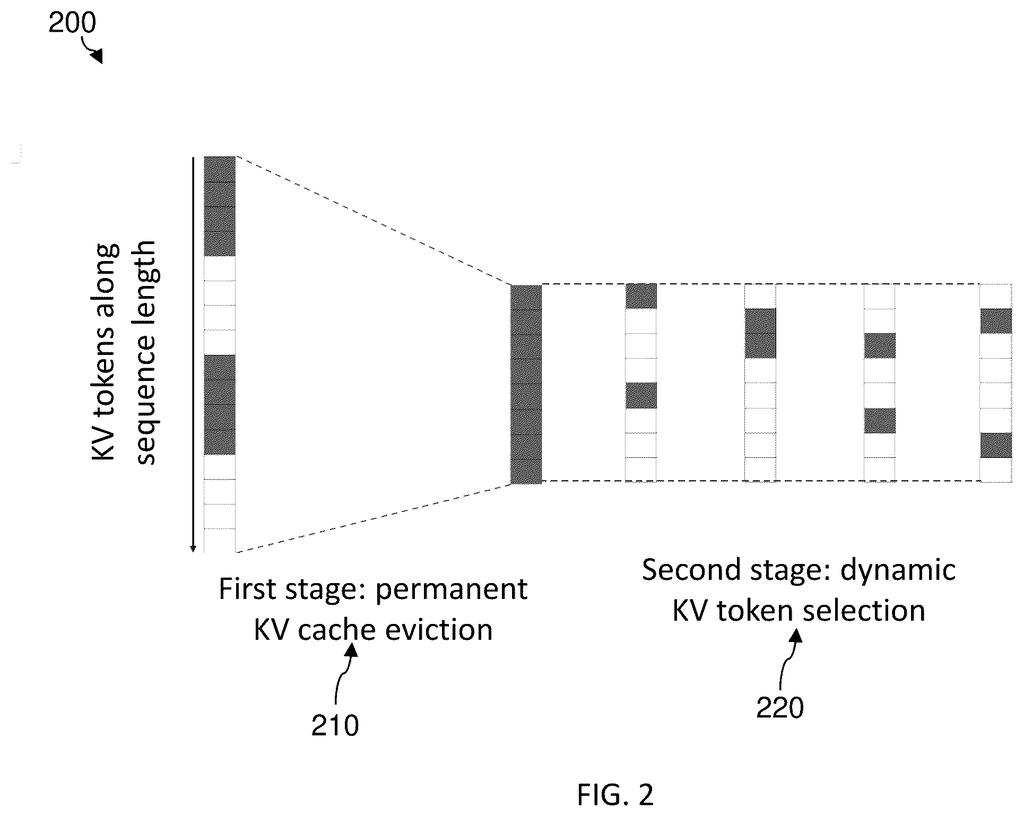
Nvidia's patent describes a two-step approach to keeping that notepad manageable. First, a rough-cut step throws out notes that are unlikely to be useful again. Then a finer-detail step quickly scans what's left and picks only the most relevant entries to pay attention to for each new word generated.
The goal is to let AI models handle longer documents and conversations without needing as much expensive memory, and to do it without retraining the model from scratch. It's the kind of unglamorous engineering work that determines whether a model runs well on real hardware.
How the two-stage eviction and attention process works
When a large language model (LLM) generates text, it stores a key-value (KV) cache, a running memory table that records compressed representations of every token (word or word-fragment) it has already processed. Accessing that cache is one of the biggest bottlenecks in AI inference (the process of actually running a trained model to produce output).
Nvidia's patent introduces a KV management process with two consecutive stages:
- KV cache eviction (coarse-grain): An algorithm with an adaptive pooling size decides which cached entries to discard entirely before the fine-grain step runs. Think of it as bulk-deleting old notes that are statistically unlikely to influence the next output.
- Hybrid attention (fine-grain): This stage groups the remaining cache pages, stores their minimum and maximum values as quick reference summaries, then accumulates query data to find the most relevant entries. Finally it performs sparse attention, meaning it only fetches and processes the top-K most relevant KV pairs rather than every single one.
Critically, this is described as training-free: the technique is applied at inference time, so it doesn't require re-training an existing model. That makes it much easier to drop into a production deployment.
What this means for running large AI models on tighter hardware
The KV cache memory problem gets worse as conversations and documents get longer, which is exactly the direction AI applications are heading. Systems that can summarize a contract, analyze a codebase, or hold a multi-hour conversation need to process hundreds of thousands of tokens without running out of memory or slowing to a crawl. A method that reduces memory bandwidth and capacity use without sacrificing accuracy directly affects what hardware can run a given model and at what speed.
For Nvidia, which sells both the GPUs that run these models and the inference software stack around them, owning the IP on memory-efficiency techniques is a natural extension of its AI infrastructure business. If this approach lands in Nvidia's TensorRT-LLM or related tooling, it could let the same GPU serve more users simultaneously, which translates directly to lower cost per query for anyone deploying AI at scale.
This is deep infrastructure work, not a flashy demo, but it addresses a real and pressing constraint in production AI deployments. The training-free angle is the most practically useful part: operators don't want to retrain models to get better hardware efficiency. Whether Nvidia's specific two-stage approach becomes a standard technique or gets superseded is an open question, but the problem it's solving is very real.
There are more where this came from
We read every patent application Big Tech publishes and send you the ones worth knowing. Plain English, free, every week.
The drawings
8 drawing sheets from US 2026/0220041 A1 · click any drawing to enlarge


Want this weekly breakdown for a company we don't cover? Patentlyze Pro →