
Sony Patents a System That Keeps Virtual Backgrounds in Sync During Live Camera Cuts
If you've ever watched a live broadcast shot on a virtual set and noticed the background look briefly wrong after a camera cut, Sony has a patent aimed at fixing exactly that.
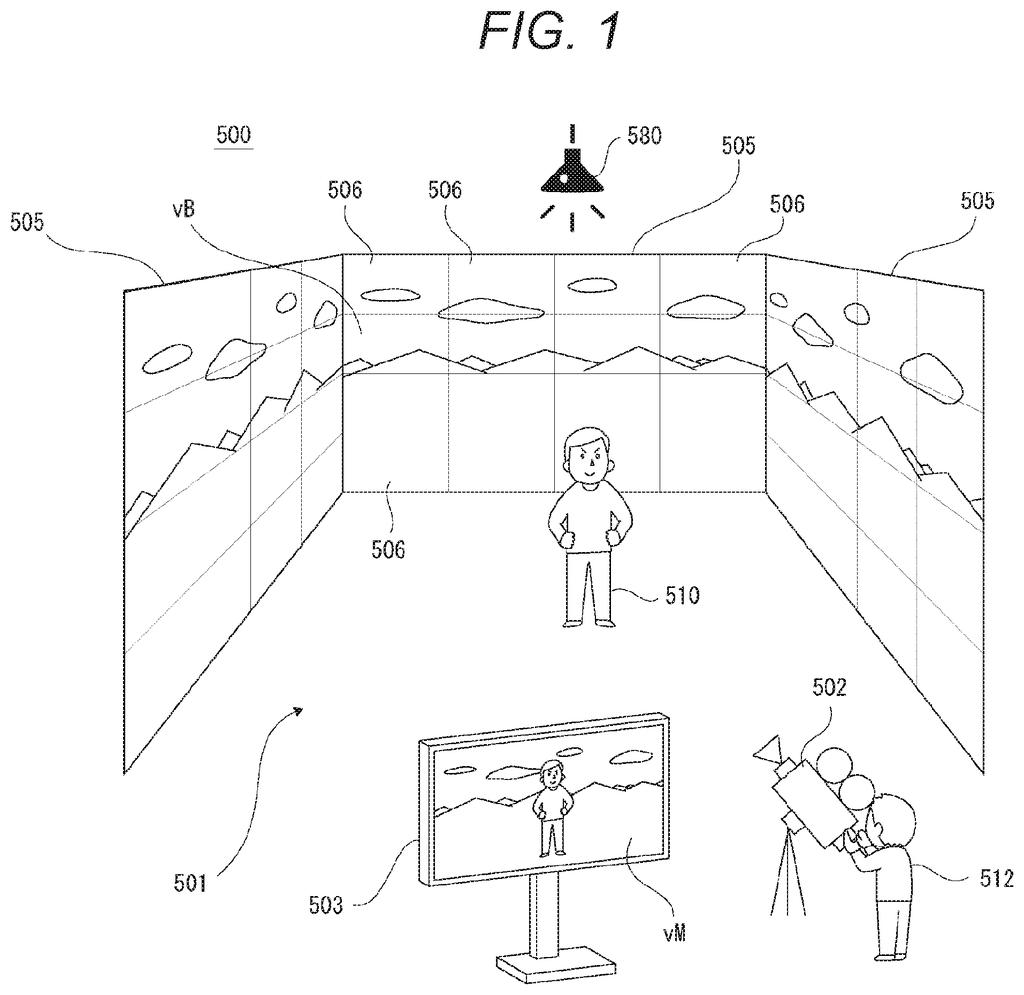
What Sony's background-sync switcher actually does
Picture a news anchor sitting in front of a giant LED wall showing a city skyline. The camera operator cuts to a different angle, but the skyline on that wall is still showing the view from the old camera position. For a split second, the perspective is wrong and the illusion breaks.
Sony's patent describes a system that solves this by pre-loading the correct background for the next camera before the director actually makes the cut. When you hit the switch button, the LED wall updates first, and then, after a short built-in delay, the live video feed switches over. The two events arrive on screen at the same moment.
The result: the background and the camera angle always match, the virtual set looks continuous, and viewers never see that jarring half-second where the perspective is off. It's a timing and coordination problem solved with a carefully calculated pause.
How the delay timer keeps cameras and backgrounds in step
The patent describes two separate switch units working in tandem. The first switch unit controls what gets displayed on the LED wall (the virtual background). The second switch unit controls which camera's live feed goes out as the program signal.
When a director triggers a camera cut, the system immediately tells the first switch unit to load the background that matches the destination camera's perspective. That update starts propagating to the display wall right away. Then, after a predetermined delay time (a fixed number of frames or milliseconds chosen to account for how long the display wall takes to update), the second switch unit finally cuts the live camera feed.
The core logic lives in a control unit that coordinates both switches and owns the delay timer. The patent's independent claim frames this as software: a program running on a computer that listens for a user's switch command, fires the background update immediately, and holds the camera-feed command in a queue until the delay expires.
- Director presses cut
- Background video for new camera angle loads on the LED wall
- Timer counts down the delay
- Live camera feed switches to match
What this means for virtual production and live broadcast
Virtual production stages, where actors perform in front of large LED walls instead of physical sets, are now common in film, television, and live events. The background displayed on those walls has to match the camera's exact position and angle to maintain the illusion. Right now, keeping that sync tight during live multicamera work often requires manual coordination or custom middleware. Sony's patent bakes that coordination directly into the switcher hardware and software.
For broadcasters running live shows on virtual sets, this could remove a whole category of on-air errors. For your experience as a viewer, it means the virtual environment feels continuous rather than glitchy when the director cuts to a new angle. Given Sony's deep presence in both broadcast equipment and film technology, this fits squarely in a product line they already sell to production companies.
This is a focused, practical engineering fix for a real problem in live virtual production. It's not flashy, but the problem it solves is one that currently requires either expensive custom setups or careful manual timing. Sony is in a strong position to ship this inside its existing broadcast switcher lineup.
There are more where this came from
We read every patent application Big Tech publishes and send you the ones worth knowing. Plain English, free, every week.
The drawings
21 drawing sheets from US 2026/0222515 A1 · click any drawing to enlarge


Want this weekly breakdown for a company we don't cover? Patentlyze Pro →