
Qualcomm Patents Tech to Keep AI Location Training Data Fresh and Unbiased
AI-based location tracking is only as good as the data it trains on, and if that data is always collected in the same situations, the AI gets lopsided. Qualcomm's new patent is about fixing that problem at the source.
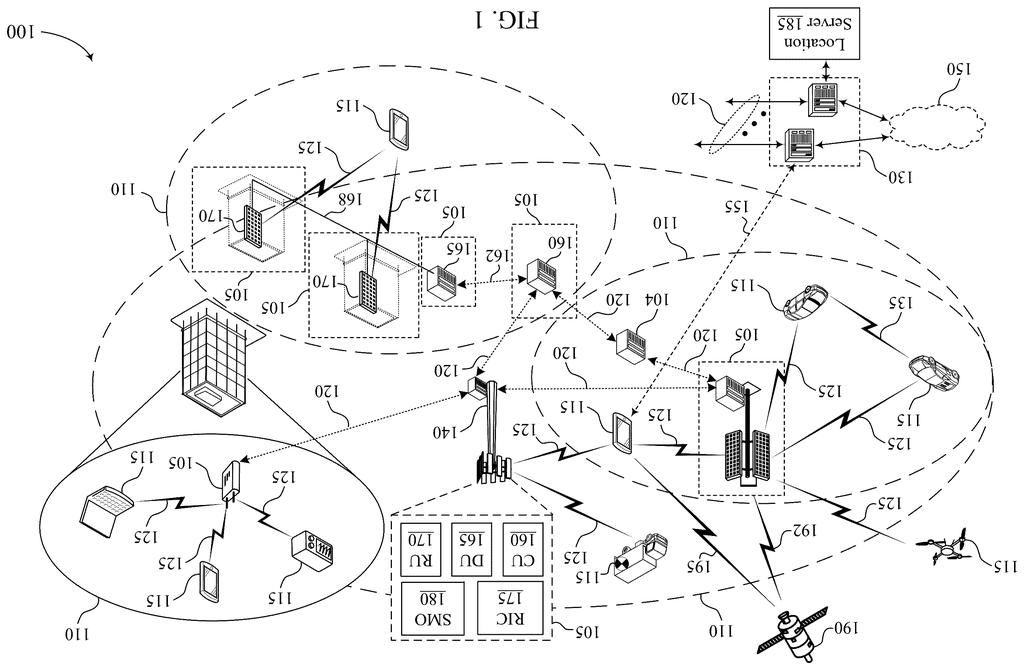
How Qualcomm keeps phone location AI from learning bad habits
Imagine your phone's AI learns to figure out your location by studying thousands of examples of signal data. Now imagine that almost all those examples were collected while you were standing still indoors. The AI would get very good at that one scenario, and pretty bad at everything else. That's the "biased data" problem.
Qualcomm's patent describes a fix: instead of collecting location-training data only when something specific happens (like when you open a map app), the phone uses a randomized coin-flip system to decide when to gather data. Sometimes it collects, sometimes it doesn't, and that randomness helps build a more varied, representative training set.
The network tells your phone how to set up these random collection windows, and the phone can even request specific signal transmissions from the network to use during those windows. The goal is to make the underlying AI that powers location and sensing features more accurate across a much wider range of real-world conditions.
How probabilistic triggers control when a phone collects data
The patent describes a system where a user equipment (UE, meaning your phone or another wireless device) is configured by the network to collect data using probabilistic triggers. A probabilistic trigger is essentially a coin-flip rule: when a certain condition is met, collection happens only with some defined probability, rather than every single time.
This matters because AI and machine learning models for positioning need training data that reflects the full variety of situations a device might encounter. If data is collected only in response to specific, predictable events, the dataset ends up skewed toward those events, which degrades the model's performance in other scenarios.
- The network sends configuration info telling the device what triggers to watch for and what probabilities to apply.
- The device detects when a trigger fires, then uses the probability rule to decide whether to actually collect data that time.
- The device can also request Positioning Reference Signals (PRS) on demand from the network, which are specific radio transmissions designed to help measure location, so it has good raw material to collect when a trigger window opens.
- Collected data is then used to train or refine the on-device or network-side AI positioning model.
The patent also covers the device telling the network about its capability to handle these probabilistic triggers, so the network knows what kind of configuration to send down.
What this means for AI-driven location accuracy on your phone
Location and sensing on phones increasingly rely on AI models rather than simple GPS math, and those models need diverse, unbiased training data to work well across different buildings, cities, and movement patterns. If training data is always collected in the same narrow circumstances, the AI performs poorly anywhere outside those conditions. This patent addresses that gap at the data-collection layer, before the model is ever trained.
For you as a user, the downstream effect would be more reliable AI-driven location features indoors, in dense urban areas, or in other GPS-weak environments where traditional positioning already struggles most. For Qualcomm, this is infrastructure work that would sit inside chipset firmware and network software, likely invisible to end users but foundational to the accuracy of any AI location feature built on top.
This is genuinely useful infrastructure work, even if it doesn't make for a flashy announcement. Biased training data is one of the more underappreciated failure modes in deployed AI, and tackling it at the hardware and protocol level rather than cleaning it up after the fact is the right approach. The probabilistic trigger idea is clever and practical.
There are more where this came from
We read every patent application Big Tech publishes and send you the ones worth knowing. Plain English, free, every week.
The drawings
25 drawing sheets from US 2026/0222309 A1 · click any drawing to enlarge


Want this weekly breakdown for a company we don't cover? Patentlyze Pro →