
Samsung Patent Tackles Sensor Blind Spots in Self-Driving Cars
Every self-driving car has a dirty secret: the physical frame holding its sensors together creates blind spots the sensors can't see around. Samsung's new patent tackles that problem head-on.
What Samsung's sensor blind-spot fix actually does
Imagine a camera mounted on a pole. The pole itself blocks a thin slice of what the camera can see. Self-driving vehicles have the same problem: the struts and supports that hold the sensor array together cast "shadows" where the sensors can't detect anything.
Samsung's patent describes a small, specially designed piece (they call it an "identification reinforcement unit") that sits precisely in those blind zones. Instead of leaving a gap in the data, this piece is built to be picked up by external positioning systems, so the vehicle's location can be confirmed even when parts of the sensor's view are physically blocked.
In short, it's a workaround for a structural problem that's baked into the hardware of almost every autonomous vehicle today. Rather than redesigning the whole sensor mount, Samsung proposes plugging the hole with a dedicated component.
How the identification reinforcement piece fills the gap
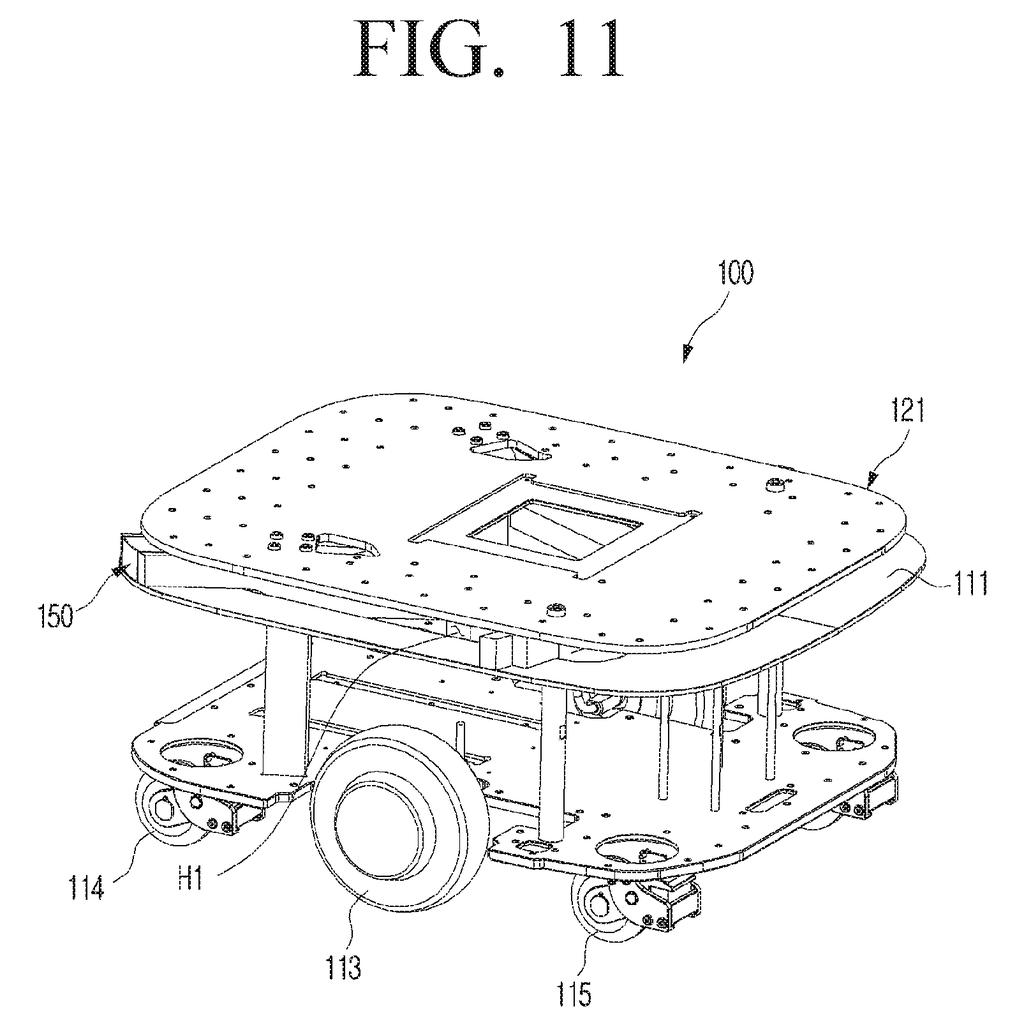
The patent describes an autonomous driving device with two main body sections (a first body and a second body) separated by a gap. A support structure bridges those two bodies, and a sensor sits in the open space between them.
The problem is geometric: the support strut inevitably falls within the sensor's field of view, creating a blind area. The patent introduces an identification reinforcement portion, described as a longitudinal piece (essentially an elongated strip or rod) placed exactly in that obscured zone.
This piece isn't just a passive filler. It's designed to be detected by an external identification entity (think: an outside positioning system, such as GPS infrastructure, roadside units, or a backend mapping service) that uses circuitry to determine the vehicle's position. By being readable to that external system, the reinforcement piece compensates for what the onboard sensor misses, strengthening overall position identification.
- Two-body sensor housing with a structural support between them
- Sensor occupies the gap between the two bodies
- Blind area created by the support is covered by the reinforcement piece
- External positioning systems can read the reinforcement piece to confirm location
What this means for autonomous vehicle positioning accuracy
Self-driving vehicles rely on precise, continuous position data. A gap in sensor coverage, even a thin one caused by a support strut, can introduce uncertainty into where the car thinks it is or what's around it. For high-speed or complex traffic scenarios, that matters.
What's notable here is that Samsung is addressing a physical limitation with a hardware solution rather than trying to patch it entirely in software. The patent is also detachable in design (the title references a unit "detachable" from the driving device), suggesting the reinforcement component could be swapped or upgraded independently of the main sensor assembly. That modularity could matter for fleet operators who need to service vehicles without replacing entire sensor rigs.
This is a focused, practical engineering patent rather than a headline-grabbing concept. Samsung isn't reinventing autonomous driving sensors; it's patching a structural gap that every sensor-equipped vehicle has to deal with. The modular, detachable angle is the most commercially interesting part, since it implies Samsung is thinking about real-world maintenance and serviceability, not just lab performance.
There are more where this came from
We read every patent application Big Tech publishes and send you the ones worth knowing. Plain English, free, every week.
The drawings
33 drawing sheets from US 2026/0219078 A1 · click any drawing to enlarge


Want this weekly breakdown for a company we don't cover? Patentlyze Pro →
Be the first to weigh in