
Sony Patents a Camera Chip That Keeps Photos Sharp Despite Tiny Electrical Interference
Every time a camera sensor reads a pixel, a tiny unwanted voltage spike can sneak into the signal and muddy the image. Sony's new patent targets exactly that moment with a redesigned circuit.
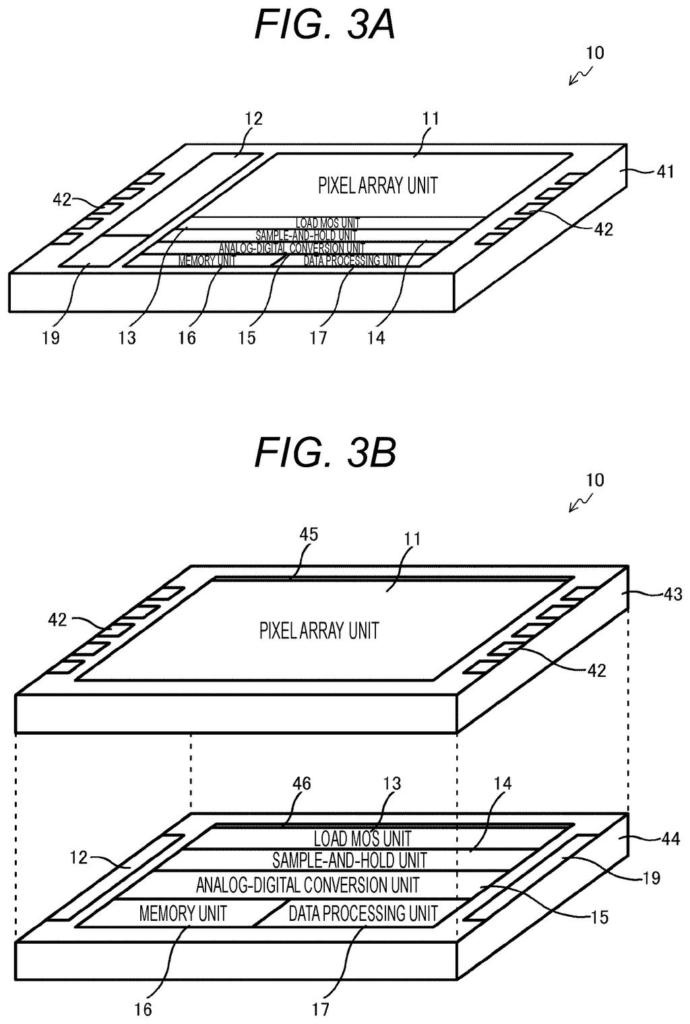
What Sony's noise-reduction image sensor actually does
Imagine taking a photo in a dimly lit room. Your camera sensor has to read millions of tiny light measurements in a fraction of a second, and even a microscopic electrical hiccup during that read can show up as grain or color noise in the final shot.
Sony's patent describes a redesigned circuit inside the image sensor that stores each pixel's reading in two separate mini-capacitors: one for a baseline "blank" measurement and one for the actual light data. By keeping those two readings carefully isolated from each other, the circuit prevents small voltage errors from mixing in during the critical moment the data is captured.
The clever part is how Sony wires the transistors controlling those capacitors. Instead of the usual arrangement, a dedicated transistor sits between the storage element and the output line specifically to drain away stray charge before the sensor reads out the final value. The result is a cleaner signal with less fixed-pattern noise, which is the kind of banding or speckling you sometimes see in low-light photos.
How the dual-capacitor sample-and-hold circuit works
This patent covers a sample-and-hold circuit built into a CMOS image sensor. A sample-and-hold circuit is the part of a sensor that briefly "freezes" a pixel's electrical reading so it can be measured accurately before moving on to the next pixel.
The circuit uses a dual-capacitor architecture: one capacitive element stores a reset signal (a baseline reading taken before any light hits the pixel) and a second stores the data signal (the actual light-induced reading). Comparing these two lets the sensor subtract out fixed noise, a technique called correlated double sampling (CDS).
The key innovation is the transistor topology around each capacitor:
- A write transistor controls when new data flows into the capacitor.
- A sampling transistor sits in series with the capacitor to isolate it.
- A read transistor controls when that stored value flows out to the column output line.
- A reset transistor connects the output line to a known reference voltage, draining away stray charge that would otherwise corrupt the reading.
By separating the write and read paths and adding that dedicated reset transistor at the output, Sony says the circuit reduces charge injection variation, which is the inconsistent voltage error that switching transistors on and off can inject into the signal.
What this means for Sony camera sensor quality
For Sony, which supplies image sensors to a large portion of the smartphone industry including Apple's iPhones, incremental noise improvements in sensor circuits compound into visible differences in low-light photography. A cleaner sample-and-hold stage means the downstream image signal processor has less noise to fight, which can translate to sharper shadow detail and more accurate colors without requiring more compute.
This is fairly deep silicon-level work, not something users will see labeled on a spec sheet. But noise performance is one of the primary battlegrounds in smartphone camera competition, and patents like this one show where Sony's sensor engineering teams are spending their attention.
This is a narrow but real engineering improvement at a part of the image sensor that directly affects low-light noise. It won't make headlines the way a new lens format would, but sample-and-hold circuit quality is a genuine bottleneck in sensor performance, and Sony filing a patent here signals active work on the problem. If you care about mobile camera hardware, it's worth knowing Sony is iterating at this level.
There are more where this came from
We read every patent application Big Tech publishes and send you the ones worth knowing. Plain English, free, every week.
The drawings
19 drawing sheets from US 2026/0222705 A1 · click any drawing to enlarge


Want this weekly breakdown for a company we don't cover? Patentlyze Pro →
Be the first to weigh in