
Samsung Patents Faster Device-to-Device Wireless Proximity Connections Without Manual Setup
Ultra-wideband is the precise location tech inside your phone and wallet tracker, but getting two UWB devices to find each other quickly has always been a friction point. Samsung's new patent proposes a clever shortcut: use a slower, well-understood radio channel to do the introduction, so the high-precision UWB link can get straight to work.
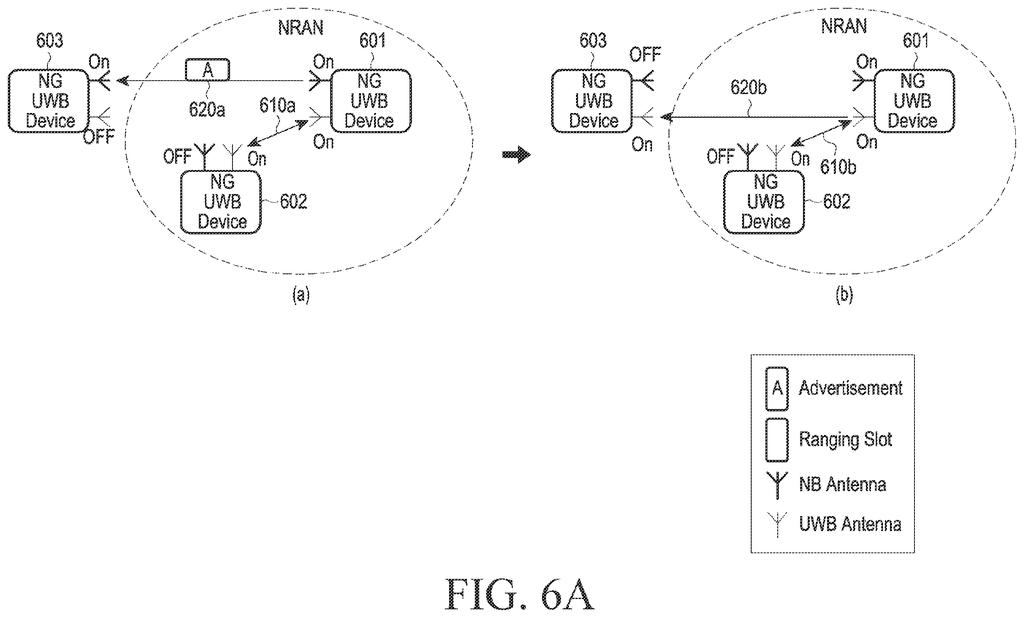
How Samsung wants UWB devices to announce themselves
Imagine you're at a crowded party and need to find a specific person. Instead of shouting across the room in a language only some people understand, you text them first so they know to look for you. Samsung's patent works on the same idea, applied to wireless devices.
Ultra-wideband (UWB) is the short-range radio technology that lets your iPhone or Galaxy phone pinpoint a nearby AirTag or SmartTag to within centimeters. It's great at precision, but devices first need to agree on the right "frequency lane" before they can talk. That handshake can slow things down.
Samsung's approach has one UWB device broadcast a small setup packet over a regular, lower-power narrow-band radio channel. Any nearby UWB device can pick up that broadcast and use the info inside it to join the right UWB session immediately, skipping the usual back-and-forth. It's a small protocol tweak, but it could make device discovery noticeably faster in real-world use.
How the narrow-band broadcast sets up the UWB session
The patent describes a two-radio coordination scheme. A first UWB device generates what the patent calls a Narrow Band Acquisition Packet (NB AP), a small data packet containing configuration details about the UWB session it is currently running (things like timing parameters and channel identifiers).
That packet is broadcast over an NB (narrow-band) channel, a lower-bandwidth radio link that is easier for nearby devices to scan passively. Because narrow-band transmissions are simpler to monitor continuously without draining battery, a second UWB device can listen in the background and pick up the NB AP without needing to already be synchronized to a UWB signal.
Once the second device receives the NB AP, it extracts the session parameters and uses them to configure its own UWB session, essentially letting it skip the discovery and negotiation steps that would otherwise be needed. The two devices end up running coordinated but separate UWB sessions ("first" and "second" in the patent's language), suggesting this could support scenarios where multiple devices join the same spatial-positioning context.
- Device A broadcasts session info over narrow-band radio
- Device B receives and parses that broadcast passively
- Device B configures its UWB session using the received parameters
- Both devices are now operating in a coordinated UWB environment
What this means for UWB tracking and device pairing
UWB is already shipping in Samsung Galaxy phones and Tags, Apple devices, and a growing number of smart-home and automotive products. The friction today is that two devices often need several round-trip radio exchanges before they can start doing precise ranging. A faster, broadcast-first discovery method could make things like hands-free car unlocking or instant tag-finding feel more responsive to you as the user.
More broadly, this kind of protocol work matters because UWB is being pushed into denser environments, such as warehouses, hospitals, and shared offices, where dozens of devices might be trying to find each other at once. A clean broadcast-discovery mechanism reduces collision risk and setup overhead, which is the kind of unglamorous engineering that determines whether a technology actually works reliably at scale.
This is foundational protocol work, not a flashy feature. Samsung is essentially filing a coordination mechanism that could make UWB device discovery faster and more scalable. It won't generate headlines on its own, but if it shows up in a future Galaxy ecosystem update, you'll notice it as the moment pairing stopped feeling finicky.
There are more where this came from
We read every patent application Big Tech publishes and send you the ones worth knowing. Plain English, free, every week.
The drawings
21 drawing sheets from US 2026/0223205 A1 · click any drawing to enlarge


Want this weekly breakdown for a company we don't cover? Patentlyze Pro →
Be the first to weigh in