
Samsung Patents a Voltage-Sensing Protection System for Gas Cooking Appliances
A gas burner's ignition system is surprisingly vulnerable to electrical spikes — Samsung's latest patent describes a smart circuit that steps in automatically when voltage gets too high, potentially extending the life of ignition components and reducing failure risk.
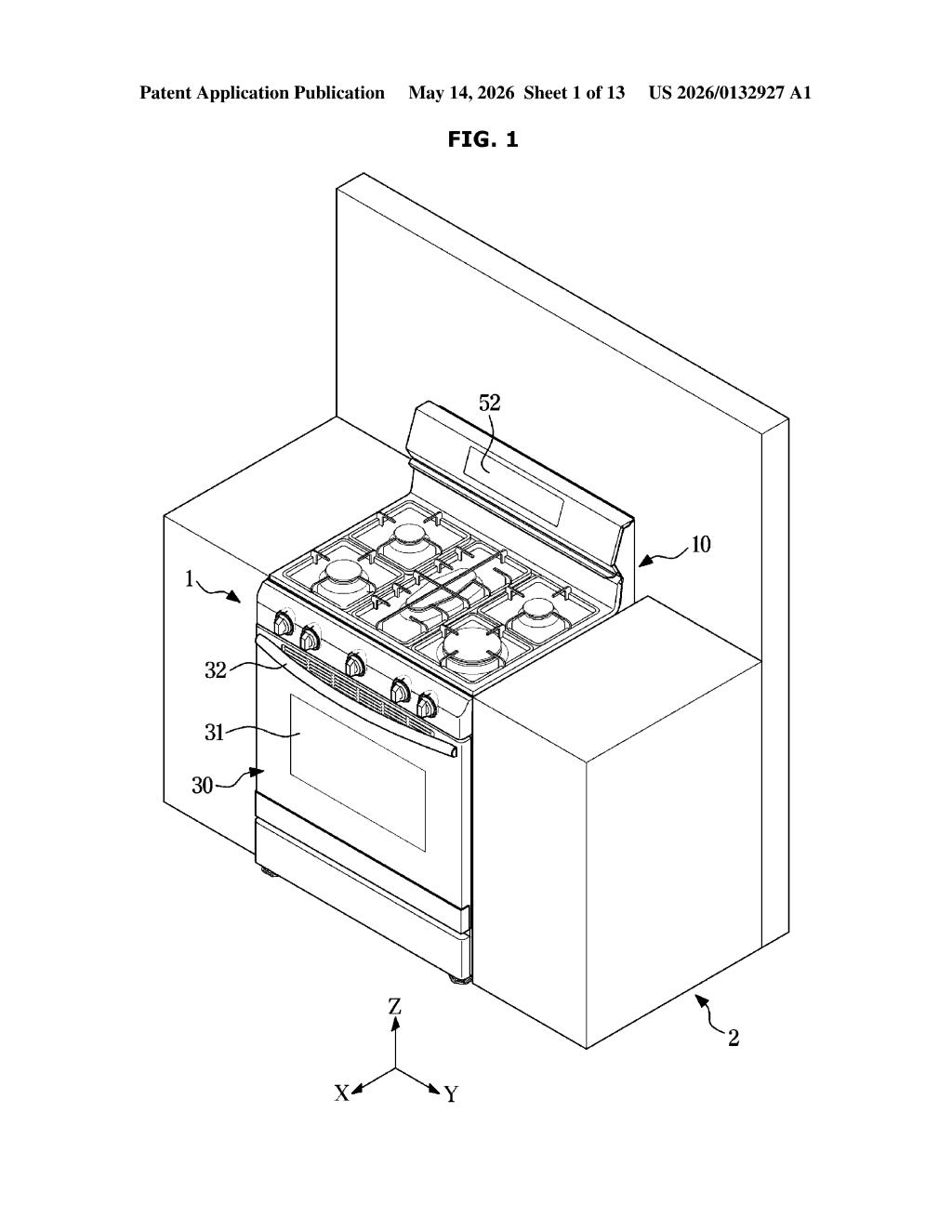
What Samsung's automatic burner protection actually does
Imagine your gas stove's ignition clicking away every time you turn a burner on. That little spark is generated by an electrical circuit, and like any electrical component, it can be damaged if too much voltage runs through it — especially in homes where power supply can be inconsistent.
Samsung's patent covers a cooking appliance that watches the voltage going to the ignition system in real time. If it climbs above a set threshold, a switching element automatically connects a current-limiting component into the circuit, acting like a pressure-relief valve to keep the current at a safe level.
The result: your burner's ignition hardware is less likely to be fried by an unexpected voltage surge. It's the kind of quiet, protective engineering that you'd never notice — until it saves you from a repair call.
How the voltage sensor triggers the current-limiting circuit
The patent describes a gas cooking appliance built around a feedback loop between a voltage sensor, a controller, and a pair of circuit elements.
Here's how the pieces fit together:
- Voltage sensor — continuously monitors the electrical voltage being applied to the burner's ignition device.
- Current limiting element — a component (likely a resistor or similar passive device) that reduces how much current flows through the circuit when inserted.
- Switching element — acts like an electronically controlled gate that can connect or disconnect the current limiter from the burner circuit on command.
- Controller — the decision-maker: when the detected voltage exceeds a defined first voltage threshold, it tells the switching element to bring the current limiter online.
The logic is straightforward: under normal voltage conditions, the current limiter stays out of the circuit so ignition performance isn't degraded. But when voltage climbs dangerously high — due to grid fluctuations or other causes — the controller intervenes within milliseconds to protect the ignition hardware.
The patent also references memory and communication circuitry, suggesting the controller could log events or potentially report faults remotely, though those aspects aren't central to the core claim.
What this means for gas range reliability and safety
Gas ranges are sold globally into homes with wildly varying power supply quality — voltage instability is a real-world problem in many markets where Samsung competes. A built-in voltage protection system could meaningfully reduce ignition component failures, which are one of the more common (and annoying) gas appliance repair issues. For Samsung, it's a differentiator that's easy to manufacture into existing designs at low cost.
For you as a consumer, this kind of protection is invisible when it works — but it's the difference between a stove that keeps sparking reliably for a decade and one that needs a service visit after a bad storm. It's not glamorous engineering, but it's exactly the sort of thing that drives long-term brand loyalty in home appliances.
This is a narrow, practical patent covering a well-understood electrical engineering technique applied to gas appliance ignition. It's not pushing any frontiers in cooking technology, but it solves a genuine reliability problem in a clean, low-cost way. Samsung's home appliance division competes hard on durability in price-sensitive markets, and this kind of protective circuitry is exactly how you earn a reputation for reliability over time.
There are more where this came from
We read every patent application Big Tech publishes and send you the ones worth knowing. Plain English, free, every week.
Want this weekly breakdown for a company we don't cover? Patentlyze Pro →