
Disney Patents Robot Face Skin That Physically Shifts to Match Projected Emotions
Disney is patenting animatronic figures whose physical skin can push, pull, and deform in sync with images projected onto it, combining old-school puppetry mechanics with modern projection mapping in a single surface.
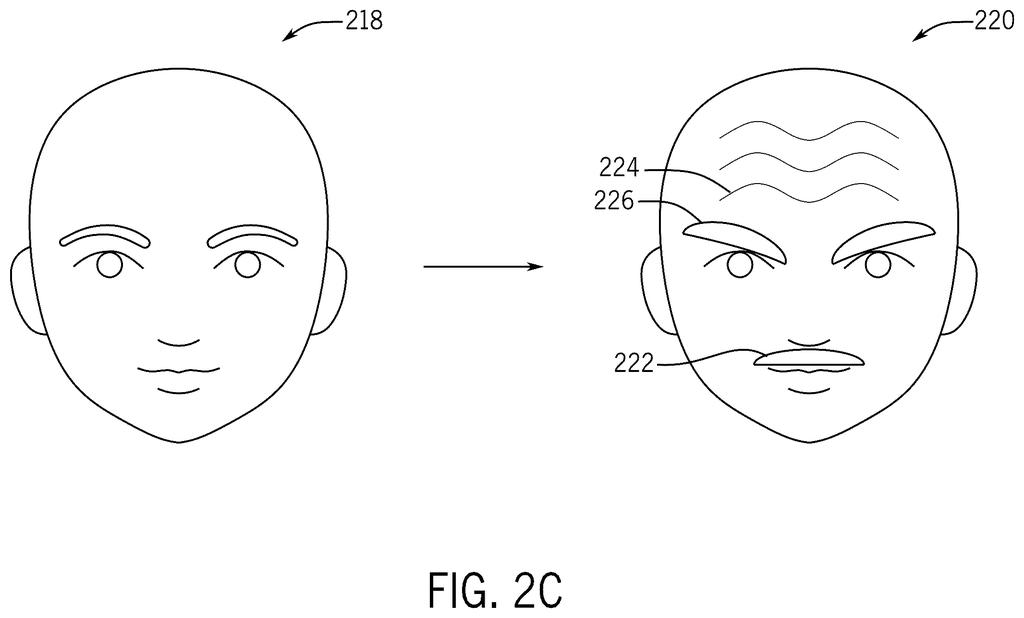
What Disney's shape-shifting animatronic skin actually does
Imagine a theme park robot that doesn't just have a pre-sculpted frozen face. Instead, its rubbery outer skin can actually move and bulge in real time, while a projector simultaneously paints a facial expression onto that same surface. The two effects work together: the physical shape of the skin and the image projected on top of it reinforce each other.
That's what Disney is describing here. An animatronic figure has a rigid inner shell, a flexible skin stretched over it, and small actuators (think tiny motors or pneumatic pushers) that selectively deform the skin from underneath. At the same time, a projector treats the skin as a canvas and maps imagery onto whatever shape the skin happens to be in.
The result is a face that can look more alive than a traditional animatronic, which is locked into whatever expression was carved into its fiberglass head at the factory.
… an actuator configured to selectively create a deformation of the skin, wherein the deformation is configured to complement content projected onto the skin.
Translation: A mechanical part physically pushes the robot skin to match whatever image is projected onto it.
How the actuator, shell, and projector work together
The patent describes a three-part system built into a single animatronic figure:
- A rigid shell that forms the structural body of the figure, like a skeleton or inner frame.
- A flexible skin stretched over the shell. Crucially, the patent says this skin defines a continuous projection surface, meaning a projector can treat the entire face as one unbroken screen.
- Actuators mechanically connected to the skin from behind. An actuator here is any device that creates physical movement, such as a small motor, a pneumatic piston, or a cable-pull mechanism. These push or pull specific points on the skin to change its surface shape on demand.
When the actuators deform the skin, they change the topography (the three-dimensional contour) of the face. A projector then maps imagery onto whatever shape the skin is currently holding. Because both the physical deformation and the projected image are designed to complement each other, the figure can convey expressions that would be impossible with either technique alone.
The patent is specifically focused on mimicking facial expressions, so the likely application is characters with recognizable faces where emotional nuance matters most.
The actuator may move the skin to change a topography of the skin to mimic a facial expression.
Translation: The internal motor shifts the surface shape to copy real human facial expressions.
What this means for theme park animatronic experiences
Traditional animatronics are physically expressive but visually static: the face is sculpted once and never changes. Projection-only systems can display any image but look flat because the underlying shape doesn't move. Disney's approach combines both, so the skin physically wrinkles or bulges while the projected image follows. That combination could produce expressions that feel far more convincing to a guest standing a few feet away.
For theme park visitors, this could mean character encounters where the robot in front of you genuinely looks surprised, sad, or delighted, rather than wearing the same molded grin forever. It also gives Disney's imagineers the ability to change a character's mood or even its appearance in software, without rebuilding the physical figure.
This is genuinely interesting engineering from Disney's R&D side. Combining physical skin deformation with projection mapping is a real technical challenge, and solving it well could meaningfully change how lifelike theme park characters feel in person. It's not a reinvention of animatronics, but it's a clever marriage of two existing techniques that have always been kept separate.
There are more where this came from
We read every patent application Big Tech publishes and send you the ones worth knowing. Plain English, free, every week.
The drawings
15 drawing sheets from US 2026/0225255 A1 · click any drawing to enlarge


Want this weekly breakdown for a company we don't cover? Patentlyze Pro →
Be the first to weigh in