
Amazon Patent Gives Home Robots Spatial Memory to Track and Map Belongings
Imagine asking a robot to grab your keys, and it actually knows you moved them to the kitchen counter three days ago. Amazon's latest patent describes exactly that kind of object-aware memory for home robots.
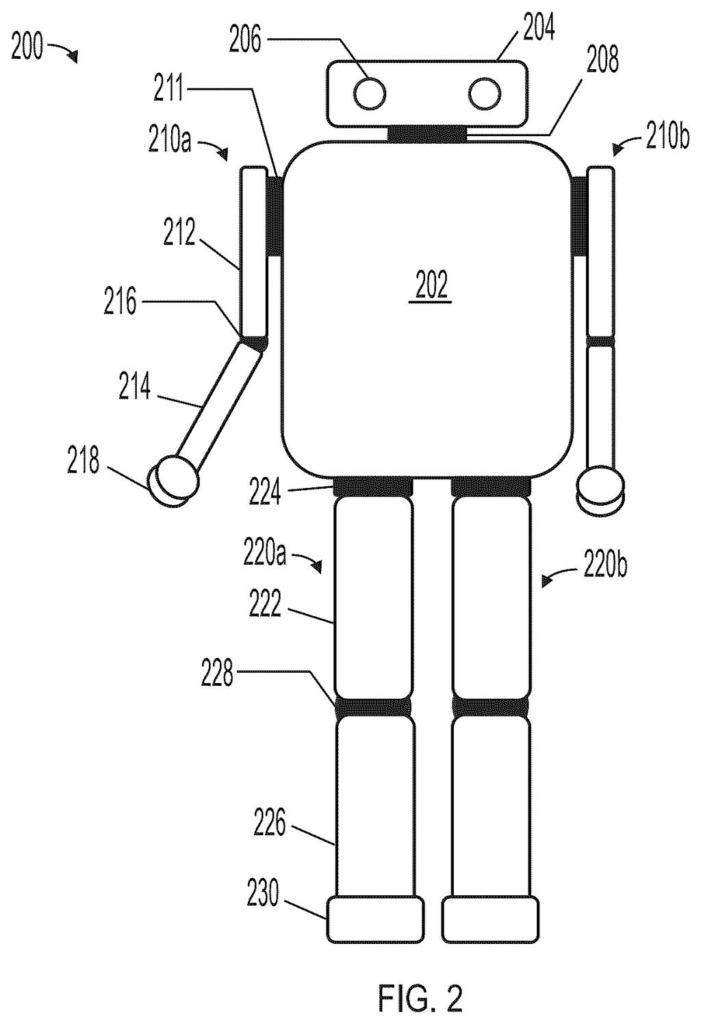
How Amazon's robot tracks where your things actually are
Picture asking a home robot to bring you your medication. Most robots would stare blankly if the pill bottle wasn't exactly where it was programmed to look. Amazon's patent describes a smarter approach: the robot keeps two kinds of memory, one for things it has seen recently and one for things it learned about a long time ago.
When you ask the robot a question or give it a task, it searches both memories. If it finds the object in recent memory, great. If only in long-term memory, it also checks an event log, essentially a change history, to see whether something about that object has shifted since it last looked. Maybe the bottle was on the nightstand last week but moved to the bathroom yesterday.
The robot then uses whichever version of the truth is most current to figure out what to do and in what order. It's less "follow these pre-programmed steps" and more "reason from what I know about your home right now."
determining whether the user query matches one or more semantic tokens associated with the stored object in a short-term database, and determining whether the query matches one or more semantic tokens associated with the stored object in a long-term database; …
Translation: The robot checks both short and long term memory to figure out what item the user is asking about.
How the short-term and long-term databases work together
The patent describes a method for generating tasks on a robot by querying two separate databases:
- Short-term database: holds recently observed properties of objects (think: where the robot saw your coffee mug ten minutes ago).
- Long-term database: holds older, more persistent knowledge about objects the robot has catalogued over time.
- Event log: a record of changes to an object's known state, so the robot can tell that an object's last known position differs from an earlier known position.
When a user query comes in (say, "find the remote control"), the system checks the short-term database first. A match there gives it current, observed properties to work with. If nothing current is found, it falls back to the long-term database. If the long-term database has a record and an associated event log, the robot also retrieves the previously known properties alongside the last recorded time of that state.
Semantic tokens (essentially keyword-like labels attached to objects) are how the query gets matched to the right stored record. Once the best available information is assembled, the system determines which tasks are needed and in what order to execute them. This lets a robot adapt its plan based on whether it's working from fresh data, stale data, or a documented history of changes.
… hierarchical object identification is used to generate a contextual model of the environment around the robotic system.
Translation: The robot builds a smart map of its surroundings by organizing objects in a structured way.
What this means for Amazon's home robot ambitions
Amazon has been publicly developing a home robot called Astro, and the gap between "a robot that navigates your house" and "a robot that actually helps you" comes down to exactly this kind of contextual memory. A robot that can only find things it has currently seen is far less useful than one that can reason about where something probably is based on how your home evolves over time.
For everyday users, this is the difference between a robot that requires constant supervision and one that can handle a vague, natural request. The patent also hints at a layered architecture where task-specific behaviors combine with general movement, which suggests Amazon is thinking about robots that can handle a wide variety of requests without needing to be reprogrammed for each one.
This patent is doing real work. The dual-database plus event-log design is a concrete, practical answer to one of the hardest problems in home robotics: objects move, and robots need to know that. It's not a flashy AI demo but a foundational infrastructure patent, the kind that determines whether a product is actually useful in a messy real home.
There are more where this came from
We read every patent application Big Tech publishes and send you the ones worth knowing. Plain English, free, every week.
The drawings
22 drawing sheets from US 2026/0228231 A1 · click any drawing to enlarge


Want this weekly breakdown for a company we don't cover? Patentlyze Pro →
Be the first to weigh in