
Amazon's New Patent Teaches Its Echo Speakers to Know When You're About to Speak
What if your Echo could tell you were about to speak to it before you even said 'Alexa'? Amazon's latest patent describes exactly that — a system that reads the room using only sound.
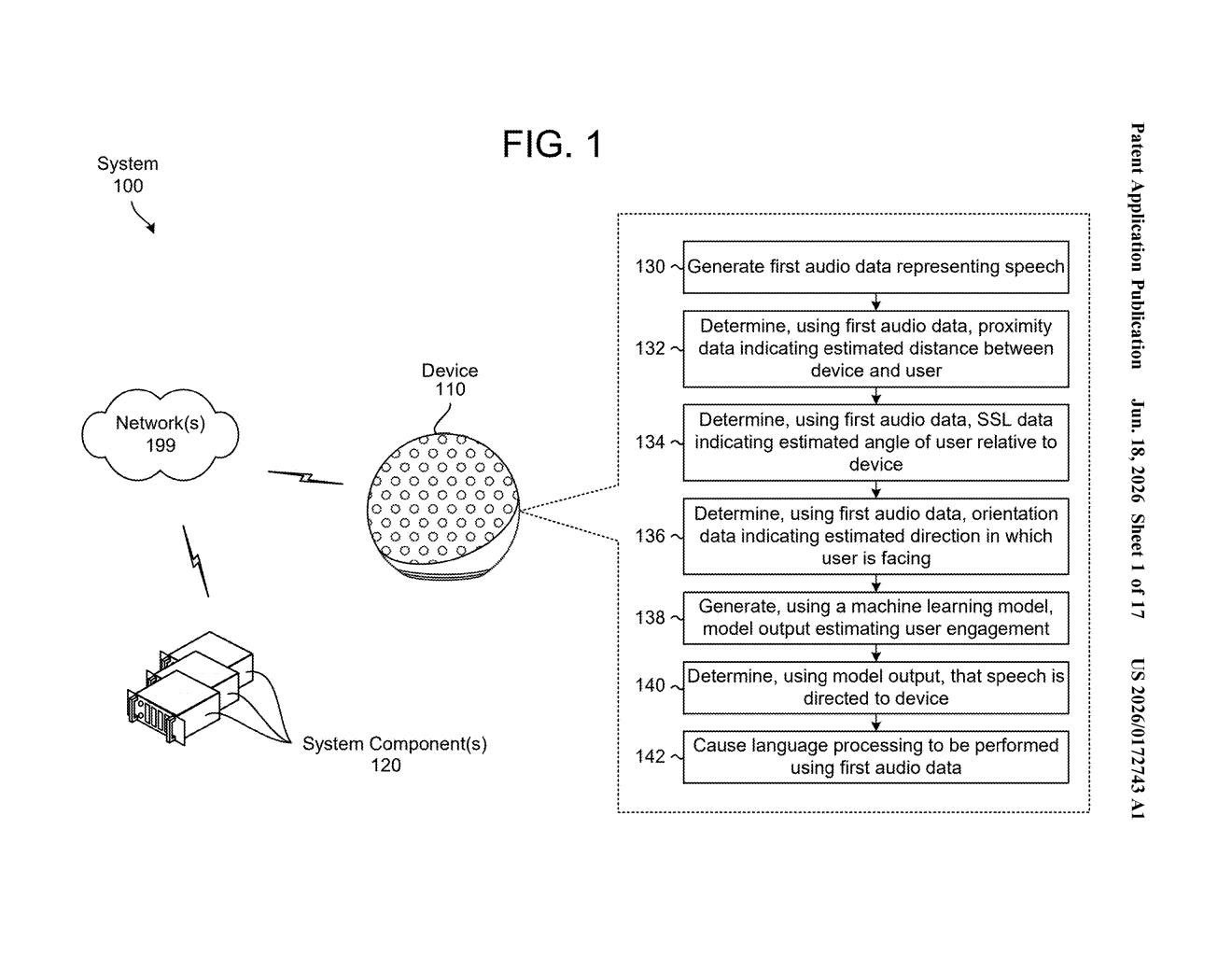
What Amazon's no-wake-word listener actually does
Imagine walking into your kitchen, turning to face your Echo, and just saying 'Play some jazz' — no trigger phrase, no awkward pause. Amazon is working on technology that would let a smart speaker figure out on its own whether you're the one talking, and whether you're actually talking to it.
The system uses the device's built-in microphones to estimate three things: how far away you are, what angle you're at relative to the speaker, and which direction your body is facing. If all three line up in a way that suggests you're addressing the device, it starts processing your speech right away — no 'Alexa' required.
This is different from always-listening approaches that just wait for a keyword. Instead of filtering by a specific word, the device filters by your physical position and attention. If you're across the room facing the TV, it ignores you. Turn toward the speaker and step closer, and it pays attention.
How the device maps your distance, angle, and body direction
The patent describes an audio-based user engagement detection system built into a device with multiple microphones and a speaker. Rather than relying on a wake word to start processing, the device continuously analyzes incoming audio to assess whether a nearby person is likely speaking to it.
To make that judgment, the device measures three distinct signals:
- Distance — how far away the speaker is, estimated from audio characteristics across microphones
- Relative angle — where in the room the person is positioned relative to the device, calculated using sound source localization (a technique that triangulates sound direction using differences in when audio reaches each microphone)
- Facing direction — an estimate of which way the person's body or head is oriented, inferred from how sound from them arrives across the microphone array
The device uses three-dimensional vectors (directional arrows in 3D space) and associated power levels to build a spatial picture of who is speaking and where. A classifier — a trained model that sorts inputs into categories — then decides whether all three factors together indicate the person is engaged with the device.
Only when all three conditions are satisfied does the device hand the audio off to language processing (the part that understands what you're saying and acts on it). This keeps the heavy-lifting AI quiet until there's a real reason to run it.
What this means for the future of Alexa interactions
For everyday users, this could make smart speakers feel dramatically less clunky. The 'Alexa... Alexa... ALEXA' frustration exists because wake-word detection is a blunt instrument — it either triggers or it doesn't. A system that understands spatial context could be both more responsive when you want it and quieter when you don't, cutting down on false triggers from TV dialogue or other people's conversations.
For Amazon, this also has a strategic angle. Smart speakers haven't grown much as a category lately, and reducing friction in the core interaction — just talk to it naturally — is one of the cleaner ways to revive the experience. This patent also signals that Amazon is investing in on-device audio intelligence, which matters for privacy: if the device can decide locally whether you're engaged, it doesn't need to send audio to the cloud just to check.
This is one of those patents that solves a problem people have given up complaining about — the wake word. The approach is genuinely interesting because it sidesteps the obvious alternative (always-on transcription, which has real privacy costs) in favor of spatial awareness, which is much harder to reverse-engineer into a surveillance tool. Whether Amazon ships this cleanly or turns it into something creepier depends entirely on implementation, but the core idea is worth watching.
There are more where this came from
We read every patent application Big Tech publishes and send you the ones worth knowing. Plain English, free, every week.
Want this weekly breakdown for a company we don't cover? Patentlyze Pro →