
Qualcomm Patents AI That Helps Phones Stay Connected When Switching Between Towers
Every time your phone switches from one cell tower to another, there's a tiny window where things can go wrong. Qualcomm is patenting a system that lets the phone's own AI anticipate those switches before they happen.
How Qualcomm's cell-cluster AI helps your phone stay connected
Imagine you're on a video call while riding a train. Your phone is constantly jumping between cell towers as you move, and each handoff is a potential source of dropped packets or a brief freeze. Usually the phone just reacts to a weak signal after the fact.
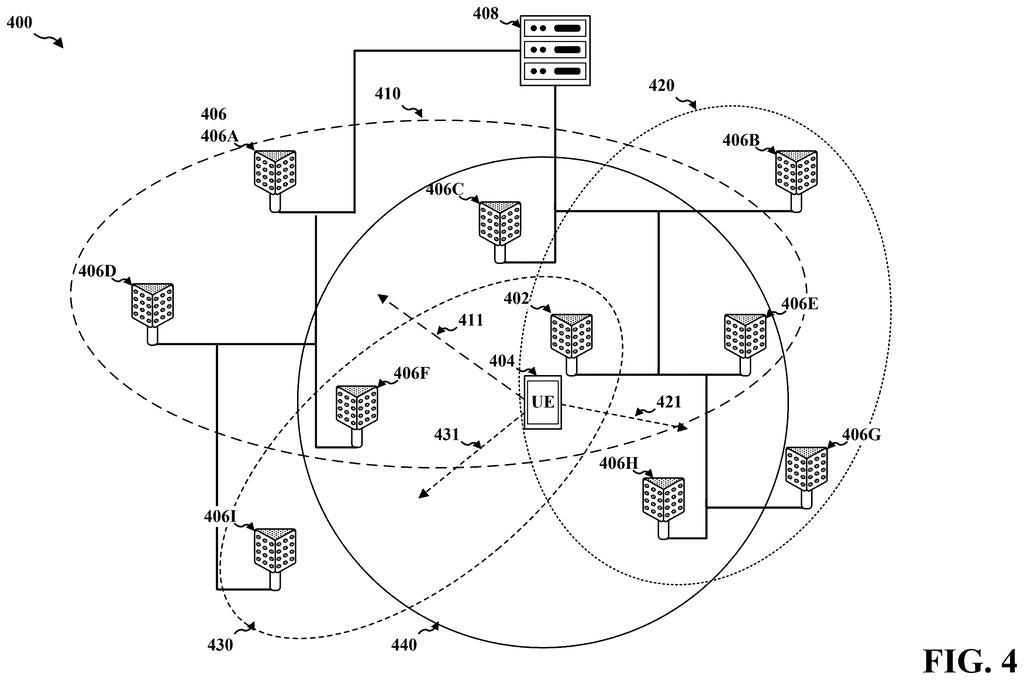
Qualcomm's patent describes a different approach: the network tells your phone which nearby towers to pay attention to as a named group, called a cell cluster. Armed with that list, an AI model running on the phone can study patterns across all those towers together and learn when a handoff is likely coming.
The practical idea is that predicting a handoff in advance lets the phone or the network prepare for it, potentially keeping your connection smoother during the transition. It's the difference between a driver who knows the road curves ahead and one who notices it only when the wheel starts to turn.
obtain first information identifying a cell cluster comprising one or more cells of a plurality of cells, wherein the plurality of cells comprises a serving cell and one or more neighboring cells; and perform, based on the first information, a task associated with a machine learning (ML) model.
Translation: Your phone figures out which nearby cell towers belong to a group and uses artificial intelligence to manage them.
How the ML model uses cell clusters to anticipate handoffs
The patent covers two sides of a system: the phone (called a UE, or user equipment) and the network node managing it.
- The network entity sends the phone a list of cells (towers) that form a cluster, including the phone's current serving tower and its neighbors.
- The phone receives that cluster definition and uses it to drive a machine learning task, such as predicting which tower it will connect to next or how signal quality will change.
- The network also sends a data collection configuration, telling the phone what measurements to gather from those specific towers to feed the ML model.
The key idea is that grouping cells into a named cluster gives the ML model a bounded, relevant context (a defined set of towers to reason about) rather than asking it to track every tower in range indiscriminately. The model can then specialize its predictions for the likely movement corridors a user actually travels.
This is filed under standards-adjacent work, meaning it's designed to fit into how 5G networks already communicate with devices, rather than requiring entirely new hardware.
… output, for a ML model associated with a task to be performed by the UE, a data collection configuration associated with the cell cluster.
Translation: The network generates data settings for the artificial intelligence your device runs to handle tower group changes.
What this means for 5G reliability on the move
For everyday users, smoother handoffs between towers matter most in high-speed situations: highways, trains, dense urban areas where towers are closely packed. If a phone can anticipate a handoff rather than just react to one, the network has a head start on routing your data through the next tower before your signal on the old one degrades.
For Qualcomm, this is squarely in its modem business. The company supplies the cellular chips inside a large share of Android phones, and patents like this one shape how those chips interact with 5G standards. If this approach gets incorporated into 3GPP specifications (the body that defines cellular standards globally), it could become a baseline behavior across the industry, with Qualcomm's implementation already filed.
This is unglamorous but real infrastructure work. Mobility prediction is a known weak point in 5G, and tying ML models to a well-defined cluster of cells is a sensible engineering fix. It won't make headlines when it ships, but if it lands in a modem standard, millions of people on trains and highways will notice slightly fewer frozen video calls.
There are more where this came from
We read every patent application Big Tech publishes and send you the ones worth knowing. Plain English, free, every week.
The drawings
29 drawing sheets from US 2026/0230847 A1 · click any drawing to enlarge


Want this weekly breakdown for a company we don't cover? Patentlyze Pro →
Be the first to weigh in