
Qualcomm Patents a Way for Your Phone to Predict Signal Problems Before They Happen
Your phone already measures signal strength, but it reports what it sees right now. A new Qualcomm patent would have it predict what the signal will be, and send that forecast to the network before your call or video stutters.
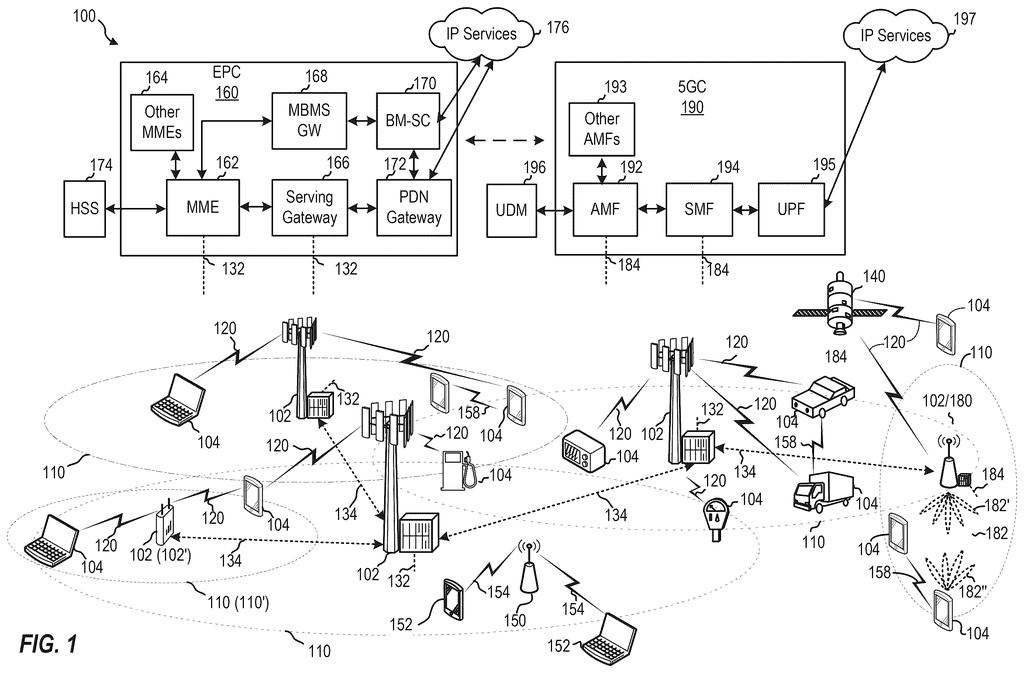
How Qualcomm wants phones to forecast their own signal quality
Today, when your phone connects to a cell tower, it constantly measures signal strength and reports those measurements back to the carrier's network. The problem is that those reports describe the present, not the future, so the network is always reacting to problems rather than avoiding them.
Qualcomm's new patent describes a system where the phone's chip runs a small AI model that takes all those signal measurements and generates predictions about where signal quality is headed. Instead of saying "the signal is weak right now," the phone would say "the signal is about to get weaker," and format that forecast according to instructions from the network.
The network sends the phone a configuration package that tells it which signals to measure, which AI model to run, and how to format the report it sends back. That way the carrier can tell the network to shift your connection to a better tower or adjust your data settings before a drop happens, not after.
… generate one or more RRM predictions based at least in part on one or more measurements according to the set of measurement objects …
Translation: Your phone uses past signal measurements to forecast upcoming connection issues.
How the RRM inference configuration drives the prediction loop
The patent centers on a process called RRM inference configuration, where RRM stands for Radio Resource Management, the system that decides which cell tower your phone connects to and at what settings.
Here is how the loop works:
- The network sends your phone a special configuration message that defines a set of measurement objects (which signals and frequencies to monitor) and a reporting configuration (what format and timing to use when sending results back).
- Your phone's processor takes those measurements and runs them through an AI/ML inference model (an AI model that produces a prediction from input data rather than just recording it) to generate one or more RRM predictions about future signal conditions.
- The phone packages those predictions into a structured report and transmits it to the network on the schedule the configuration specified.
The key technical distinction is that the phone is not just forwarding raw measurements. It is doing local computation to produce a forecast, and the network is the one that decides what the phone should predict and how to report it. That network-controlled configurability matters because different carriers, frequency bands, and deployment scenarios may need different kinds of predictions.
… transmitting a report including information associated with the one or more RRM predictions, wherein the report is in accordance with the reporting configuration …
Translation: The device sends a warning report back to the network about the anticipated signal drop.
What predictive signal reports could mean for 5G connections
Dropped calls and stuttering video in crowded or fast-moving environments are not random. They happen because networks are slow to notice a connection is degrading and even slower to reroute it. If phones can send predictive signal reports instead of historical ones, networks could hand off your connection to a stronger tower before the current one gets congested, which is especially useful on high-speed 5G links where signal conditions change quickly.
For everyday users, this is the kind of infrastructure work that would show up as fewer dropped video calls in elevators, better streaming quality on a highway, and more consistent connections in crowded venues. The improvement would be invisible but real. Qualcomm's run of AI-in-cellular filings suggests the company sees on-device inference as a long-term layer of wireless infrastructure, not a one-off feature.
Qualcomm's 473rd filing in our Qualcomm coverage since May adds to a pattern that includes tracking movement via radio and AI-guided data routing.
Dropped calls and stuttering video happen less because of bad coverage than because networks react too slowly to changing conditions. By the time a cell tower notices a phone is struggling, the damage is done. That gap, measured in milliseconds, costs carriers billions in customer churn and costs users moments that matter.
Qualcomm's approach here shifts the phone from passive reporter to active forecaster, predicting signal problems before they occur and flagging them in a structured way the network can act on. The network tells the phone what to watch and how to report back, which keeps the system flexible across different carriers and cities.
The real question is whether standards bodies will bake this framework into the rules that all carriers must follow. Without that, the idea stays useful but narrow. With it, every future phone inherits a faster early-warning system for the moments when your signal is about to fall off a cliff.
There are more where this came from
We read every patent application Big Tech publishes and send you the ones worth knowing. Plain English, free, every week.
The drawings
19 drawing sheets from US 2026/0304172 A1 · click any drawing to enlarge


Want this weekly breakdown for a company we don't cover? Patentlyze Pro →
Be the first to weigh in