
Nvidia Patents an AI System That Divides 5G Airwaves Between Competing Cell Towers
When two 5G cell towers try to broadcast on overlapping frequencies, everybody's signal suffers. Nvidia thinks AI can referee that fight automatically.
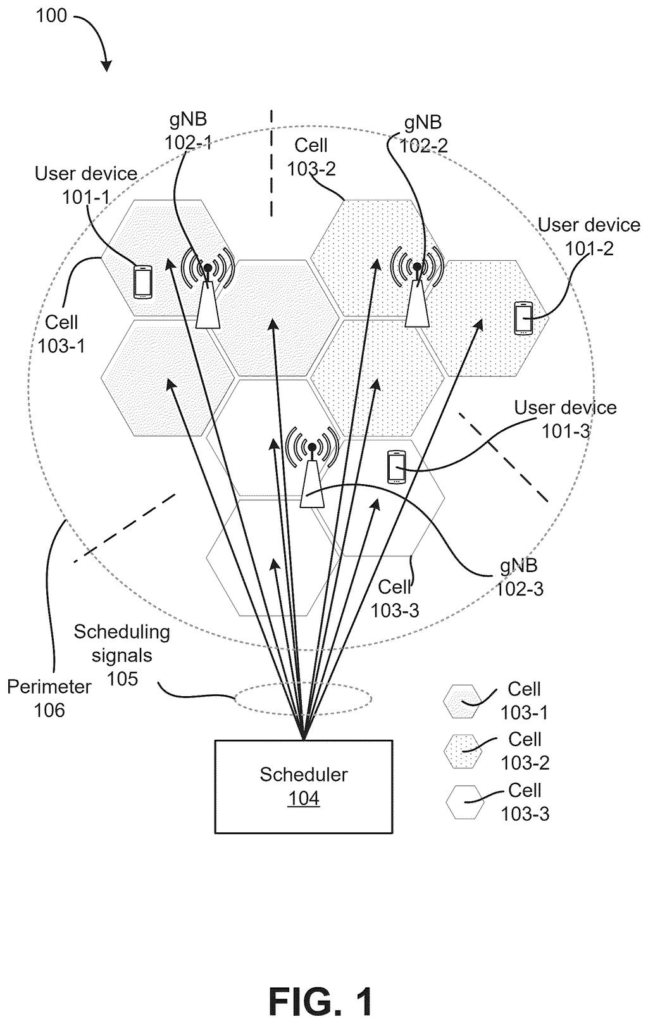
What Nvidia's AI radio-sharing system actually does
You're on a video call in a busy city block, and your phone is in range of two different cell towers at once. When those towers aren't coordinating well, they step on each other's signals, and your call drops or your video freezes.
Nvidia's patent describes a system where an AI watches how much those towers are interfering with each other and then decides, in real time, how to divide up the available computing and radio resources between them. The goal is to keep each tower working efficiently without letting one degrade the others nearby.
This isn't a consumer gadget; it's infrastructure-level plumbing. The AI lives inside the network itself, making adjustments that carriers would otherwise have to configure by hand, or not at all.
use one or more graphics processing units (GPUs) to determine interference between two or more wireless communication network radio access network (RAN) cells based, at least in part, on information of links between one or more user devices and two or more base stations …
Translation: Nvidia uses graphics chips to calculate signal crowding between nearby cell towers.
How the AI weighs interference between 5G cells
The patent covers a system that allocates compute resources (processing power inside the cellular network) across multiple 5G RAN cells (Radio Access Network cells, the software-defined base stations that handle your connection). The allocation decisions are driven by measurements of interference between those cells.
In modern 5G networks, especially those built on open, software-defined hardware, the radio processing stack runs on general-purpose servers. That means compute can, in theory, be shifted around dynamically, the way a data center reallocates virtual machines. This patent describes using AI circuits to do exactly that: sense which cells are fighting over the same frequencies, then redistribute processing capacity to compensate.
The specific technical hook is the interference-awareness. Rather than assigning resources based on a fixed schedule or simple load metrics, the AI factors in how much one cell's transmissions are bleeding into neighboring cells' coverage areas. That's a harder problem, because interference is dynamic and depends on physical conditions.
- AI monitors inter-cell interference in real time
- Compute resources are shifted across two or more 5G cells based on that data
- The system targets the network layer, not individual devices
… cause one or more compute resources to be allocated to two or more fifth-generation (5G) radio access network (RAN) cells based, at least in part, on interference between the two or more 5G RAN cells.
Translation: The system then distributes processing power based on how much those cell towers interfere with each other.
What this means for 5G network performance
For most people, this patent shows up as fewer dropped calls and more consistent speeds in dense areas like stadiums, transit hubs, or busy street corners, places where multiple towers overlap and currently negotiate resources with limited intelligence.
For carriers, the appeal is operational. Hand-tuning cell tower configurations is expensive and slow. An AI that adjusts resource allocation automatically, and does it based on real interference conditions rather than guesswork, could reduce the engineering overhead of running a dense 5G network. Nvidia's track record in AI-for-wireless patents suggests this fits a longer push into the telecom infrastructure market, where the company is competing against established networking vendors.
Nvidia's 527th filing in our Nvidia coverage since May adds to a run that includes a fix for multi-chip GPU crosstalk and early circuit congestion detection.
The design trades specificity for generality. By centering the whole system on interference as the key input signal, Nvidia is betting that interference is the most important variable to optimize around. That's a reasonable bet in dense urban deployments, but in rural or suburban networks where interference is low and raw coverage is the binding constraint, this approach buys you very little.
There's also a practical gap between the patent's claims and deployment reality. The system requires compute to be allocatable across cells dynamically, which assumes a software-defined, cloud-ran architecture. Legacy networks can't do this at all, and even modern open-RAN deployments vary widely in how flexible their compute layers actually are.
The bigger question is whether interference-aware allocation, applied at the compute layer, is the right place to solve this problem. Interference coordination in 5G already happens at the radio protocol level through existing 3GPP standards. Nvidia's patent carves out a role for AI in the compute scheduling layer on top of that, which is a real gap, but a narrow one. Worth watching if you're a carrier evaluating open-RAN vendors; easy to ignore if you're not.
There are more where this came from
We read every patent application Big Tech publishes and send you the ones worth knowing. Plain English, free, every week.
The drawings
60 drawing sheets from US 2026/0303303 A1 · click any drawing to enlarge


Want this weekly breakdown for a company we don't cover? Patentlyze Pro →
Be the first to weigh in