
IBM Files Patent for AI Math Acceleration Through Analog Electrical Pulse Signals
Most AI chips do math the digital way, flipping billions of ones and zeroes millions of times per second. IBM's new patent describes a different approach: let electricity itself do the multiplication, inside a physical grid of resistors.
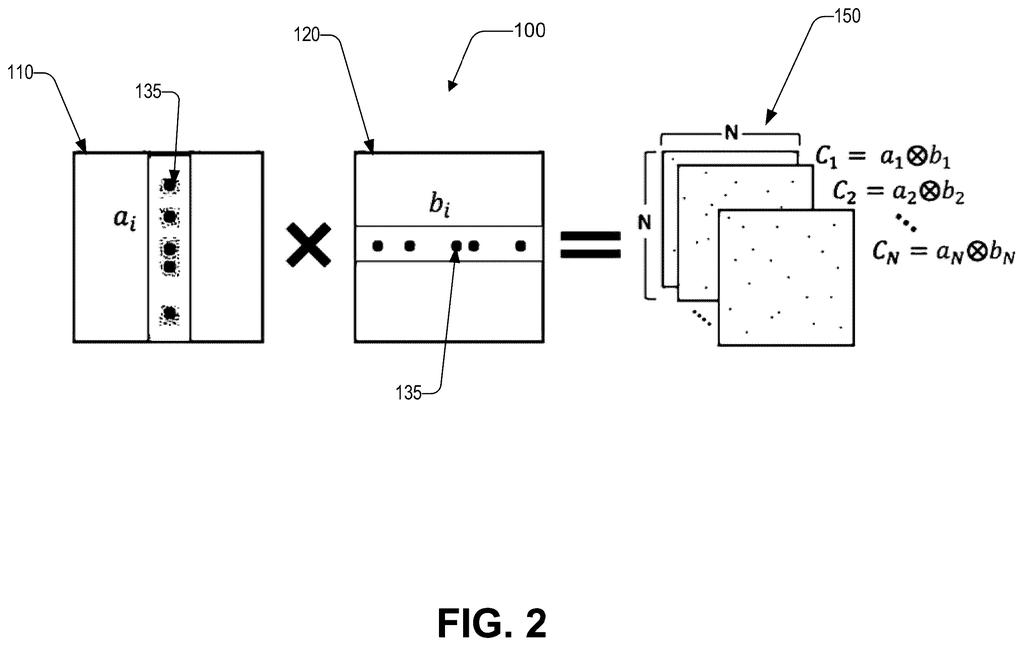
What IBM's analog pulse-based AI chip actually does
Imagine a city power grid where two signals traveling along different wires meet at an intersection. IBM's patent uses that same idea inside a chip. It sends electrical pulses along rows and columns of a grid, and when two pulses happen to arrive at the same intersection at the same time, the chip reads the electrical result of that collision as a calculation. No traditional math circuits required.
The grid is made of resistive devices (tiny components that control how much electricity flows) and capacitors (components that store a small charge). Those capacitors hold the running tally of calculations in progress, which means the chip can keep accumulating partial results without needing to write everything to memory after each step.
This matters because the most common operation in AI is called matrix multiplication, which is essentially a massive flood of multiply-and-add steps. Digital chips do that in logic gates. IBM's design proposes doing it in the physics of the circuit itself, which could be considerably more energy-efficient.
A compute device architecture includes an array of resistive devices equipped with capacitors holding a charge that stores intermediate results. The array includes signal rows and signal columns that meet at intersections.
Translation: The system uses a grid of specialized circuits to hold and process temporary data values.
How pulse coincidences replace digital multiplication
The patent describes a chip made of a grid of resistive devices (components whose electrical resistance encodes a value) with capacitors at each intersection that accumulate charge over time.
Two banks of signal generators fire stochastic pulse signals (random-timed electrical pulses whose average rate encodes a number) along rows and columns of the grid. When a row pulse and a column pulse arrive at the same intersection at the same time, that coincidence is detected and the resulting voltage or resistance is measured. The magnitude of that result encodes the product of the two numbers those pulses represent.
A controller module orchestrates the entire process:
- Triggers both sets of signal generators to fire across rows and columns
- Watches for coincidence events at intersections
- Reads the voltage or resistance produced at each coincidence
- Accumulates those readings into an output matrix
The stochastic (randomized) timing is intentional. By letting pulses fire randomly rather than on a fixed clock, the system can represent a wide range of values and naturally average out noise over many pulses, a technique borrowed from stochastic computing (a method where probability encodes numbers instead of binary digits).
… detect one or more coincidences of pulse signals at intersections of the plurality of signal rows and the plurality of signal columns; measure a resultant voltage or resistance at each of the one or more coincidences of pulse signals; …
Translation: It finds where electrical pulses cross in the grid and measures the resulting electrical properties.
What this means for the cost and power of AI computing
AI workloads are dominated by matrix multiplications, the arithmetic engine behind every neural network layer. Digital chips handle this well but at high power cost, because each multiplication requires many logic gate operations. An analog approach, where the physics of resistors and capacitors perform the arithmetic directly, can in principle slash both the energy used and the silicon area required.
IBM has been one of the most active researchers in analog AI acceleration, including its work on phase-change memory and resistive RAM for in-memory computing. This patent extends that line of thinking with a specific stochastic-pulse scheme for full matrix-matrix (not just matrix-vector) multiplication, which is a harder problem to solve in analog hardware and one that matters for training AI models, not just running them.
This is a serious research patent, not a product filing. IBM Research has long published peer-reviewed work on analog AI accelerators, and this filing looks like a formalization of that work. The stochastic pulse coincidence scheme is a real technical idea with genuine efficiency potential, but analog computing for AI remains pre-commercial, with noise and precision challenges that digital chips don't have. Worth tracking, not worth hype.
There are more where this came from
We read every patent application Big Tech publishes and send you the ones worth knowing. Plain English, free, every week.
The drawings
8 drawing sheets from US 2026/0229302 A1 · click any drawing to enlarge


Want this weekly breakdown for a company we don't cover? Patentlyze Pro →
Be the first to weigh in