
Patent: AI That Cross-Checks Itself Catches Fake Images More Reliably
IBM has filed a patent for a system that runs two independent AI checks on any image, one that reads the picture's description, one that compares it to freshly generated lookalikes, and combines both verdicts into a single real-or-fake answer.
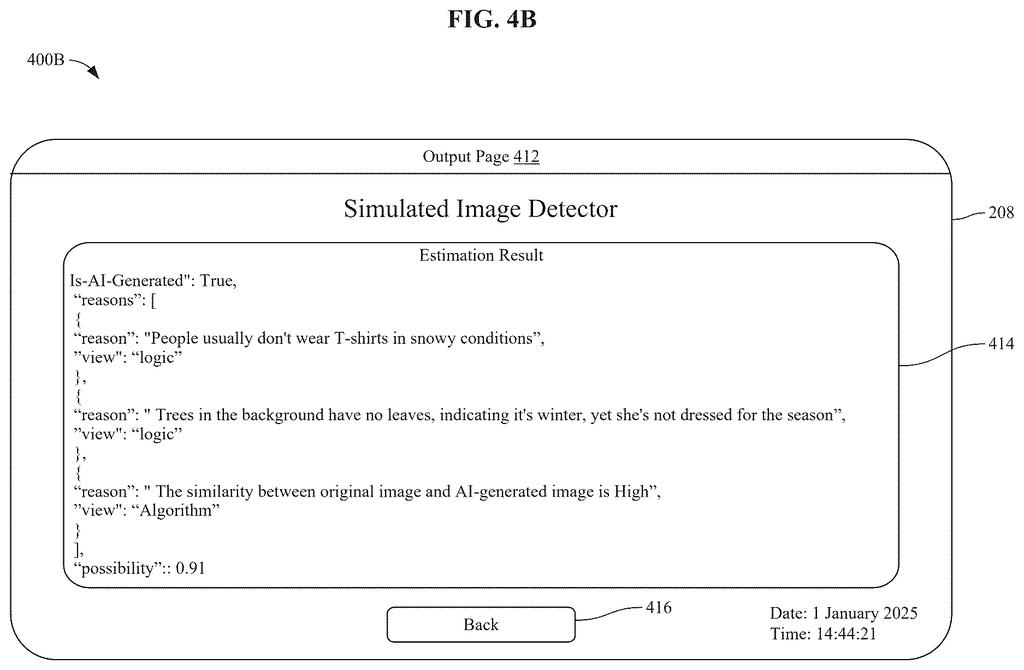
How IBM's fake-image detector works in plain English
Imagine you receive a photo and need to know if it was taken by a camera or generated by an AI tool like Midjourney or DALL-E. Your eye might catch something "off," but that gut feeling doesn't scale to millions of images a day.
IBM's approach runs two separate checks. First, it generates a written description of the image and asks an AI to judge whether that description makes sense for something real (flagging odd details, impossible lighting, or anatomical errors). Second, it uses an AI image model to create a small batch of similar images from that same description, then measures how closely the original matches those freshly generated versions. A real photo would look distinctly different from AI-generated versions of the same scene; a fake image might look suspiciously similar.
The system blends both scores into a final verdict: real or simulated. The idea is that two independent signals are harder to fool than one alone.
… generating, by the computer, second result data based on an average similarity score associated with a comparison of the input image with each image in the generated set of images …
Translation: The system compares the original image to a freshly generated set of pictures to score their likeness.
Inside IBM's two-stage image authenticity pipeline
The patent describes a two-path detection pipeline. Here's how it breaks down:
- Summary generation: The system creates descriptive metadata ("summary data") for the input image, essentially a structured caption or feature description that captures the scene's content and key attributes.
- Path 1, Reasoning check: A model reads that summary and produces "first result data", a set of reasons for or against the image being realistic. This is closer to a logical consistency audit: does the described scene match what a real photograph could contain?
- Path 2, Similarity check: A separate machine learning model takes both the summary and the original image, then generates a set of comparison images from the same description. The system scores how similar the original is to each generated image and averages those scores into "second result data." The intuition here is that a synthetic image will cluster closely to AI-generated variants, while an authentic photograph will be a clear outlier.
- Fusion: The two result sets are combined into "final result data" that classifies the image as real or simulated.
The patent does not specify the exact model architectures, but the approach is model-agnostic enough to work with any combination of vision-language models and image generation systems.
The first result data includes a first set of reasons associated with validation of a representational accuracy of the input image.
Translation: The software compiles a specific list of explanations regarding whether the picture accurately represents reality.
What this means for AI-generated content detection
As AI image generators get better, single-signal detectors are becoming easier to fool. A system trained only on pixel artifacts, for example, can be beaten by tuning the generator. IBM's two-path approach makes that harder: an attacker would need to simultaneously beat both the semantic reasoning check and the visual similarity test.
For enterprise customers, think insurance companies validating claim photos, news organizations vetting submitted images, or legal teams handling digital evidence, a more reliable fake-image detector is genuinely useful. IBM has a long history of selling this kind of trust-and-verification tooling to large institutions, so the commercial target for this patent is fairly obvious.
This is a solid, practical piece of engineering rather than a flashy AI showcase. The two-path fusion idea is well-established in detection research, and IBM is essentially patenting a specific pipeline design, not a new foundational technique. That said, the approach is more attack-resistant than single-signal detectors, which makes it worth watching for enterprise deployments where reliability matters more than novelty.
There are more where this came from
We read every patent application Big Tech publishes and send you the ones worth knowing. Plain English, free, every week.
The drawings
12 drawing sheets from US 2026/0229012 A1 · click any drawing to enlarge


Want this weekly breakdown for a company we don't cover? Patentlyze Pro →
Be the first to weigh in