
Samsung Patents 5G Sidelink System for Drone-to-Controller Identification
Drones need a reliable, two-way communication channel with their controllers — and Samsung is filing patents to define exactly how that pipe gets set up over 5G and 6G sidelink connections. The details are dry, but the infrastructure implications for commercial drone fleets are real.
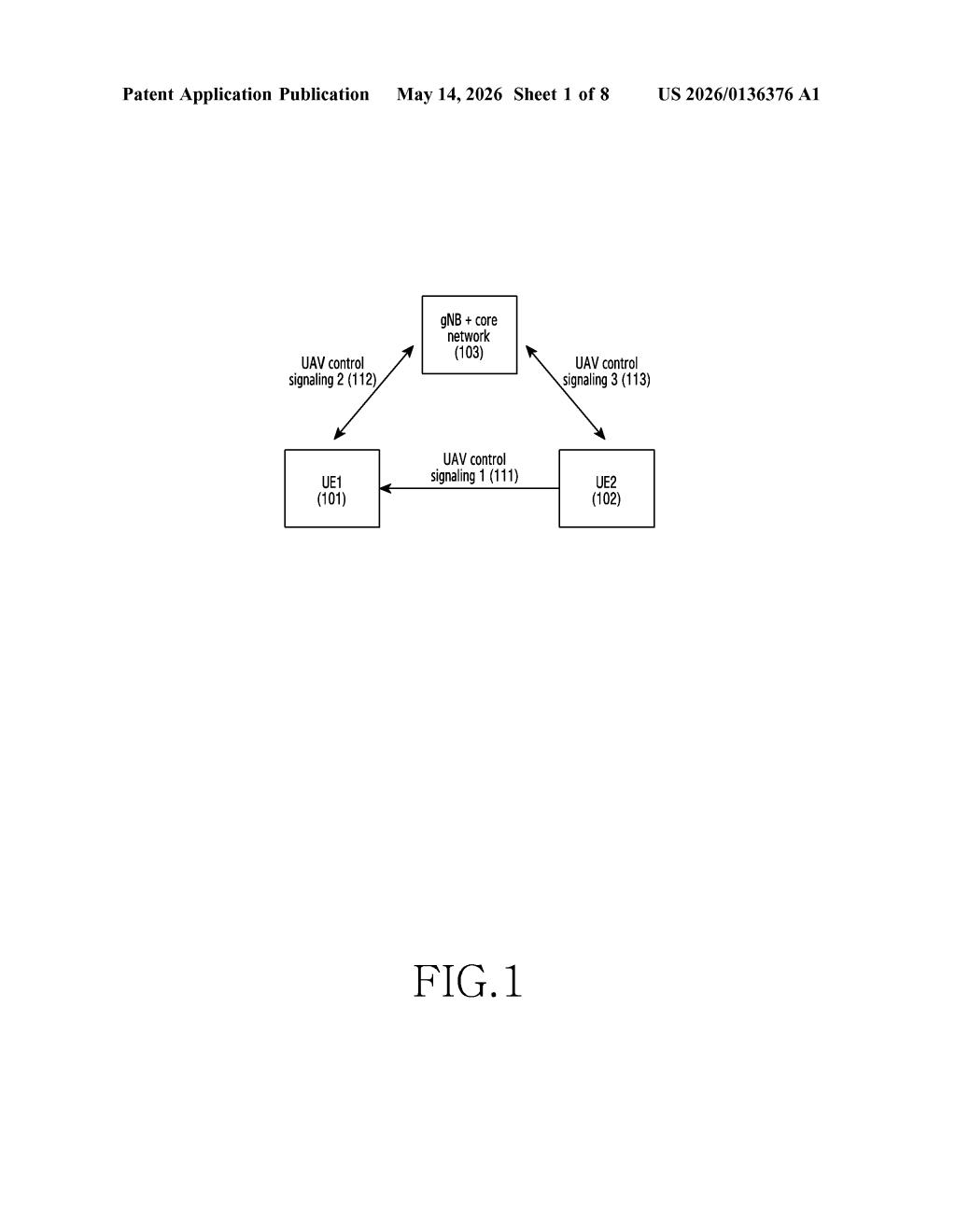
What Samsung's drone radio bearer setup actually does
Imagine you're flying a drone and your controller needs to constantly send commands to the drone — and the drone needs to send status updates back to you. That two-way conversation has to be reliable, fast, and correctly prioritized. This patent describes how to set that up over a 5G or 6G wireless link.
Samsung's approach defines a method for a user device (think: a drone controller or the drone itself) to configure a "radio bearer" — essentially a dedicated logical pipe — for all that back-and-forth drone control traffic. Depending on how the traffic is classified or how urgent it is, the system can either use one shared pipe for everything or set up separate pipes for different types of messages.
The connection between controller and drone uses something called a sidelink — a direct device-to-device channel that doesn't have to bounce through a cell tower. That keeps latency low and the connection resilient, which matters a lot when you're trying to avoid a flyaway.
How sidelink bearer config handles UAV control QoS
The patent describes a protocol-layer method for configuring radio bearers (dedicated logical channels within a 5G/6G radio connection) specifically for UAV control information exchanged between two user equipment (UE) nodes — for example, a ground controller and an airborne drone.
The key mechanism is sidelink communication (direct UE-to-UE radio links that bypass the base station), over which one device acquires bearer configuration information — essentially instructions on how to set up the channel. Using that configuration, the device then establishes the radio bearer(s) for bidirectional UAV control traffic.
The patent offers two configuration strategies:
- Single shared bearer: one radio bearer handles both uplink control commands and downlink status/identification signals.
- Multiple bearers: separate bearers are created based on the cast type (unicast vs. groupcast vs. broadcast) or the QoS profile (Quality of Service — basically how time-sensitive or error-sensitive each message type is).
A notable sub-feature is the handling of remote UE identification — the system supports signaling flows that let one UE request and receive identification information from another, which is important for regulatory drone ID requirements (e.g., Remote ID mandates from aviation authorities like the FAA).
What this means for 5G-connected drone networks
Commercial and regulatory drone deployments increasingly require Remote ID — a broadcast identifier that lets authorities track who's flying what, where. Embedding that identification exchange natively into the 5G/6G radio bearer configuration means drones on cellular networks could satisfy those requirements without a separate radio module. That's a meaningful simplification for fleet operators.
For Samsung specifically, this positions the company in the standards-layer plumbing for 5G-connected UAV ecosystems — a space where Qualcomm, Ericsson, and Nokia are also staking claims. It won't show up in a product you buy, but it could shape how drone connectivity gets standardized in 3GPP releases targeting 6G, directly affecting what chipsets and base station software will support.
This is deep telecom standards work — the kind of patent that matters for 3GPP committee positioning, not consumer headlines. If you're tracking Samsung's push into 5G/6G infrastructure and drone ecosystem plays, it's worth a note. If you're not in that space, it's easy to skip.
There are more where this came from
We read every patent application Big Tech publishes and send you the ones worth knowing. Plain English, free, every week.
Want this weekly breakdown for a company we don't cover? Patentlyze Pro →