
Microsoft Patent Enables HTML Metadata to Power Customizable Browser-Based AI Chatbots
Every website chatbot you've ever used is probably running on a server somewhere, costing that company real money. Microsoft's latest patent describes a way to move that work directly into the browser, with the website just whispering instructions.
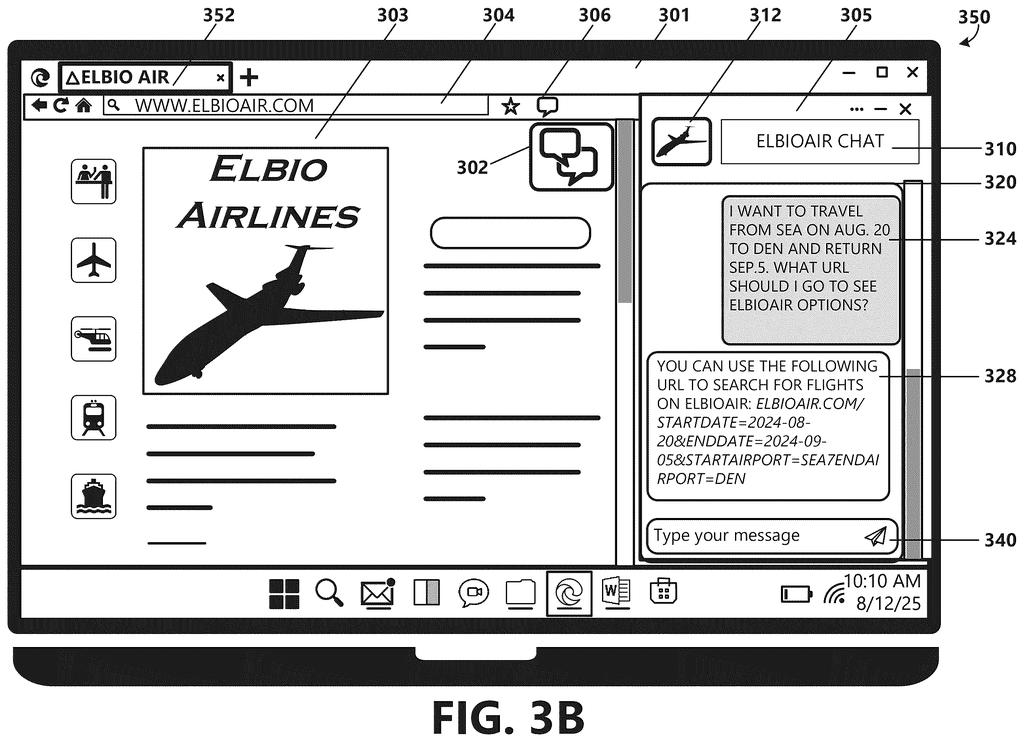
What Microsoft's browser-embedded chatbot system actually does
Imagine visiting a cooking website and a helpful chatbot pops up that knows only about recipes, not random unrelated topics. Right now, that kind of customized AI assistant requires the website to run its own AI server in the background, which is expensive and complicated to set up.
Microsoft's patent describes a much simpler approach: the website just bakes instructions into its normal webpage code, the same way it might specify colors or fonts. When your browser loads the page, it reads those instructions and automatically configures its own built-in AI chatbot to behave the way the website wants.
The result is that any website could have a customized AI assistant without owning or managing any AI infrastructure at all. The browser does the heavy lifting; the website just provides the personality.
… custom AI metadata is included in the data package for a web resource. The custom AI metadata is extracted and used to enable customized chatbot features. The web browser identifies the custom AI metadata and uses the metadata to configure a generative AI model that supports chatbot functionality within the web browser.
Translation: Websites can add special chatbot instructions right into their underlying code.
How custom AI metadata travels inside HTML to your browser
The patent centers on a concept called custom AI metadata, which is essentially a set of instructions tucked inside a webpage's HTML (the standard code that tells your browser what to display). When you load a page, your browser already reads dozens of metadata fields to understand things like the page title or language. This system adds a new category of metadata specifically for configuring an AI chatbot.
The browser extracts those instructions and uses them to configure a generative AI model running locally inside the browser (think of the AI as a built-in engine, not a remote service). The website's metadata might specify things like the chatbot's tone, what topics it should focus on, or how it should introduce itself.
- Website side: authors embed AI configuration instructions in their HTML, the same way they'd add a page description or favicon.
- Browser side: the browser parses those instructions, adjusts its built-in AI model accordingly, and activates the chatbot interface for that page.
- User side: you see a chatbot that feels tailored to that specific site, with no visible sign of all the plumbing underneath.
The key technical detail is that the AI model itself lives in the browser, not on the website's servers. The website only contributes configuration data, not compute power.
What this means for the future of website chatbots
For ordinary people browsing the web, this could mean more capable and more relevant chat assistants on everyday websites, without those sites needing deep AI expertise or big infrastructure budgets. A small online retailer or a local news site could offer the same kind of AI chatbot experience that today only well-funded companies can afford.
For Microsoft specifically, this fits neatly into the company's existing bet on browser-native AI through Edge. If the browser already contains a powerful AI model, convincing websites to configure it rather than build their own becomes a straightforward pitch. It also means Microsoft's browser could become a platform layer that sits between users and the web in a new way.
This is a genuinely interesting infrastructure idea that could lower the cost of AI-powered websites dramatically. The all-claims-canceled status on the first independent claim is a yellow flag worth watching, but the core concept, offloading chatbot compute to the browser while letting websites customize behavior through HTML metadata, is the kind of unglamorous plumbing that ends up mattering a lot if it ships.
There are more where this came from
We read every patent application Big Tech publishes and send you the ones worth knowing. Plain English, free, every week.
The drawings
7 drawing sheets from US 2026/0228287 A1 · click any drawing to enlarge


Want this weekly breakdown for a company we don't cover? Patentlyze Pro →
Be the first to weigh in