
Microsoft Patent Teaches AI Chatbots to Verify Facts Before Generating Responses
AI chatbots are famously bad at sticking to the facts. Microsoft's latest patent describes a pipeline where one AI figures out exactly what to look up, and a second AI uses only those results to write the answer.
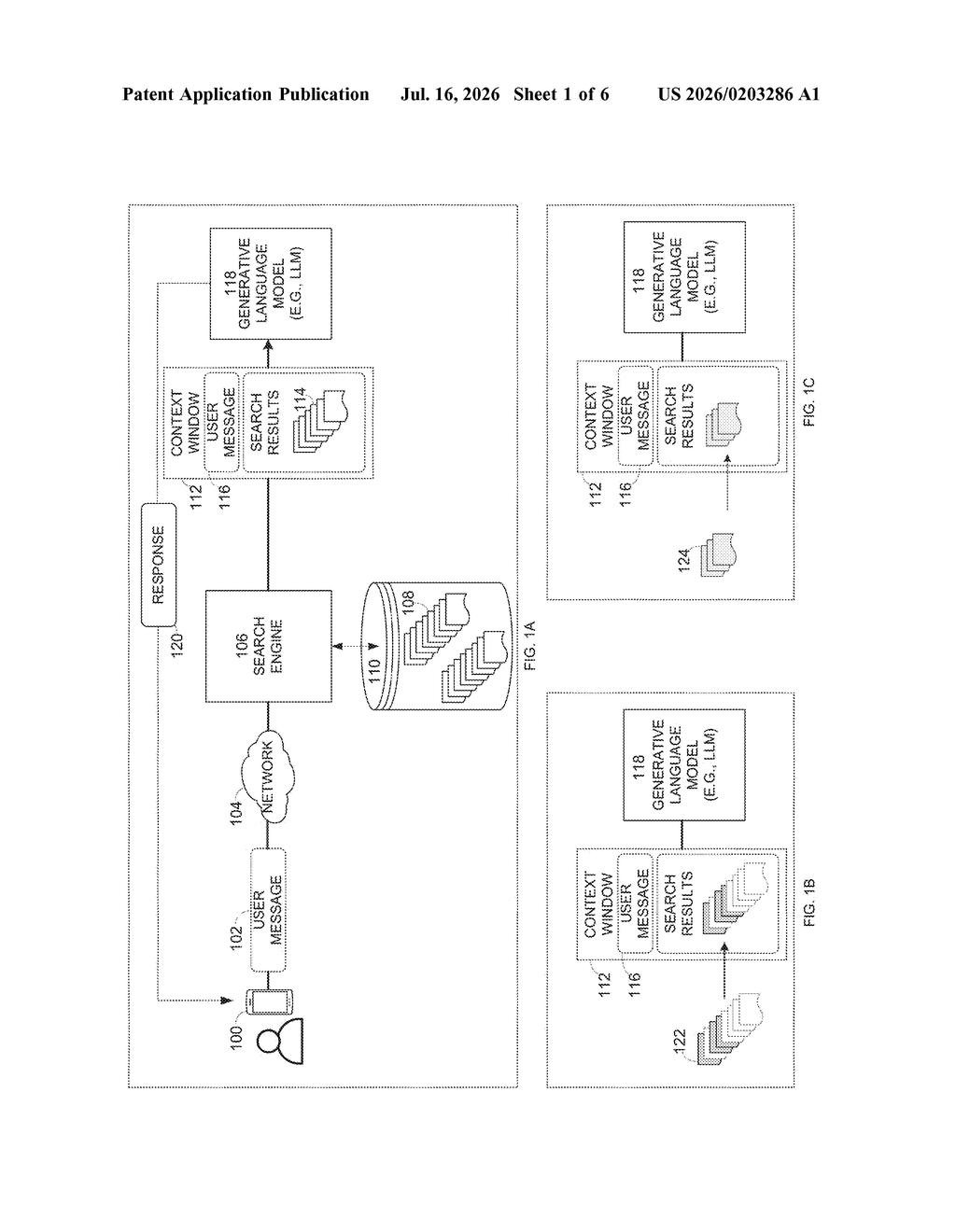
How Microsoft's two-model chatbot looks facts up first
Imagine asking a customer-service bot a question about your account, and instead of making something up, it first runs a precise search in the company's own database before it says a word. That's the idea behind this Microsoft patent.
The system uses two separate AI models working in sequence. The first one reads your question, checks the conversation history, and writes a specific database query to pull only the relevant facts. The second model then takes those facts and writes your actual answer. Nothing extra gets fed in, so the answer stays focused.
The practical payoff is that the chatbot doesn't have to guess or rely on whatever it memorized during training. It reaches into a live, structured source of truth. That makes responses more accurate and easier to verify.
How the query-builder and responder AIs split the work
The patent describes a retrieval-augmented generation (RAG) pipeline built around a knowledge graph (a structured database where facts are stored as named entities and the relationships between them, rather than plain rows and columns).
Here's the sequence:
- A user sends a chat message. The system feeds that message to a web search engine to identify the specific real-world entities (people, companies, products) the question is about.
- A first AI model receives the conversation history, those identified entities, and a knowledge graph schema (basically a map of what kinds of facts the database holds and how they connect). From all that, it writes a structured query targeting only the attributes actually needed.
- That query runs against the knowledge graph, returning a tight, targeted data set.
- A second AI model takes the retrieved data plus the original question and produces the final response.
The key design choice is keeping the two tasks separate. The first model specializes in knowing what to ask the database; the second specializes in writing a good answer. The knowledge graph schema gives the first model a clear vocabulary so it doesn't request too much or too little data.
What this means for AI answers you can actually trust
Most AI chatbots either hallucinate facts or drown in irrelevant context when they try to use external data. This patent's approach is designed to solve both problems at once: the schema-guided query step means only genuinely relevant facts reach the answer-writing model, and those facts come from a controlled, company-managed database rather than the open web.
For enterprise software, where Microsoft sells products like Copilot for Microsoft 365 and Azure AI services, accurate, auditable answers matter a lot. A sales rep asking a bot about a customer's contract history can't afford a hallucinated number. A system that fetches exactly the right graph nodes before answering is a meaningful step toward AI that businesses can actually rely on.
This is solid, practical AI infrastructure work. It won't make headlines the way a flashy consumer feature does, but the two-model split with schema-guided querying is a sensible answer to a real problem that enterprise AI deployments face every day. If Microsoft bakes this into Azure AI or Copilot products, it could move the needle on factual reliability in ways that matter more than a model's raw benchmark scores.
There are more where this came from
We read every patent application Big Tech publishes and send you the ones worth knowing. Plain English, free, every week.
Want this weekly breakdown for a company we don't cover? Patentlyze Pro →