
Microsoft Patents a Display Film That Absorbs Specific Colors on Demand
Your screen looks washed out in sunlight and bleeds light in a dark room. Microsoft is patenting a film that can selectively block specific colors of light to fix both problems at once.
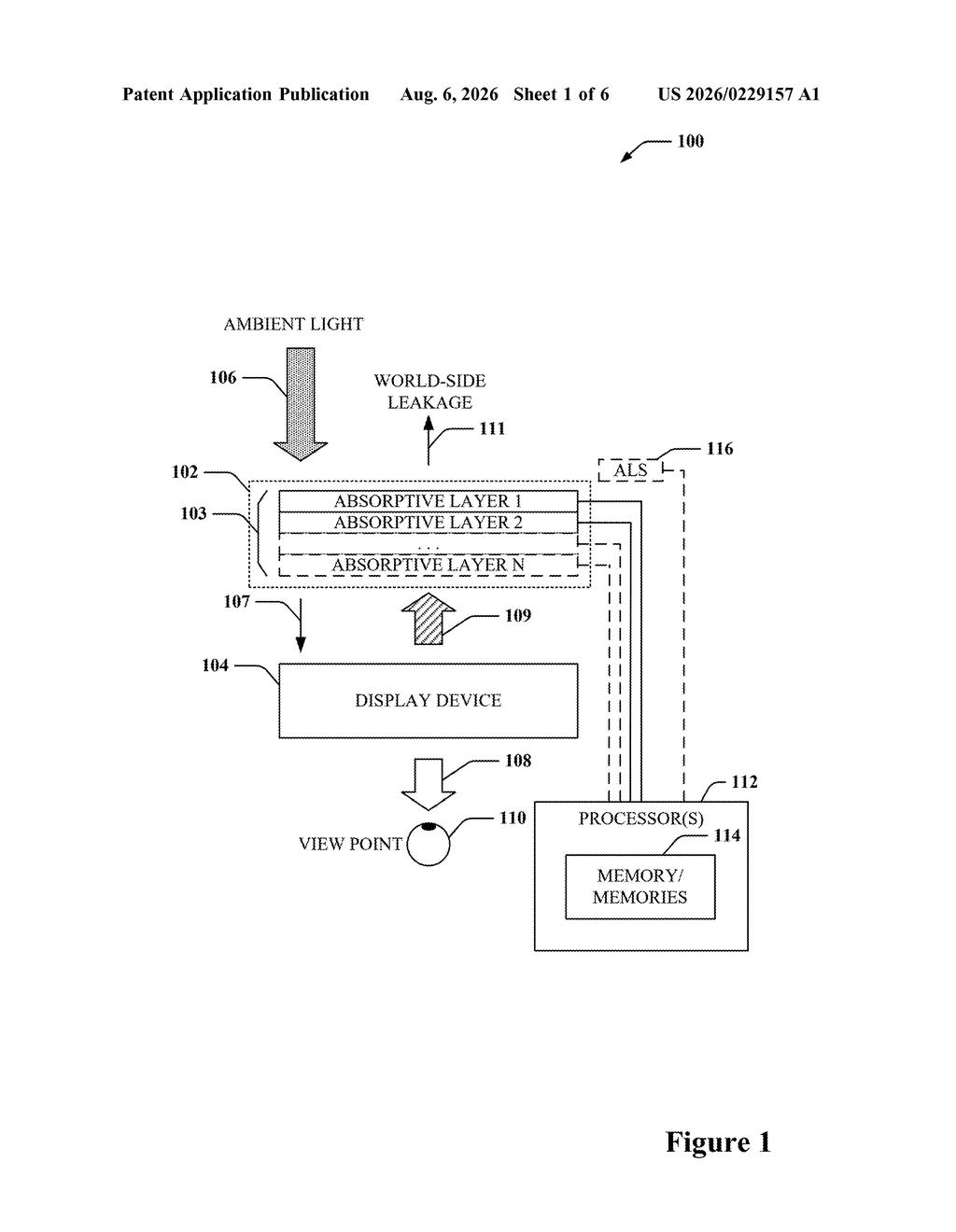
What Microsoft's color-absorbing display film actually does
Imagine watching a movie in a dark room while your TV backlight leaks a faint blue glow around the edges, or trying to read your laptop outside while the sun washes out the colors. Both problems come down to the wrong light ending up in the wrong place.
Microsoft's patent describes a thin film that sits over or inside a display and can dynamically change which colors it blocks. Instead of a fixed tint (like the polarizing layers already in most screens), this film can be told to absorb, say, more red or more blue at any given moment, depending on what the display is showing or where you're using it.
The idea is that the system gets a signal about which colors need to be absorbed, then adjusts the relevant layers in the film accordingly. That could mean richer blacks in a dark room by killing color bleed, or better outdoor visibility by cutting the wavelengths that sunlight overpowers most.
receive an indication of one or more colors for absorption by a chromatically adaptive film overlaid on, or situated within, the display device …
Translation: The system picks which specific colors the special screen film needs to soak up.
How the film switches which color layers block light
The patent describes a chromatically adaptive film (a layered optical coating that can change how much of each color of light it lets through) placed on top of or inside a display panel.
The film contains multiple color absorptive layers, each targeting a different part of the visible spectrum. A processor receives an instruction specifying which color or colors need to be absorbed at a given moment, then adjusts the light transmittance (how much light passes through) in the relevant layers independently.
The patent specifically calls out two use cases:
- Ambient light control: blocking outside light from passing through the display and muddying the image, a common problem outdoors or near windows
- Leakage light control: stopping light from inside the display from escaping around the image, which causes a glow effect in dark environments
Because the layers are individually adjustable, the system could theoretically fine-tune the film's behavior per frame or per scene, rather than using a single fixed filter for all conditions.
Based on the indication, light transmittance in one or more color absorptive layers of multiple color absorptive layers of the chromatically adaptive film can be modified.
Translation: It then adjusts specific layers inside the film to block those exact colors.
What this means for screen quality in tough lighting
Display manufacturers have spent decades layering fixed optical films into screens to improve contrast and color accuracy. The limitation is always that a fixed film is a compromise: what helps outdoors hurts indoors, and vice versa. A film that adjusts on the fly could let a single display perform well across radically different environments without the user touching a settings menu.
For Microsoft, this is particularly relevant to its Surface line and any future AR or mixed-reality hardware, where screen quality in varied lighting is a known weak point. If this film can be driven by the same signal that controls what's being displayed, color management becomes a real-time physical process, not just a software correction applied after the fact.
This is a genuinely interesting materials-and-display patent. Dynamic optical filtering at the layer level is the kind of low-level fix that software brightness and color-calibration settings can never fully replicate. Whether Microsoft ships this in a consumer device or licenses it into the broader display supply chain, the underlying idea addresses a real and persistent problem.
There are more where this came from
We read every patent application Big Tech publishes and send you the ones worth knowing. Plain English, free, every week.
The drawings
6 drawing sheets from US 2026/0229157 A1 · click any drawing to enlarge


Want this weekly breakdown for a company we don't cover? Patentlyze Pro →
Be the first to weigh in