
Sony Patents a Strap That Keeps Body-Worn Sensors Firmly in Place
Sony is patenting a simple but specific wearable strap design, one built to hold a pressure-sensing device firmly against your skin. It's a small mechanical idea with a clear purpose: keeping a sensor exactly where it needs to be.
What Sony's pressure-sensing strap actually does
Imagine strapping a small sensor to your finger or wrist and having it slide out of place the moment you move. That's the exact problem this patent is trying to fix.
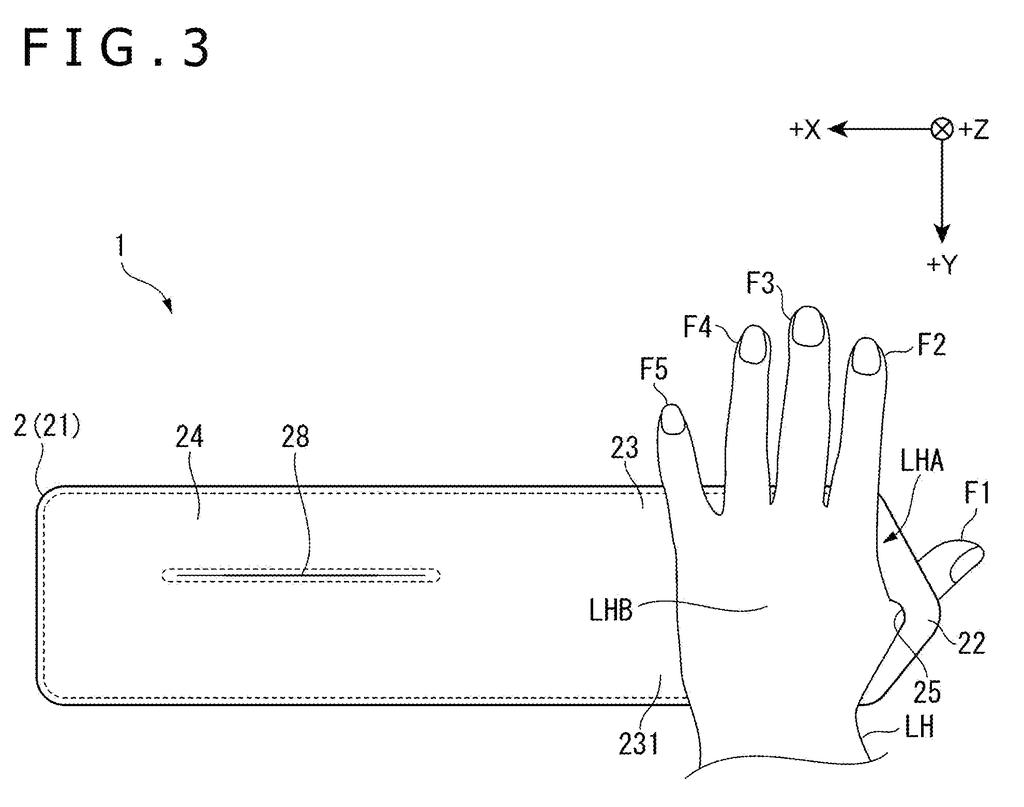
Sony's design describes a flexible strip, like a wristband or finger strap, with a hole at one end and a narrow slot cut along its length. A locking tab on one side of the strip folds over and grips the other side, holding the whole thing snugly in place without buckles or velcro.
The broader patent family it belongs to is called a "pressure sense presentation apparatus," which suggests this strap is meant to hold a device that either measures pressure on your body or delivers pressure sensations to it. Think haptic feedback or biometric sensing worn on your hand during gaming.
a strip that extends in a first direction and that has (i) a first surface, and (ii) a second surface on a side opposite to the first surface …
Translation: The strap has two flat sides facing away from each other.
How the strip, slit, and locking section fit together
The patent describes a wearable attachment strip with three functional parts working together to keep a sensor or haptic device secured to a body part like a finger or wrist.
- The strip: A flexible band with a defined front and back surface that runs along one direction.
- The through-hole: A hole punched at one end of the strip, likely used as an anchor point or for threading the band through a housing.
- The slit: A narrow cut running lengthwise along the strip, positioned between the hole and the rest of the band. This slit allows the strip to flex or thread through itself.
- The locking section: A tab or protrusion on one surface of the strip that folds over and presses against the opposite surface, effectively clamping the strap closed without external hardware.
Together, the design creates a low-profile, self-locking fastener. The slit lets the strip fold or pass through a gap, and the locking tab catches on the other side to prevent it from slipping. It's a purely mechanical solution, no electronics needed in the strap itself.
… a locking section that is provided to one surface of the first surface and the second surface, contacts the other surface of the first surface and the second surface, and locks the other surface …
Translation: A clasp fastens the strap by pressing against its opposite side.
What this means for Sony's wearable controller ambitions
Sony has been building out its controller and haptics ecosystem through PlayStation and its broader interactive entertainment work. A secure, adjustable strap for a body-worn pressure sensor fits squarely into that picture, whether for a future finger-tracking controller, a biometric game accessory, or a rehabilitation device that delivers tactile feedback.
On its own, this strap patent is a narrow mechanical filing. But paired with Sony's existing patents around pressure sensing and haptic feedback, it suggests the company is thinking carefully about how these devices physically attach to people, not just how they work electronically. Getting that fit right is often what separates a concept from a product someone will actually wear.
This is a small, practical patent covering a strap mechanism. It's not a headline product announcement, and on its own it tells you very little about what Sony is building. What it does confirm is that someone at Sony is working through the physical ergonomics of a body-worn sensing or haptic device, which is the unglamorous but necessary work that comes before any real product ships.
There are more where this came from
We read every patent application Big Tech publishes and send you the ones worth knowing. Plain English, free, every week.
The drawings
17 drawing sheets from US 2026/0224394 A1 · click any drawing to enlarge


Want this weekly breakdown for a company we don't cover? Patentlyze Pro →
Be the first to weigh in