
Qualcomm Patents a Way to Tell When a Driver Overrides an Autopilot System
When a car's autopilot wants to turn left but you grab the wheel and go straight, something has to notice that conflict. Qualcomm's new patent is a system specifically designed to catch that moment.
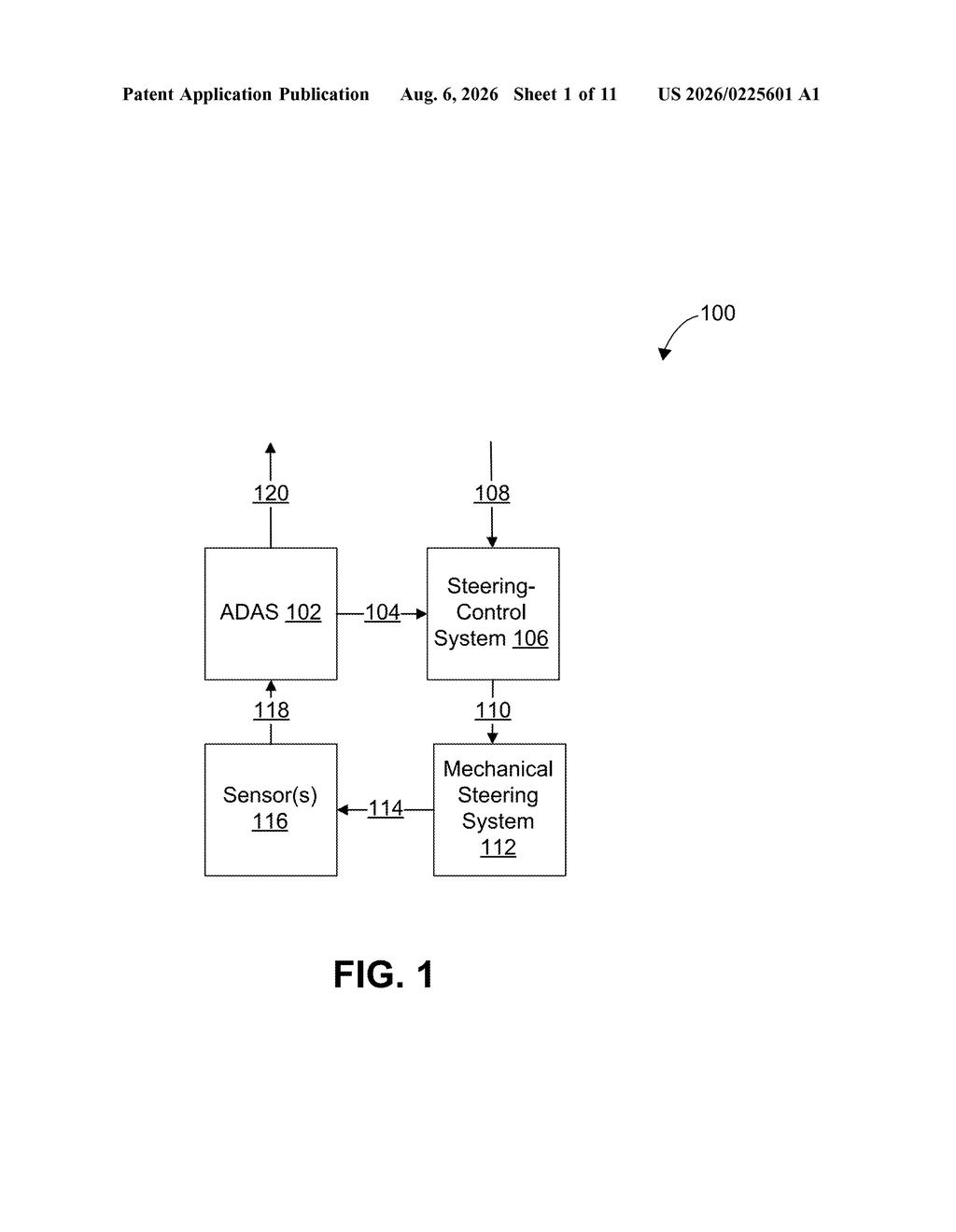
How Qualcomm's steering-conflict detector works
Imagine you're on the highway with your car's driver-assist system active. It's been steering for you, but you spot something and grab the wheel. The question is: does the car know you've taken over? Right now, many systems rely on torque sensors or cameras pointed at your hands. Qualcomm's approach is different.
This patent describes a method that compares two signals: what the car's autopilot told the steering system to do, and what the steering wheel actually did. If there's a big enough gap between those two numbers, the system concludes a human must be intervening and flags it accordingly.
That flag, called a "driver-is-interacting signal," can then be used by the rest of the car's software to decide how to respond, such as backing off the autopilot, logging the event, or alerting other systems. It's a simple idea, but detecting human override reliably is one of the trickier problems in assisted driving.
compare a steering output signal to a measured steering signal, wherein the steering output signal is generated by a driving system of a vehicle and output to a steering system of the vehicle, and wherein the measured steering signal is based on a steering angle of a vehicle; …
Translation: The car continuously checks what the computer wanted to do against what the steering wheel actually did.
How the system compares planned vs. Actual steering angle
The patent describes an apparatus, essentially a chip or processor module, that runs a continuous comparison loop while a vehicle is in an assisted-driving mode.
The two inputs being compared are:
- Steering output signal: the command the driving system sends to the steering actuator (what the car intends to do)
- Measured steering signal: the actual steering angle observed on the wheel (what the wheel is physically doing)
When those two values diverge by more than a set threshold, the system generates a driver-is-interacting signal. That threshold is important: small differences from road noise or minor mechanical play can be filtered out, while a genuine human override produces a gap large enough to cross it.
The generated signal doesn't steer the car itself; it's an output flag that other vehicle systems can act on. The patent focuses on the detection logic, leaving responses (like disengaging autopilot or logging the event) to downstream systems that consume that flag.
… based on a difference between the measured steering signal and the steering output signal exceeding a threshold, generating a driver-is-interacting signal for indicating that a driver is interacting with one or more controls of the vehicle.
Translation: If the two signals disagree past a certain point, the system decides the human driver has just taken over.
What this means for assisted-driving safety handoffs
Detecting when a human takes over from an automated system is a foundational safety requirement for any assisted-driving product. Regulatory frameworks in the US, EU, and elsewhere are increasingly requiring that vehicles correctly identify driver engagement, and a missed handoff, where the car doesn't realize a human is steering, can create dangerous conflicts between human and machine inputs.
Qualcomm supplies silicon and software stacks to automakers and Tier-1 suppliers, so a patent like this likely targets its Snapdragon Ride automotive platform. If this detection method is baked into their chipsets, it becomes part of the standard toolkit any carmaker using Qualcomm hardware gets out of the box, which is a significant position to hold in the assisted-driving supply chain.
This isn't a flashy autopilot patent, it's plumbing. But plumbing in assisted driving is where real safety lives. The comparison-based approach Qualcomm describes is elegant in its simplicity: no camera, no torque sensor, just math on two signals already present in the system. Whether it's novel enough to survive a prior-art challenge is a separate question, but as a building block for safer handoffs, it's the kind of unglamorous work that actually matters.
There are more where this came from
We read every patent application Big Tech publishes and send you the ones worth knowing. Plain English, free, every week.
The drawings
11 drawing sheets from US 2026/0225601 A1 · click any drawing to enlarge


Want this weekly breakdown for a company we don't cover? Patentlyze Pro →
Be the first to weigh in