
Nvidia Patents a Way to Reconstruct Broken Lane Lines for Self-Driving Cars
Faded paint, shadows, and partial obstructions make lane markings one of the trickier problems for self-driving cars. Nvidia's latest patent describes a system that doesn't need a perfect, continuous line to know where the lane is.
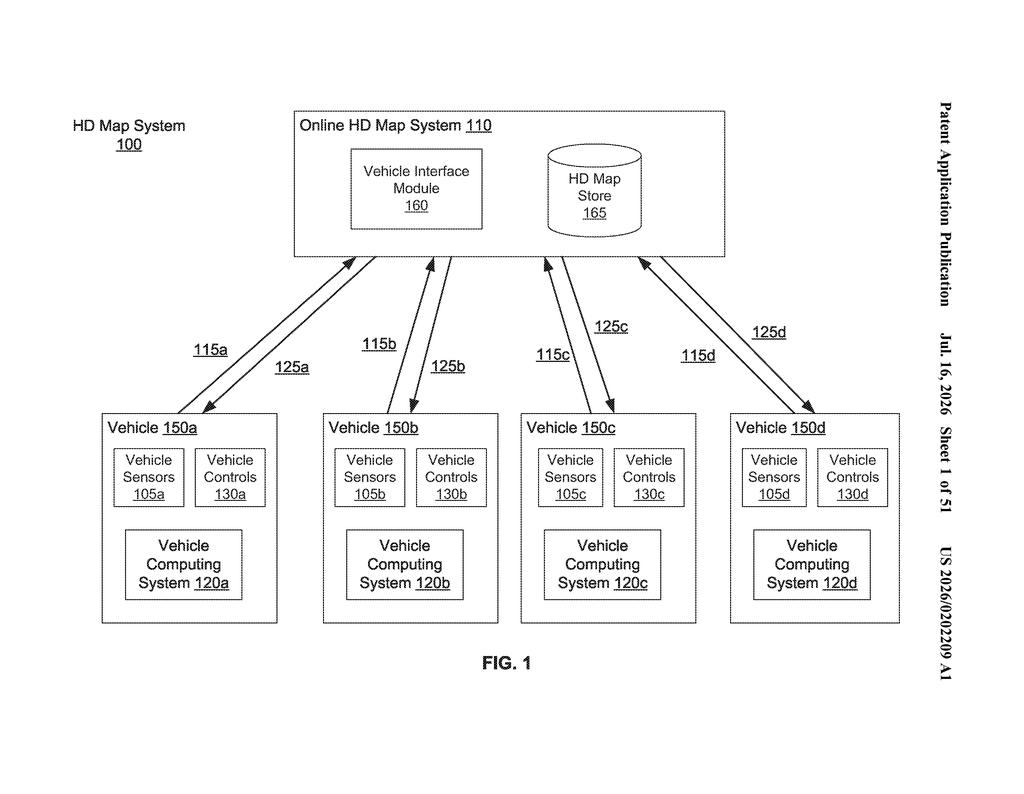
How Nvidia's lane-stitching system guides autonomous vehicles
Imagine driving on a road where half the lane markings have worn away. You can still figure out where the lane is because your brain fills in the gaps. Nvidia's new patent teaches a computer to do something similar for autonomous vehicles.
The system picks up scattered pieces of lane markings from cameras, LIDAR, or radar, figures out the central spine running through each piece, and then connects those spines into a single continuous lane line. The car then uses that reconstructed line to decide how to steer, brake, or change lanes.
This is the kind of behind-the-scenes work that keeps a self-driving car from drifting when the road markings aren't cooperative. It's not flashy, but it's exactly the sort of problem that separates a demo-ready car from one that handles real-world roads.
How the system rebuilds full lane lines from scattered segments
Lane line identification is a core perception task for any self-driving system, but real roads rarely offer clean, unbroken markings. This patent describes a pipeline that breaks the problem into manageable steps.
First, the system uses sensor data (cameras, LIDAR, or RADAR) to detect individual lane line segments, the small, discrete patches of marking it can actually see. Rather than trying to match those patches to a full lane immediately, it finds the center line of each segment, essentially the spine running along its length.
Once it has center lines for multiple segments, it stitches them together to reconstruct a complete lane line. That reconstructed line is then fed into the vehicle's control system, informing steering, speed, and navigation decisions.
The system runs on a combination of CPUs, GPUs, and hardware accelerators (purpose-built chips for specific tasks), and can operate on the vehicle itself or in the cloud. It's designed to work with autonomous and semi-autonomous vehicles alike.
What better lane detection means for self-driving reliability
Self-driving systems are only as good as their understanding of the road ahead, and lane detection has long been a weak point in messy real-world conditions. A system that can reliably reconstruct broken or partially visible lane markings could reduce the number of edge cases that cause autonomous vehicles to hesitate or hand control back to a human driver.
For Nvidia, which supplies the computing hardware and software platforms that power many autonomous vehicle programs, this kind of perception patent also reinforces its position as a full-stack player, not just a chip vendor. If this approach makes it into Nvidia's DRIVE platform, it could improve the safety record of any vehicle running on Nvidia silicon.
This is foundational perception work, not a headline feature. Lane reconstruction from fragmented segments is a known hard problem in autonomous driving, and a cleaner algorithmic approach to it is genuinely useful. That said, the patent describes a fairly conventional pipeline; the real value will show up in whether Nvidia's implementation outperforms what competitors are already doing in production.
There are more where this came from
We read every patent application Big Tech publishes and send you the ones worth knowing. Plain English, free, every week.
Want this weekly breakdown for a company we don't cover? Patentlyze Pro →
Be the first to weigh in