
Samsung Patents a Speaker That Tunes Itself by Listening Through Multiple Microphones
Most speakers sound different in every room, and most people never bother to fix that. Samsung is filing patents for a system that does the room correction for you, using whatever microphone-equipped devices you already own.
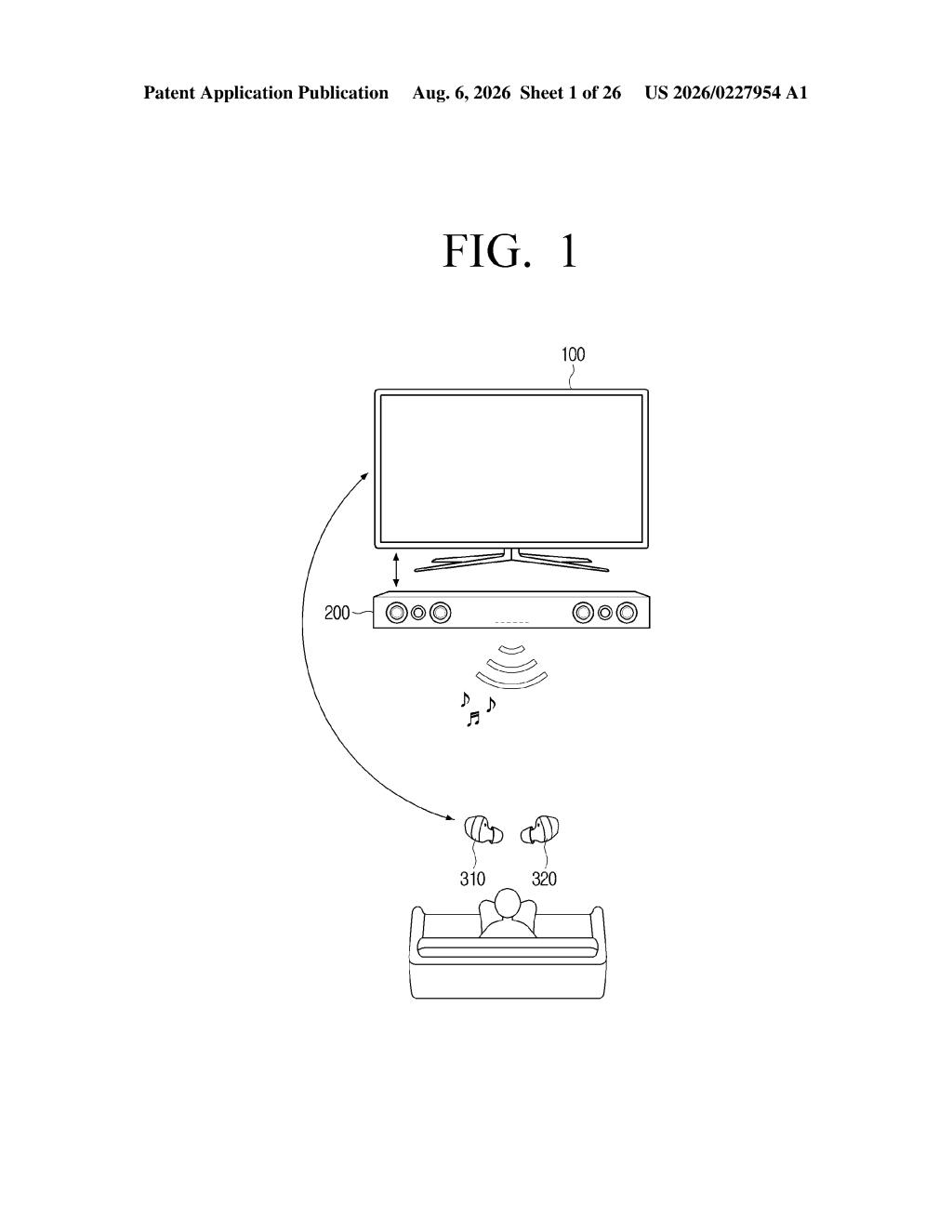
What Samsung's automatic speaker calibration actually does
Imagine you just set up a new soundbar or speaker in your living room. The sound is okay, but it doesn't account for your room's shape, furniture, or where you actually sit. Normally, fixing that requires a calibration microphone and some technical know-how. Samsung's patent describes a system that handles this automatically.
Here's how it would work for you: a central device (think a phone or a smart home hub) plays a test tone through your speaker. Two other devices nearby, like your phone in one corner and a tablet across the room, each record how that test tone actually sounds in your space. The hub then compares those two recordings and adjusts the speaker's settings to produce better audio.
The system even starts with a smart first guess, using the history of your past audio settings before a single measurement is taken. It's essentially a two-pass process: a rough tune based on what worked before, then a precision tune based on what the microphones heard in your actual room.
… transmit, to the audio output device, the first audio setting information and information related to a first target audio signal for testing; …
Translation: The device sends a test sound to the speaker using previous settings.
How the multi-mic measurement and tuning loop works
The patent describes an electronic apparatus (a central hub or controller) that coordinates a multi-device audio calibration loop. Here's the sequence:
- The hub pulls first audio setting information from stored history, essentially an educated starting point based on previous calibration sessions.
- It sends those preliminary settings to an audio output device (a speaker or soundbar) along with a test tone to play.
- Two separate external devices, each with a microphone, independently record how that test tone sounds in the room. These could be smartphones, smart speakers, or any mic-equipped device.
- The hub collects both recordings, compares them, and calculates second audio setting information, a refined set of EQ or tuning parameters.
- Those refined settings are then sent back to the speaker, which plays a second, corrected audio signal for the user.
The use of two microphones at potentially different positions is key. A single mic only captures the sound at one point in the room; two mics give the system a more complete picture of how the speaker is filling the space, allowing for corrections that account for directionality and room reflection.
… obtaining second setting information based on the information on the first measurement and the information on the second measurement; …
Translation: It calculates better audio settings using recordings from both remote microphones.
What this means for Samsung's audio devices
Room correction audio technology already exists in high-end AV receivers, but it typically requires a dedicated calibration microphone that ships in the box. Samsung's approach would let any two microphone-bearing devices in the home do the job, which dramatically lowers the barrier to actually using the feature.
Samsung makes a wide range of products that could fit into this ecosystem: Galaxy phones, Galaxy tablets, smart TVs, and its own soundbars. If this patent reflects real product direction, it could mean future Samsung audio products calibrate themselves using devices already in your home, with no extra hardware required.
This is a practical idea that solves a real problem most people don't know they have. Automatic speaker calibration is one of those features that audiophiles swear by but average buyers ignore because setup is annoying. Using existing devices as microphones is a genuinely sensible workaround, and Samsung has the device ecosystem to actually pull it off.
There are more where this came from
We read every patent application Big Tech publishes and send you the ones worth knowing. Plain English, free, every week.
The drawings
26 drawing sheets from US 2026/0227954 A1 · click any drawing to enlarge


Want this weekly breakdown for a company we don't cover? Patentlyze Pro →
Be the first to weigh in