
Samsung Patent Targets Noise Cancellation Tailored to Individual Ear Canal Shapes
Every ear canal is shaped differently, and that physical quirk affects how well noise-canceling headphones actually work for you. Samsung's new patent tries to fix that by measuring your ear's unique acoustic properties in real time.
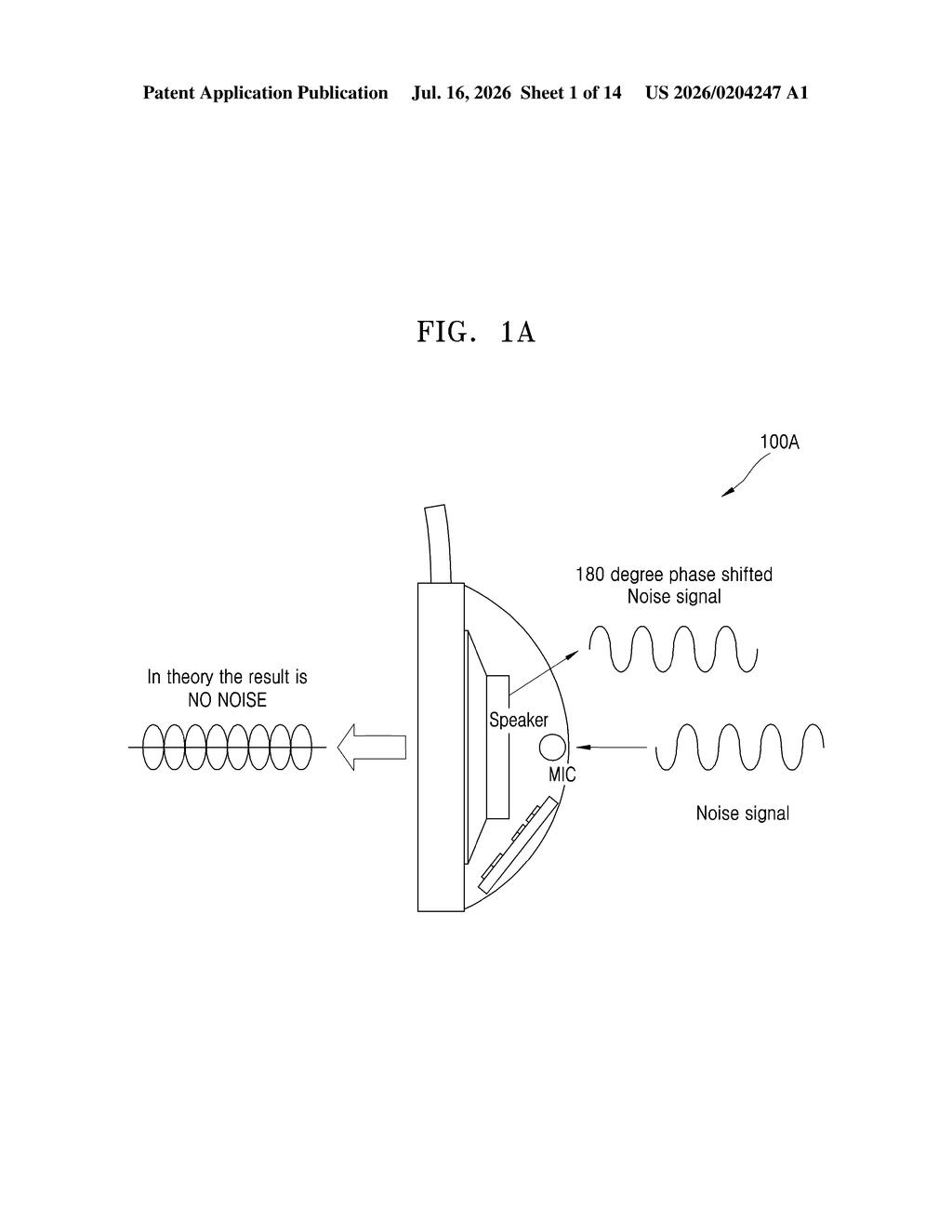
How Samsung's ear-fitting noise cancellation actually works
Imagine you buy a pair of noise-canceling earbuds and they work brilliantly for your friend but only so-so for you. That's not your imagination. The shape of your ear canal changes how sound behaves inside it, and most earbuds use a one-size-fits-all approach to blocking outside noise.
Samsung's patent describes a system that figures out the shape of your ear canal while you're wearing the earbuds, then uses that information to generate a more precise canceling signal. Two microphones do the heavy lifting: one faces outward to hear the surrounding world, and one faces inward to hear what's actually reaching your eardrum.
By comparing what those two microphones pick up, the earbuds can estimate how well the physical seal is working, what's leaking through, and what your ear is doing to the sound internally. The anti-noise signal is then custom-built around those measurements rather than a generic template.
How the system estimates your ear canal and builds an anti-noise signal
The system uses two microphones per earbud. The outer microphone captures ambient audio, the noise coming from the environment around you. The inner microphone captures a feedback audio signal, what's actually present inside the ear canal after the earbud is seated.
From there, the system estimates an "leaked signal" (sound that slipped past the physical seal of the earbud into your ear canal) by comparing the two microphone inputs. It also breaks the ambient audio into sub-bands (narrow slices of the frequency spectrum, like separating bass rumble from mid-range voices from high-pitched hiss) and identifies which noise sources are dominant in each band.
Using all of that data together, the system estimates ear canal parameters specific to the current user. Think of these as a rough acoustic fingerprint of your ear: how sound bounces around, how much leaks in, how the canal's shape colors the sound.
- Outer mic captures environmental noise
- Inner mic captures what reaches the eardrum
- System estimates how much sound leaked past the seal
- Anti-noise signal is generated based on the user's ear-canal measurements
The final anti-noise signal is tuned to those parameters, meaning the canceling sound is shaped to counteract noise as it will actually arrive at your eardrum, not a generic average.
What this means for the next generation of Galaxy Buds
Standard ANC in earbuds applies a fixed or mildly adaptive anti-noise signal. If your ear canal is unusually shaped, if the earbud fit is loose, or if you move your jaw while chewing, the cancellation can degrade noticeably. Samsung's approach tries to continuously account for those variables rather than ignoring them.
For consumers, this could mean noise cancellation that holds up better across different users and different wearing conditions without requiring a manual fit-test ritual. If Samsung implements this in a future Galaxy Buds model, it would be a direct challenge to the personalized ANC tuning that some competitors currently offer through separate app-based calibration steps.
This is a real engineering problem worth solving: ANC performance varies far more between users than most people realize, and the ear canal is the main reason why. Samsung's approach of measuring the ear acoustically in real time, rather than doing a one-time calibration, is a sensible direction. Whether it translates into audibly better buds depends entirely on execution, but the underlying logic is sound.
There are more where this came from
We read every patent application Big Tech publishes and send you the ones worth knowing. Plain English, free, every week.
Want this weekly breakdown for a company we don't cover? Patentlyze Pro →