
Intel Patents Automatic Wi-Fi Setup for Connected Home and Industrial Devices
Every smart sensor, thermostat, or industrial gadget that joins a new Wi-Fi network today usually requires someone to type in credentials or poke at a configuration app. Intel's new patent describes a way to skip all of that.
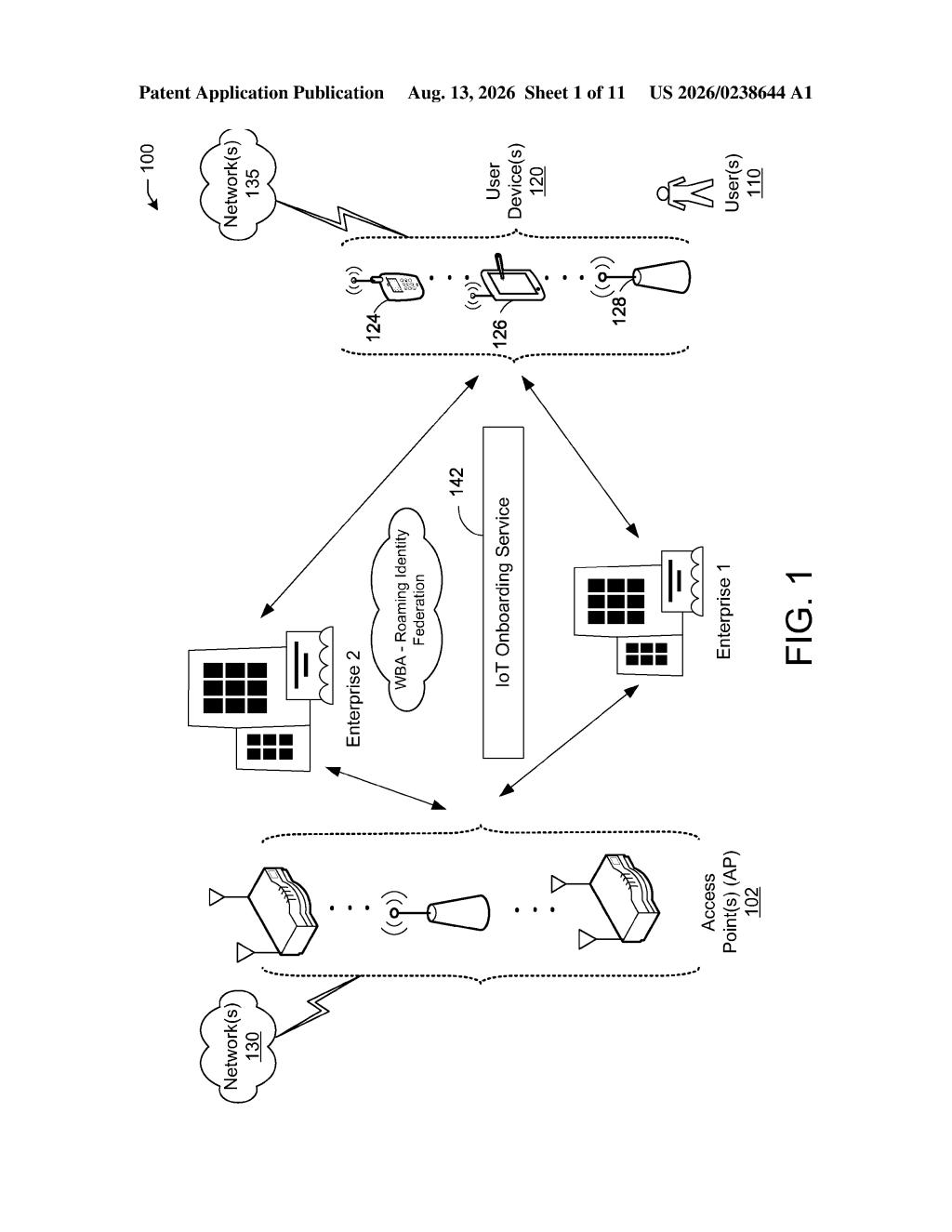
How Intel wants your smart devices to log themselves in
You're an IT manager dropping fifty new temperature sensors into a warehouse, and every single one of them needs to be individually connected to the local Wi-Fi before it can do anything useful. That manual process is slow, error-prone, and scales terribly.
Intel's patent describes a system where each device arrives pre-loaded with a standardized credential called an IoT provisioning profile. When the device powers on near a compatible access point, it spots a broadcast signal from that network, hands over its profile automatically, and gets verified and admitted without anyone typing a password.
The key ingredient is something called OpenRoaming, a framework originally designed to let your phone hop between trusted Wi-Fi hotspots the way it hops between cell towers. Intel wants to apply that same idea to the billions of small connected devices that factories, hospitals, and cities are deploying, so the setup that today takes hours could eventually happen in seconds.
The device may identify an advertisement of openroaming framework received from an IoT deployment site access network. The device may initiate association and authentication with the IoT deployment site access network using information included in the IoT provisioning profile.
Translation: The device spots a local network signal and automatically logs in using its built in security profile.
How the OpenRoaming profile handles authentication
The patent describes a four-step process that turns network onboarding into something a device can handle on its own.
- Profile loading: The IoT device is initialized with an IoT provisioning profile before it ever reaches a deployment site. Think of this like a pre-installed SIM card for Wi-Fi credentials.
- Network discovery: Once on-site, the device listens for an advertisement broadcast by the local access point that signals OpenRoaming compatibility. OpenRoaming is a Wi-Fi Alliance standard that lets devices roam between participating networks using pre-negotiated trust agreements, similar to how a hotel guest's phone automatically connects to a partner airline lounge's Wi-Fi.
- Association and authentication: The device uses its provisioning profile to begin association with the access point, then runs EAP (Extensible Authentication Protocol, a widely used challenge-and-response system that verifies identity without transmitting a raw password) over that connection.
- Access confirmation: The network returns a "network access granted" message, and the device is live.
The whole flow is designed to work without a human touching a keyboard. The device and the network recognize each other through pre-established trust anchors rather than site-specific credentials, which is what makes the approach scalable across large numbers of devices.
What this means for large-scale IoT deployments
For anyone buying or managing connected devices at scale, manual Wi-Fi setup is one of those invisible taxes that never shows up in a product brochure but consumes real time and introduces real errors. A sensor misconfigured on day one may report bad data for months before anyone notices. Intel's approach, if it reaches products, moves that failure point earlier in the supply chain, where it's easier to catch and fix.
The broader context is that Wi-Fi authentication standards like OpenRoaming were built with phones and laptops in mind, and the IoT industry has been borrowing and adapting them awkwardly ever since. Intel's filing is one of many interesting tech patents pushing IoT networking toward the kind of automated credential management that cellular networks have offered for years.
The average person will never see this technology directly. They'll feel the absence of the problem it solves: a building full of sensors that report accurate data from day one, or a hospital ward where new monitoring equipment connects without an IT ticket. The filing addresses a specific, well-documented pain point in large-scale IoT deployment, and the OpenRoaming angle is sensible because that infrastructure already exists in many enterprise and public venues. Whether Intel ships this itself or licenses the approach to device makers, the immediate beneficiary is the facility manager who stops filing connection tickets.
There are more where this came from
We read every patent application Big Tech publishes and send you the ones worth knowing. Plain English, free, every week.
The drawings
11 drawing sheets from US 2026/0238644 A1 · click any drawing to enlarge


Want this weekly breakdown for a company we don't cover? Patentlyze Pro →
Be the first to weigh in