
Nvidia Patents an AI That Cuts Out Objects in Images Without Being Told What They Are
Teaching a computer to recognize exactly which pixels belong to a car, a dog, or a traffic cone normally requires thousands of hours of hand-drawn labels. Nvidia's new patent describes a system that can generate those precise outlines automatically, from just a photo and a rough box drawn around the object.
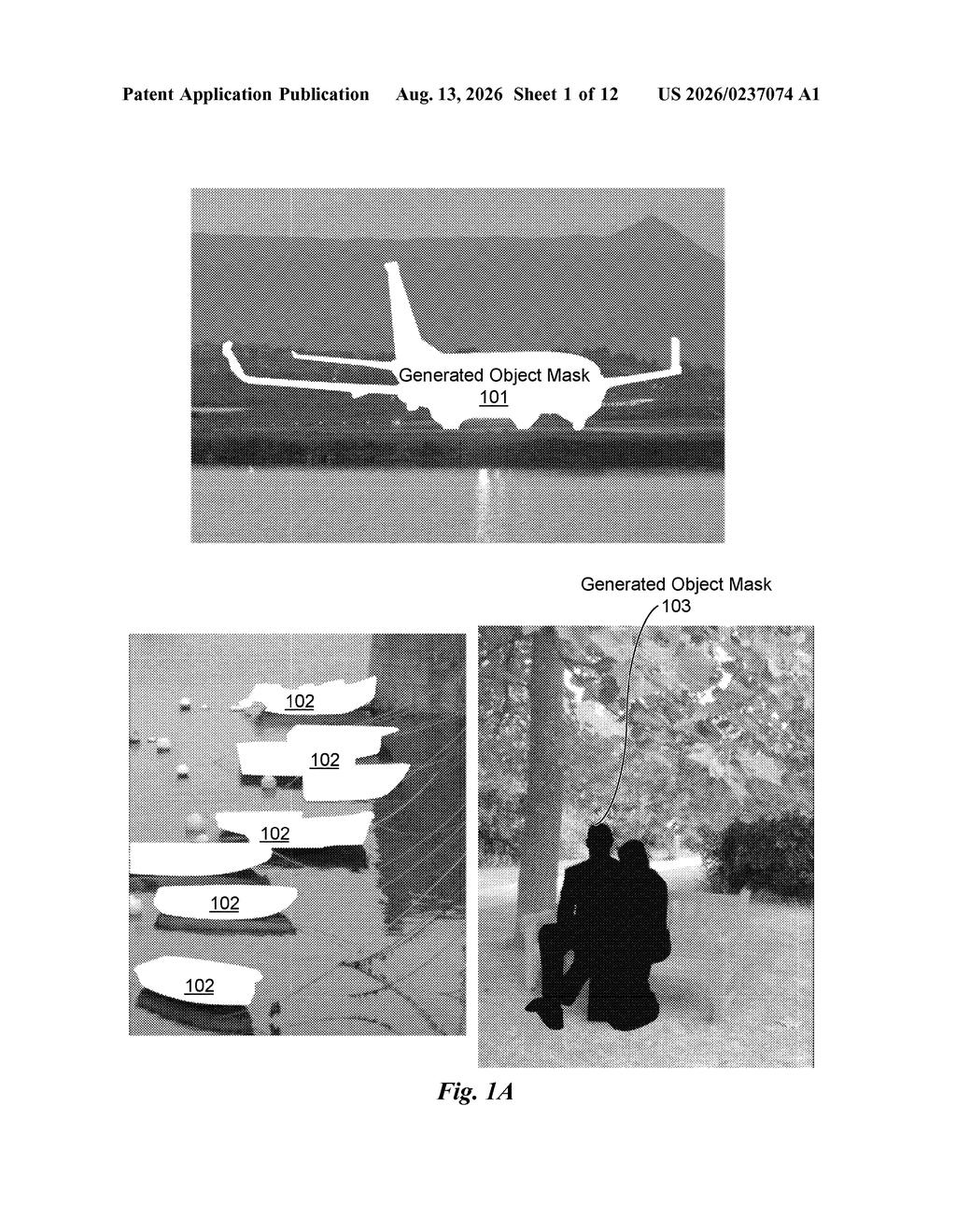
How Nvidia's object-masking AI skips the hard labeling work
Today, training an AI to recognize objects at the pixel level requires someone to manually trace around every single object in thousands of images. That process is slow, costly, and a genuine bottleneck for companies building AI that needs to "see" the world, like self-driving cars or warehouse robots.
Nvidia's patent describes a system that skips most of that hand labor. You give it a photo and a simple rectangle drawn around an object, and it automatically fills in the exact outline of that object down to individual pixels. The clever part: the system doesn't need to know what the object is. It works on any object, whether that's a pedestrian, a traffic cone, or something it has never seen before.
The result is a tool that can automatically build the large labeled datasets that AI systems need to learn from, without requiring a room full of people carefully tracing every shape by hand.
… generating a first random value associated with a first dimension of the cropped image region and a second random value associated with a second dimension of the cropped image region; expanding the cropped image region to provide an expanded image region including at least one row of pixels or at least one column of pixels that exclude the object …
Translation: The system randomly adds extra rows or columns of background pixels around an object to help the AI learn what to ignore.
How the vision transformer turns a bounding box into a pixel mask
The patent describes an auto-labeling framework built around a vision transformer (a type of neural network that processes images in chunks, the way a language model processes words). The system takes a cropped portion of an image containing some object and produces a binary mask, meaning a pixel-by-pixel map that marks exactly which pixels are "object" and which are "background."
The key step is deliberate randomness. Before the neural network does its work, the system expands the cropped image region by adding extra rows or columns of pixels along the edges. Those extra pixels are chosen randomly in size, and they contain only background, no object. This gives the network a clear contrast to work with: here is pure background, and here is the object you need to outline.
Once the expanded image goes into the neural network, the model predicts which pixels belong to the object and outputs the finished mask. That mask, combined with the original image and any object label, can then be used to train other AI models for instance segmentation (the task of identifying and outlining every individual object in a scene).
Critically, the system is class agnostic, meaning it makes no assumption about what category of object it is masking. It can outline a shoe, a stop sign, or an unfamiliar piece of industrial equipment using the same process.
Class agnostic object mask generation uses a vision transformer-based auto-labeling framework requiring only images and object bounding boxes to generate object (segmentation) masks.
Translation: The AI can outline objects in photos without needing to know what the objects are, using only simple boxes drawn around them.
What this means for training self-driving and robotics AI
For anyone building AI that needs to understand the physical world, like systems in autonomous vehicles, drones, or factory robots, the availability of high-quality labeled training data is often the limiting factor. Generating precise pixel-level masks by hand is one of the most time-consuming parts of that process. A system that automates it from bounding boxes, which are far cheaper and faster to produce, could meaningfully accelerate how quickly these AI systems get trained and improved.
The class agnostic design is the part that stretches the usefulness furthest. Because the system doesn't need to know what it's masking, it can handle objects that no one thought to label in advance, which matters for autonomous vehicles that need to handle unexpected objects in the road. Nvidia's computer vision filings show up regularly among the plain-English patent summaries that track where machine perception research is heading across the industry.
If you rely on a self-driving or robotics AI to keep you safe, the quality of its training data is directly connected to how reliably it identifies things around it. Automating the pixel-mask step removes one of the biggest cost and time barriers between a rough prototype and a model that can handle real-world variety. The class-agnostic angle matters most here: a system trained on masks nobody pre-defined has a better chance at the unexpected thing in the road than one limited to objects someone thought to hand-label years earlier.
There are more where this came from
We read every patent application Big Tech publishes and send you the ones worth knowing. Plain English, free, every week.
The drawings
12 drawing sheets from US 2026/0237074 A1 · click any drawing to enlarge


Want this weekly breakdown for a company we don't cover? Patentlyze Pro →
Be the first to weigh in