
Sony Patents a Drone Arm That Locks Itself Open Automatically
Folding drone arms are a well-worn idea, but they have a quiet failure point: you have to remember to lock them before you fly. Sony's new patent removes that step entirely by making the lock automatic.
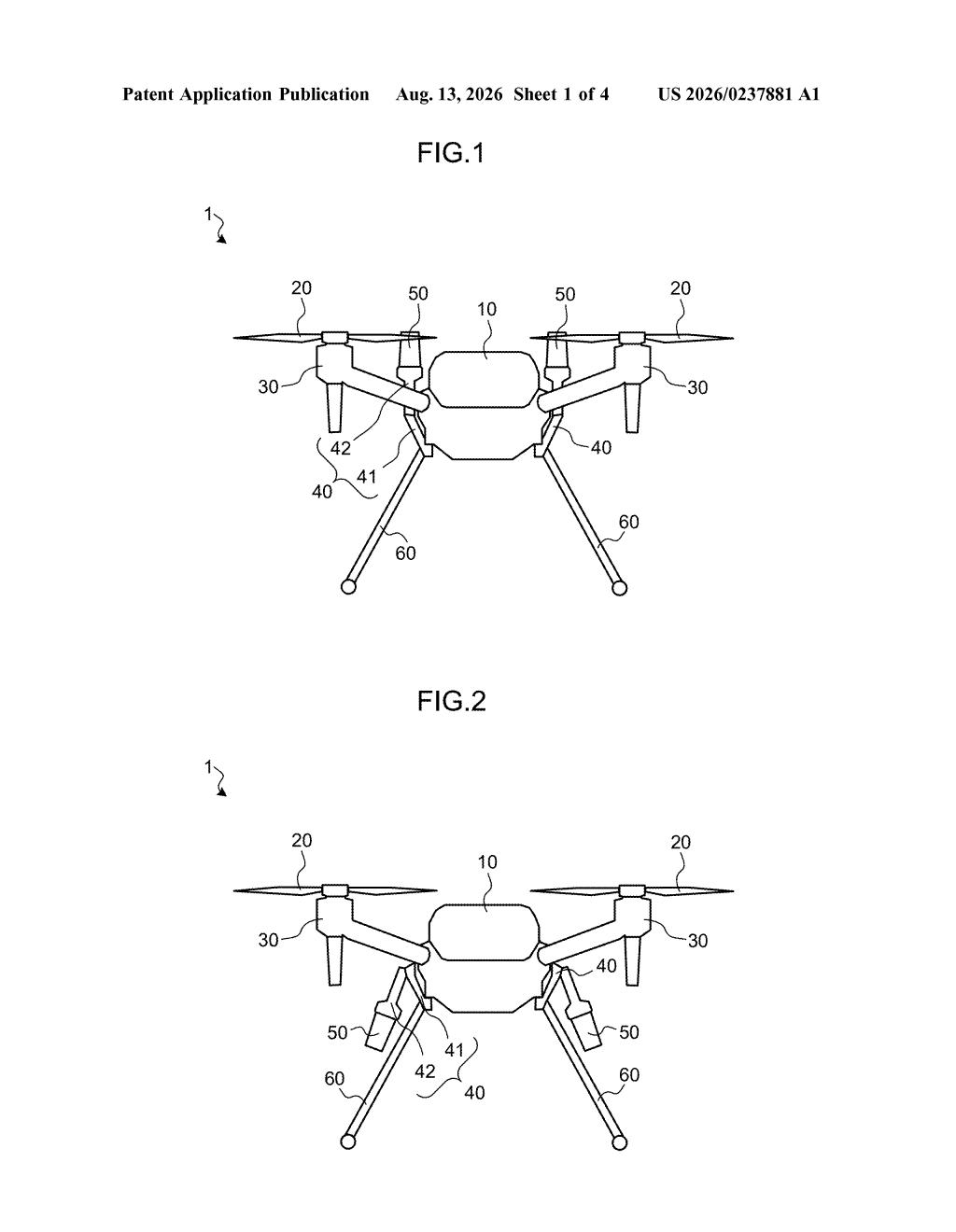
What Sony's self-locking folding drone arm actually does
Ever fumbled with a folding drone arm and wondered if it was actually locked? That moment of doubt before a flight is exactly what this patent is designed to eliminate.
Sony is filing for a drone design where the arms, the parts that extend outward to hold the propellers, fold flat for storage and then snap into a locked position on their own the moment you unfold them. You don't press a button or flip a latch. The mechanism does it for you as soon as the arm reaches its open position.
The idea is simple but meaningful: a drone with arms that can accidentally fold mid-flight is a drone that falls out of the sky. By making the lock automatic, Sony is trying to take one potential failure point off the table entirely.
… an arm that extends from the body, wherein the arm is foldable from a use state to a storage state, and is automatically locked in the use state when transitioning to the use state.
Translation: The drone arm can fold down for travel and clicks into a locked position by itself when you open it up for flight.
How the arm snaps into its locked use position
The patent covers a flight vehicle (the legal term used, but read: drone or multirotor aircraft) built around four core components: a body, rotary blades (propellers), a drive mechanism (motors), and extendable arms.
The arms are designed to fold between two defined states:
- Storage state: arms folded inward or flat against the body, reducing the drone's footprint for carrying or stowing.
- Use state: arms extended outward, holding the propellers at the correct angle and spacing for stable flight.
The key innovation is in the transition between those two states. When an arm moves from folded to extended, an automatic locking mechanism engages without any action from the user. The arm does not need to be manually latched, clicked, or checked. The patent does not specify the exact locking hardware (a spring-loaded pin, a cam, a detent, etc.), keeping the claim broad enough to cover multiple possible implementations.
The practical effect: once the arm reaches its fully open position, it is locked there. It cannot fold back accidentally during flight due to vibration, wind load, or handling.
A flight vehicle of the present disclosure includes a body, a rotary blade that floats the body, a drive mechanism that rotates the rotary blade, and an arm that extends from the body.
Translation: This patent describes a standard drone design that uses a motor to spin blades for lift and features a movable arm.
What this means for consumer and commercial drones
For anyone who has used a folding consumer drone like the DJI Mini or Air series, the manual fold-and-lock step is a familiar pre-flight ritual. Forgetting it, or not latching firmly enough, can mean a crash. An automatic lock removes that failure mode at the mechanical level rather than relying on pilot habit.
Claim 1 of this patent is written broadly: it covers any flight vehicle where a foldable arm automatically locks in the use state, regardless of how that locking is achieved. That breadth is a double-edged thing. A wide claim is harder to work around for competitors, but it also draws more scrutiny from patent examiners who will look for prior art in folding mechanisms across drones, cameras, and even furniture. Sony drone hardware filings sit alongside the latest Big Tech patents in robotics and aerial imaging, a field where mechanical reliability patents are increasingly part of the competitive foundation.
Claim 1 is deliberately broad: it doesn't specify the locking mechanism, the number of arms, the drone's size, or its application. That breadth is a strategic choice. If granted as written, it could cover a wide swath of folding-arm drone designs from any manufacturer, which makes this filing worth taking seriously even though the underlying concept is mechanically straightforward. The narrower the prior art examiners can find, the more territory Sony actually controls. Whether the claim survives examination in that form is the real question.
There are more where this came from
We read every patent application Big Tech publishes and send you the ones worth knowing. Plain English, free, every week.
The drawings
4 drawing sheets from US 2026/0237881 A1 · click any drawing to enlarge


Want this weekly breakdown for a company we don't cover? Patentlyze Pro →
Be the first to weigh in