
Microsoft Patents a Way to Make AI Chatbots Adapt to Different Groups of Users
Not everyone wants the same thing from an AI assistant, and Microsoft has filed a patent to make that gap disappear. The system automatically studies how different groups of people react to AI responses, figures out what each group actually prefers, and then bakes those preferences into the model before it ever answers your question.
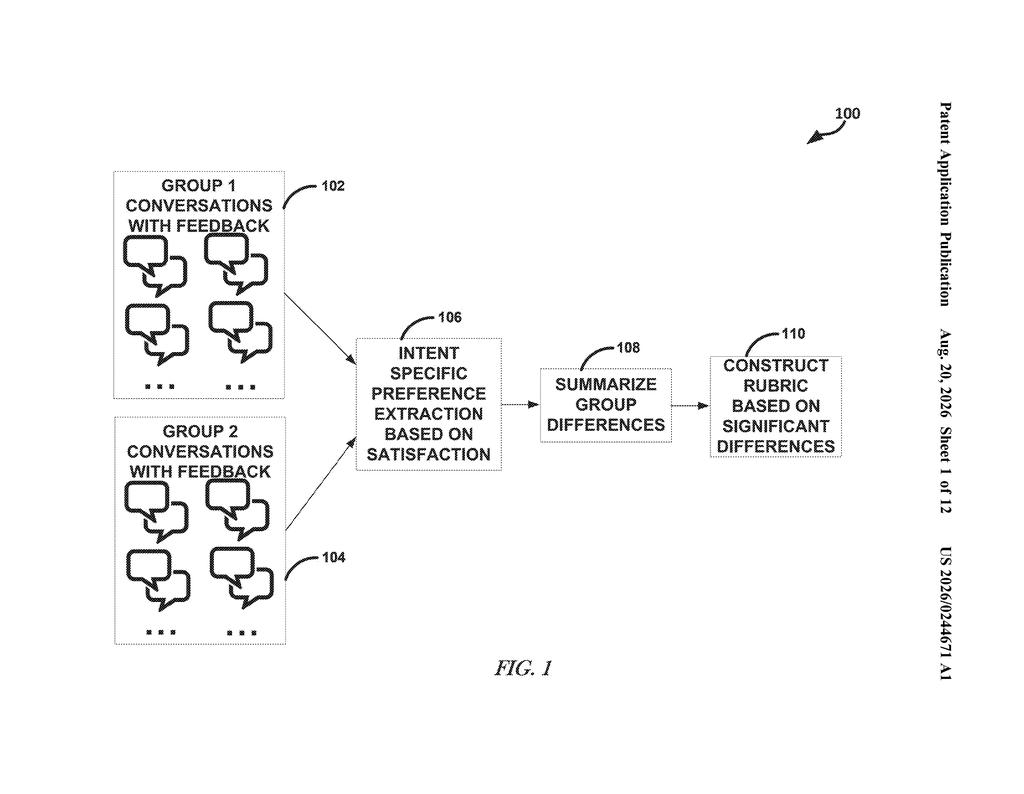
How Microsoft's group-preference AI tuning actually works
A customer service team in one city completes a chat with a bot and closes the window. Another user in a different department types back, frustrated. Both interactions get logged, and right now, most AI systems treat them the same way.
Microsoft's new filing describes a system that pays attention to those differences across whole groups of users, not just individuals. It reads through real conversation logs, extracts signals about what each group liked or disliked, and then compiles those signals into a kind of preference checklist for each group. When someone from that group starts a new conversation, the AI pulls in the right checklist and adjusts how it responds, without the user having to explain their preferences at all.
The practical upshot: an AI deployed for a legal team could respond in a different style than the same AI deployed for a creative department, even if it is technically the same underlying model. Your group's habits and preferences shape the answers, automatically.
prompting, by a processing system, a first generative model to extract and associate, based on user satisfaction signals in real-world conversation logs, implicit judgments from user responses in the real-world conversation logs with the real-world conversation logs …
Translation: The system uses an AI model to read past chat logs and figure out what users liked or disliked.
How the rubric extraction and prompt injection pipeline runs
The patent describes a three-stage pipeline that turns raw conversation history into group-specific behavior for an AI model.
Stage one: extracting implicit judgments. A first AI model reads through real-world conversation logs and looks for signals of user satisfaction, things like follow-up complaints, short replies, or enthusiastic engagement. From those signals it extracts implicit judgments, meaning preferences the user never stated directly but revealed through their behavior.
Stage two: building group rubrics. A second model (or the same one) takes those implicit judgments across many users, groups them by shared membership (department, role, demographic, etc.), and iteratively compares the groups to find where their preferences diverge. The output is a set of group-specific rubrics, essentially scorecards that describe what each group values in an AI response, such as formality level, answer length, or citing sources.
Stage three: applying rubrics at inference time. When a real user sends a message, the system identifies which group that user belongs to, selects the matching rubric, and automatically inserts it into the augmented prompt that goes to the final AI model. The model never sees the raw rubric-building process; it just receives a richer prompt and responds accordingly. The patent also mentions an alternative where the final model is fine-tuned directly on the rubrics instead of having them injected at runtime.
… group-specific rubrics indicate significant differences in the generalized preference aspects between groups, and based on the group-specific rubrics from the generative model, (i) augmenting a prompt to a third generative model resulting in an augmented prompt and providing the augmented prompt to the third generative model or (ii) fine-tuning the third generative model …
Translation: It maps out what different communities prefer and uses those rules to customize how the AI responds to each group.
What this means for Microsoft's AI products and enterprise customers
For businesses deploying AI across diverse teams or customer bases, this kind of group-aware tuning addresses a real pain point. Today, most enterprise AI products are calibrated on broad population averages, which means some user groups get responses that feel slightly off in tone, depth, or style. A system that automatically learns and applies group preferences could reduce that friction without requiring IT teams to manually configure separate models for every department or region.
The practical scope here is wide. Microsoft's Copilot products already sit inside enterprise Office 365 and Teams deployments where distinct user populations, lawyers, engineers, sales reps, are a daily reality. Group-preference alignment fits naturally into that environment. For anyone tracking how AI personalization is evolving at the enterprise level, this filing sits alongside the broader stream of new Big Tech patents that are reshaping how AI products handle the diversity of real-world users.
Microsoft's tenth filing we've tracked since June in our assistants that remember you watchlist builds on one that routes tasks by device and one adapting prompts to documents.
Claim 1 covers any system that pulls a group's preferences from chat records and feeds them into an AI before it answers a question. It does not matter which AI is used, which industry, or how the group is defined.
That is a wide net. It catches even the simplest version of this idea, where a company just pastes a short description of a team's habits into the AI's instructions. Many business AI tools already do exactly that.
If the patent is approved at this scope, rivals shipping similar features could face legal trouble, even for basic versions. The patent also mentions a deeper option, where the AI is retrained on the group's data, but that option sits alongside the broader one in the legal language, not instead of it. The broader version will do most of the damage in court.
There are more where this came from
We read every patent application Big Tech publishes and send you the ones worth knowing. Plain English, free, every week.
The drawings
12 drawing sheets from US 2026/0244671 A1 · click any drawing to enlarge


Want this weekly breakdown for a company we don't cover? Patentlyze Pro →
Be the first to weigh in