
Salesforce Patents an AI Assistant That Remembers What You've Told It Before
Most AI chat tools forget everything the moment you close the window. Salesforce is filing a patent for one that builds a running memory of you across sessions and uses it to shape every answer and follow-up suggestion you see.
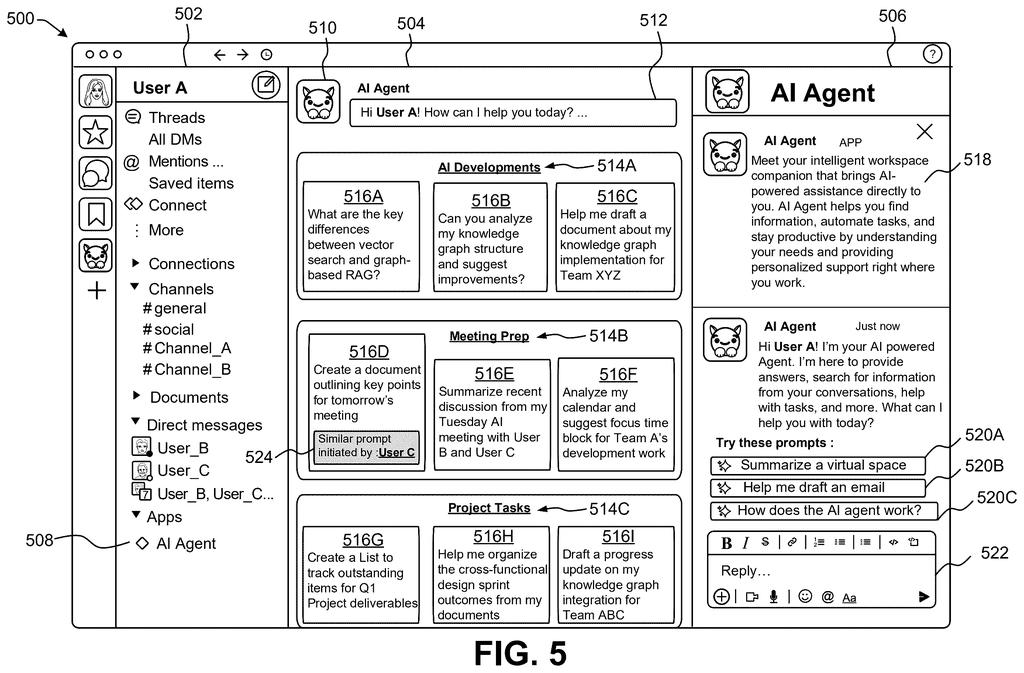
What Salesforce's context-building AI assistant actually does
Ever typed the same background information into a chatbot three times in one week? Salesforce wants to fix that. Its newly filed patent describes an AI assistant that learns details about you as you chat, stores them, and then uses that history to give you better answers the next time.
Here's what that looks like in practice. You ask your company's AI assistant about a sales report. It notices you're focused on the enterprise segment in North America. The next time you ask a question, even a different one, it already has that context in memory and adjusts both its answer and the follow-up suggestions it offers you accordingly.
The system is selective, too. It doesn't store everything indiscriminately. It only saves new details when it judges that they're likely to change how it would respond down the road. That's the difference between a notepad and an actually useful assistant.
… extracting first contextual data associated with the user based in part on the first prompt; causing the first contextual data to be stored in a context database; …
Translation: The system pulls details from your chat and saves them into a special database.
How the system decides what's worth storing between chats
The patent describes a system where a large language model (LLM) based AI agent is connected to a persistent context database, a stored record of information about a specific user, built up over multiple conversations.
When you send your first message, the system does two things at once: it extracts contextual data (relevant facts, preferences, or situational details about you) from that message and stores them, then generates both a response and a set of suggested follow-up prompts tailored to what it now knows.
With each subsequent message, the system runs a filtering step. It extracts new contextual data from your latest input, then asks whether that data is likely to change its future responses by more than a threshold amount (a minimum level of meaningful difference). If yes, it saves the new context. If no, it discards it, avoiding clutter in the database.
- Each reply is generated using the current message plus everything stored about you so far
- Suggested follow-up prompts are also personalized to your accumulated context
- The memory grows selectively, only when new information would actually shift future output
Subsequent contextual data associated with the user may be extracted and stored in the database based in part on determining the subsequent contextual data meets one or more criteria and/or is likely to affect subsequent responses …
Translation: New information is saved only if the AI decides it will change future answers.
What persistent AI memory means for enterprise software users
For anyone who uses AI tools daily at work, the frustration of re-explaining yourself every session is real and time-consuming. A system that carries genuine memory across interactions would make AI assistants behave more like a knowledgeable colleague and less like a search bar with better grammar. The suggested-prompt feature is particularly worth watching: rather than leaving you to figure out what to ask next, the system proposes follow-up questions it already knows will be relevant to your situation.
Salesforce sits at the center of enterprise customer relationship management, so a persistent-memory AI built into that ecosystem could reshape how sales teams, support agents, and account managers interact with data every day. This filing fits squarely into the expanding category of interesting tech patents around enterprise AI memory and personalization, where the competitive pressure to make AI feel less generic is pushing every major platform to rethink how user context gets stored and used.
Salesforce's fourth application we've tracked since July in our assistants that remember you watchlist builds on earlier work like sorting saved messages by priority and buttons that update from account history.
Context loss between AI sessions is a costly, daily friction point for enterprise users: every time someone has to re-explain their role, their preferences, or their prior decisions, productivity erodes and trust in the tool degrades. Salesforce is taking that problem seriously by building selective, criteria-based memory directly into the agent architecture, which matches the actual scale of the issue rather than patching around it. For organizations running AI across large teams and complex workflows, that design choice has real consequences for whether the technology earns sustained adoption or gets abandoned.
There are more where this came from
We read every patent application Big Tech publishes and send you the ones worth knowing. Plain English, free, every week.
The drawings
15 drawing sheets from US 2026/0244877 A1 · click any drawing to enlarge


Want this weekly breakdown for a company we don't cover? Patentlyze Pro →
Be the first to weigh in