
OpenAI Patents a Way to Search AI Memory Without Moving All the Data
Every time an AI assistant looks something up in its knowledge base, it has to haul enormous amounts of data out of memory just to find the relevant pieces. OpenAI has filed a patent for a chip design that does the searching inside the memory itself, so only the useful results ever leave.
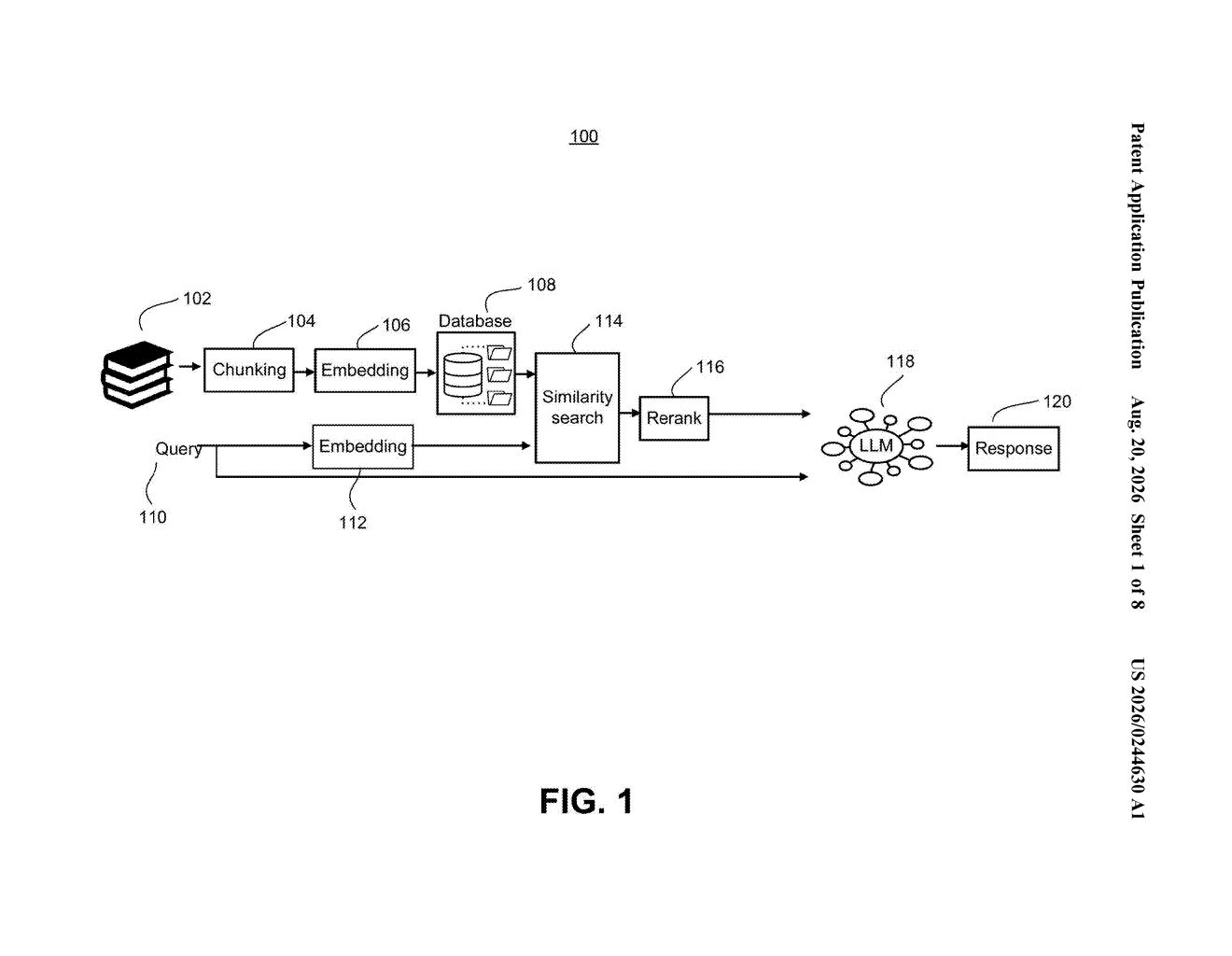
How OpenAI's in-memory search cuts AI lookup times
Imagine you need to find one specific book in a warehouse, but the current system works by loading every single book onto a truck, driving them to an office, and only there checking which one you wanted. That's roughly what happens when an AI looks up information today.
OpenAI's patent describes a memory system that puts a small "comparison engine" directly inside or right next to where the data is stored. When the AI asks a question, that engine checks all the stored knowledge fragments on the spot and hands back only the ones that match. The rest never move at all.
For you as a user, the practical upshot is faster answers and lower power consumption. The AI doesn't have to drag gigabytes of information across a chip just to use a few kilobytes of it.
memory circuitry configured to store a plurality of embedding vectors; and similarity circuitry configured to: receive a search vector, determine similarities between the search vector and the plurality of embedding vectors …
Translation: The system uses dedicated hardware to store data points and compare them directly against an incoming search request.
How the similarity circuitry filters before data leaves the chip
The patent centers on what engineers call compute-in-memory: placing processing logic physically inside, or immediately adjacent to, the memory array rather than in a separate processor.
Here's the specific pipeline the patent describes:
- A search vector (a numerical fingerprint representing the user's query) is sent into the memory system.
- Similarity circuitry embedded in the memory compares that fingerprint against every stored embedding vector (pre-computed numerical fingerprints for chunks of knowledge) without moving those vectors to a central processor first.
- The circuitry identifies the closest matches and outputs only those, leaving the rest untouched.
This matters in retrieval-augmented generation (RAG) systems, the dominant architecture for AI assistants that consult an external knowledge base before generating a response. In a conventional RAG setup, the memory bus (the highway between storage and processor) becomes a bottleneck because it must transfer vast numbers of embedding vectors for comparison. This design cuts that transfer down to just the winning results.
The patent claims the approach improves energy efficiency and reduces retrieval latency (the delay between asking and getting an answer) by dramatically shrinking the amount of data that travels across the chip.
Only the matched embedding vectors are transferred out of the memory system, substantially reducing data movement compared to conventional approaches.
Translation: By moving only the final results instead of all the raw data, the system saves significant time and power.
What this means for the cost of running AI assistants
Running AI assistants at scale is expensive, and a significant slice of that cost comes from memory bandwidth: the energy and time spent shuttling data back and forth between storage and processors. A chip that filters at the source could reduce both the power bill and the waiting time for every query a RAG-based system handles.
For the broader industry, this filing sits at the intersection of AI software architecture and custom silicon, an area where Big Tech patent news on memory-integrated AI processing has been picking up pace as companies race to make inference cheaper at the hardware level.
OpenAI's fifth filing we've tracked in our AI chip race watchlist since July follows ideas like one that skips zero calculations and one for precise math without slowdowns.
Moving the comparison work inside the memory chip itself makes that chip harder to build and more expensive to make in large numbers.
Whether that trade is worth it depends on one calculation: do the energy savings across millions of uses outweigh the higher cost per chip? This patent never shows that math.
What it does get right is targeting a real problem, not an imaginary one. So at least the added cost and complexity buy something that actually matters.
Get our take in your Top Stories
Liked this breakdown? Add Patentlyze as a preferred source on Google, and our plain-English take shows up more often in your Top Stories the next time OpenAI patent news breaks.
There are more where this came from
We read every patent application Big Tech publishes and send you the ones worth knowing. Plain English, free, every week.
The drawings
8 drawing sheets from US 2026/0244630 A1 · click any drawing to enlarge


Want this weekly breakdown for a company we don't cover? Patentlyze Pro →
Be the first to weigh in