
Intel Patents a Processor That Bookmarks Its Own Memory Work Mid-Instruction
Intel has filed a patent for a processor that can pause a complex memory operation midway through, save its place, and pick up exactly where it left off rather than starting over. It sounds minor until you realize modern chips currently have to throw away a lot of work whenever one of those operations gets interrupted.
What Intel's mid-instruction bookmarking actually does
A librarian is pulling books from shelves scattered across a large warehouse, one by one, when a fire alarm goes off. When the alarm clears, she has to remember exactly which shelf she had reached. Intel's new patent solves that exact problem for chips.
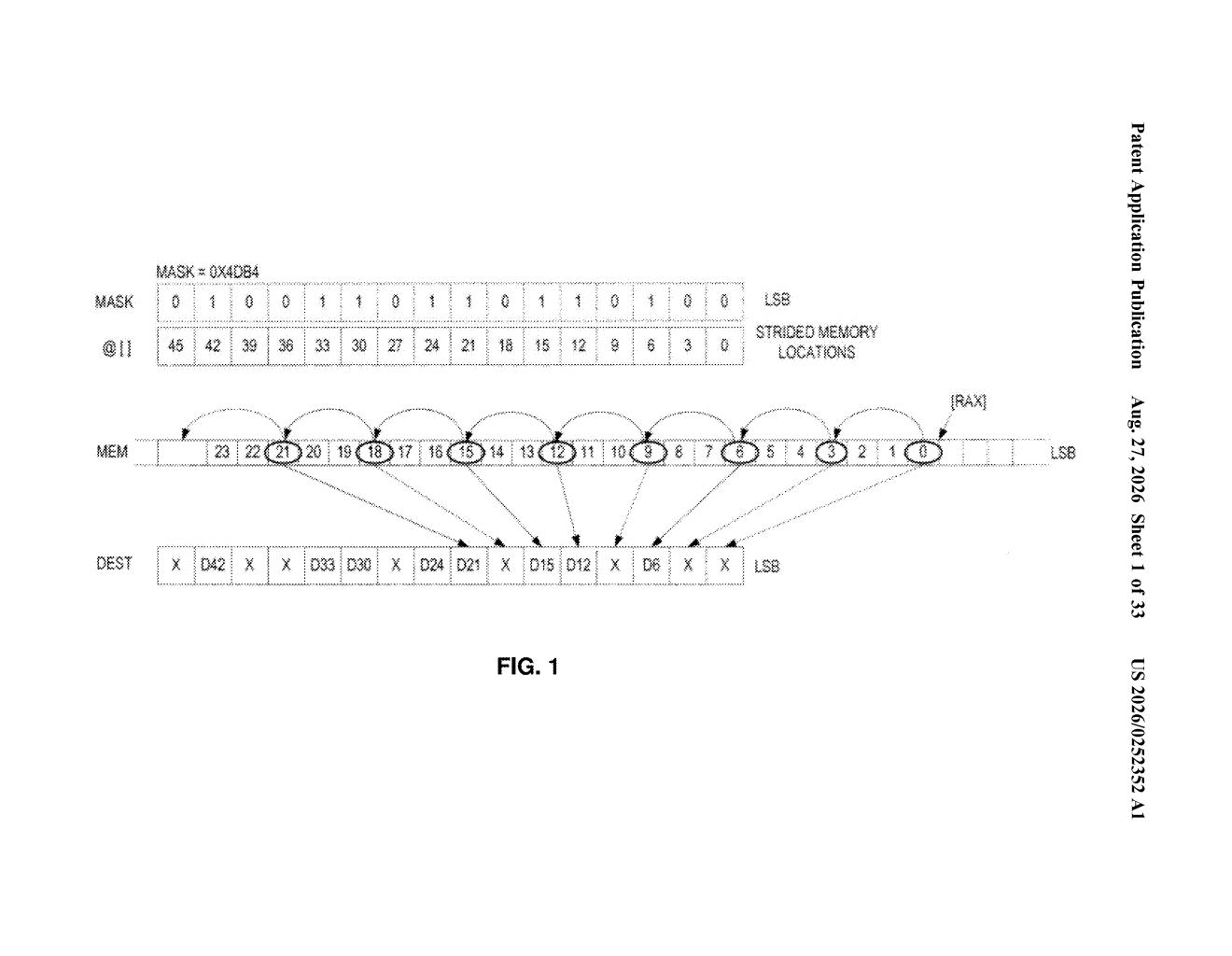
Processors regularly need to gather data from many different memory locations in a single instruction called a strided vector load. Think of it as the chip fetching ingredients from a dozen separate spots in a pantry all at once. If anything interrupts that operation mid-fetch, most processors today have to abandon the whole instruction and start from scratch.
Intel's patent describes a way for the processor to keep a running bookmark as it loads each piece of data. If an interruption hits, the chip checks that bookmark and restarts from the exact spot it left off instead of the beginning. It is a small architectural change with real consequences for any workload that moves large amounts of scattered data through memory.
decode circuitry to decode a progress tracking strided load instruction including fields to indicate a destination vector register in which to load source data elements, memory locations of the source data elements, and a register to store a progress indication …
Translation: The chip hardware reads a special command that keeps track of where it is storing data and remembering its place.
How the progress register tracks scattered memory loads
The patent covers a new class of processor instructions Intel calls progress tracking strided load and store instructions. A strided load is when a chip fetches data elements that are spaced apart in memory at regular intervals, not stored in one continuous block. This pattern is extremely common in matrix math, scientific computing, and AI model inference.
The core mechanism works like this:
- The instruction carries an extra field pointing to a dedicated progress register, a small piece of storage whose only job is to record how far execution has gotten.
- As each data element is successfully loaded into the destination vector register (a wide register that holds many values at once), the processor updates the progress register to reflect either what was just loaded or what comes next.
- If an interrupt arrives, such as an operating system event or a page fault (when the chip tries to access memory that is not yet in physical RAM), execution stops.
- When the processor restarts the instruction, it reads the progress register and resumes from that point rather than element zero.
Claim 1 specifically covers the hardware side: dedicated decode circuitry that understands the new instruction format and execution circuitry that performs the load, updates the progress register, and handles the resume logic. The patent also describes a matching store variant for writing data back out.
… in response to an interruption of the execution of the progress tracking strided load instruction, re-starting the execution of the instruction from an execution point based on the progress indication …
Translation: If something pauses the task, the processor resumes right where it left off instead of starting over.
What this means for chips handling big data workloads
For everyday users, this is invisible plumbing. But for anyone running AI inference, video transcoding, or scientific simulations on Intel hardware, it has real performance implications. When a chip has to restart a long strided load from zero every time an interrupt fires, those wasted cycles add up, especially under high system load where interrupts are frequent. A progress-tracking approach could reduce that overhead noticeably on workloads that spend a lot of time moving data around memory.
From a chip design perspective, Intel is essentially adding fault-tolerance at the instruction level, treating a single load operation more like a restartable transaction than an all-or-nothing command. This kind of resilience matters as vector instructions get wider (handling more data elements per instruction) and therefore take longer to complete, making mid-instruction interruptions more likely. The new Big Tech patents Intel has filed in the processor architecture space lately show a consistent push toward making individual instructions more durable under real-world system conditions.
That makes this Intel's 29th filing we've tracked since May in the AI chip wars, joining work like one on skipping AI steps and one on thread scheduling.
Claim 1 is specific enough to be credible but broad enough to matter. It does not lock down a particular microarchitecture or memory subsystem; it covers any processor with decode circuitry that understands the new instruction format plus execution circuitry that manages the load, progress update, and resume trio. That is a fairly wide net cast over any future chip that implements interruptible strided vector operations. What claim 1 would block, if granted, is another chip vendor shipping an instruction set that offers the same resume-from-progress behavior on strided loads.
The progress register is the key distinguishing element: it is not just a fault flag, it is a precise, instruction-carried pointer to execution state. That specificity gives the claim a real identity rather than reading like a vague method claim.
The practical significance depends on how widely Intel deploys this in actual silicon. As vector instructions grow wider across AI accelerators and general-purpose cores alike, the cost of restarting from zero on interruption grows with them. This patent positions Intel to own the architectural solution to that growing problem.
Get our take in your Top Stories
Liked this breakdown? Add Patentlyze as a preferred source on Google, and our plain-English take shows up more often in your Top Stories the next time Intel patent news breaks.
There are more where this came from
We read every patent application Big Tech publishes and send you the ones worth knowing. Plain English, free, every week.
The drawings
33 drawing sheets from US 2026/0252352 A1 · click any drawing to enlarge


Want this weekly breakdown for a company we don't cover? Patentlyze Pro →
Be the first to weigh in