
Apple Patents a Method to Feed Each Eye Its Own Image in Headsets
Running two cameras and two displays through a single processor sounds like a recipe for lag, but Apple has filed a patent describing a way to stagger the workload so one chip handles everything without the two eyes ever competing for resources at the same moment.
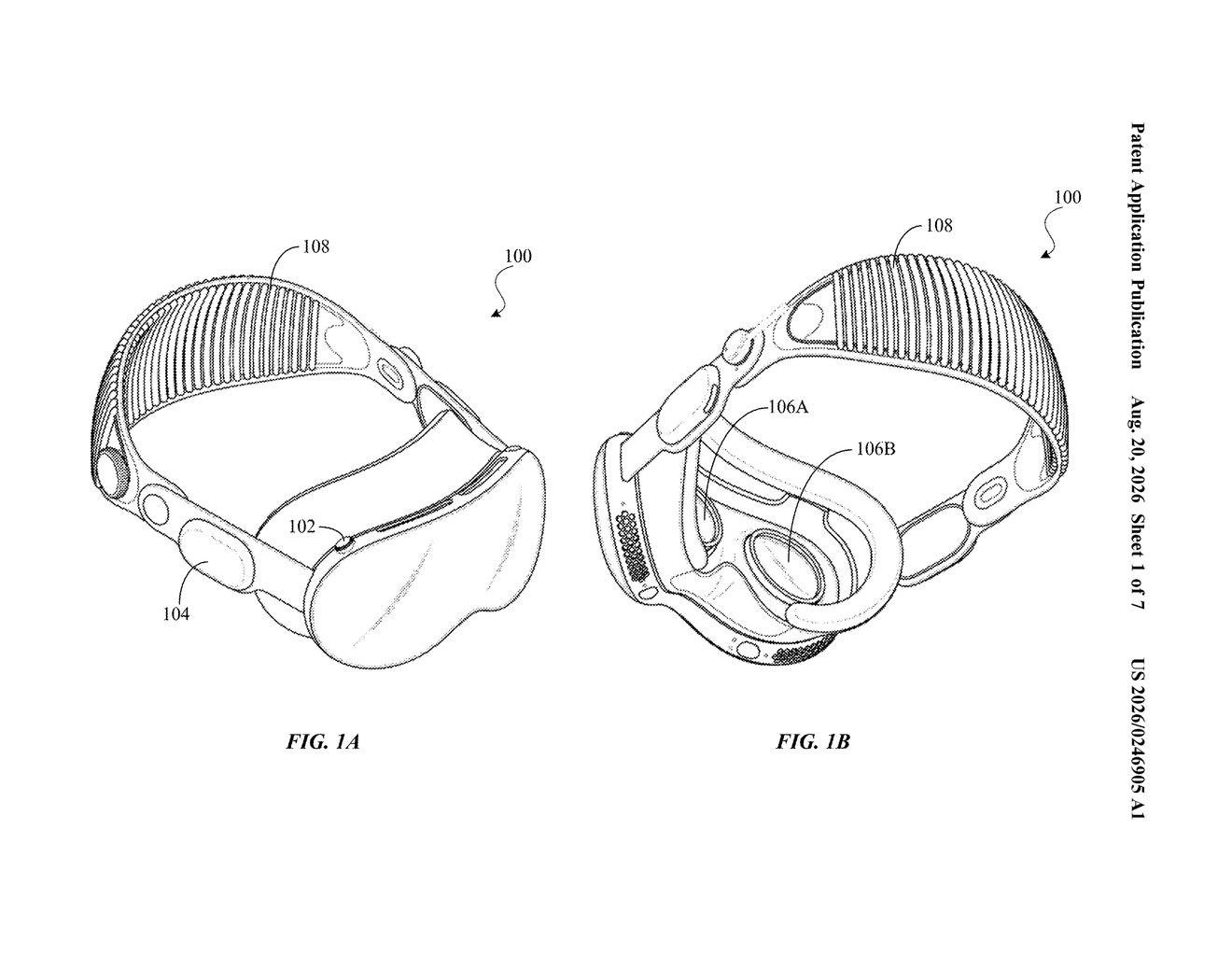
How Apple staggers left- and right-eye frames in a headset
You're wearing a VR or mixed-reality headset, and each eye is looking at its own tiny screen fed by its own camera. Those two cameras normally want to process their images at the same instant, which means you need either two processors or a very powerful one to keep up.
Apple's patent describes a way around that: instead of processing both eyes at exactly the same time, the system offsets them so they take turns. While the left-eye camera is sending its image to be processed, the right-eye camera is still capturing its picture. Then they swap. One processor handles both jobs, just never both at the exact same moment.
The practical payoff is that a single image-processing chip could do the work that normally requires two, keeping the headset lighter, cooler, and potentially cheaper to build. For you as a wearer, the goal is smooth, uninterrupted visuals in both eyes without the headset running hot.
… providing a processed version of the lines of pixels of the first image frame from the buffer to a first display device at a first time, while one or more lines of pixels of a second image frame are exposed by a second image sensor …
Translation: The headset sends the image to one eye screen while the other camera is still capturing its picture.
How one image chip handles two camera feeds at once
The patent describes a pipeline for stereoscopic image capture and display (the technical term for two-eye 3D imagery) inside a headset. The core trick is running the two image sensors out of phase, meaning their timing is deliberately offset rather than synchronized.
Here is the step-by-step flow the claim lays out:
- The first image sensor captures a frame for the left eye and starts sending its pixel data line by line into a shared memory buffer.
- While those pixels are being read out and processed, the second image sensor is simultaneously exposing (capturing) the right-eye frame. It hasn't started sending data yet, so it isn't competing for the processor.
- Once the first frame is processed and sent to the left-eye display, the second sensor's pixels are loaded into the same buffer and processed for the right-eye display.
The single ISP (image signal processor), the chip that cleans up raw camera data before it reaches a screen, handles both streams sequentially rather than in parallel. By the time it finishes one eye's frame, the other camera is ready to hand off its own. The buffer acts as a waiting room, holding pixel rows so the ISP always has something to work on without ever being double-booked.
… capturing and displaying image frames out of phase by, for example, utilizing a single ISP.
Translation: The device handles video for both eyes using just one image processor by staggering the timing.
What this means for Apple Vision Pro's processing hardware
Headsets like Apple Vision Pro pack an enormous amount of silicon into a small space, and every chip adds weight, heat, and cost. If a single image processor can handle both eyes by staggering their workloads, that is one less dedicated chip on the board, which ripples out into thermal design, battery life, and the overall form factor Apple is trying to slim down over successive generations.
The tradeoff is timing precision: the two eyes' frames are no longer captured at the identical millisecond, which could theoretically introduce a tiny mismatch in fast-moving scenes. The patent's architecture has to be tuned carefully so that offset stays small enough to be invisible to the wearer. Apple's AR display strategy sits squarely in the stream of Big Tech patent news around headset efficiency, where every millimeter and milliwatt of savings shapes what the next hardware revision can realistically look like.
Apple's 34th filing we've tracked since May on our Apple AR glasses work builds on ideas like fixing AR colors with nearby cameras and keeping remote callers looking consistent.
Apple's patent covers a simple idea: two cameras share one processing chip and feed two screens in a timed, back-and-forth sequence. That description fits a huge number of virtual reality headsets and dual-screen gadgets made by any company, not just Apple.
If the patent is approved as written, Apple could block or sue competitors using that same basic approach. The real fight will happen at the patent office, over whether older stereo camera technology already made this idea obvious.
There are more where this came from
We read every patent application Big Tech publishes and send you the ones worth knowing. Plain English, free, every week.
The drawings
7 drawing sheets from US 2026/0246905 A1 · click any drawing to enlarge


Want this weekly breakdown for a company we don't cover? Patentlyze Pro →
Be the first to weigh in