
Microsoft Patents a Deepfake Detector That Checks Whether Physics Makes Sense
AI-generated images are getting hard to spot with the human eye, but they still have a tell: physics. Microsoft's new patent describes a detection system that asks whether the light, gravity, and materials in an image actually behave the way the real world requires.
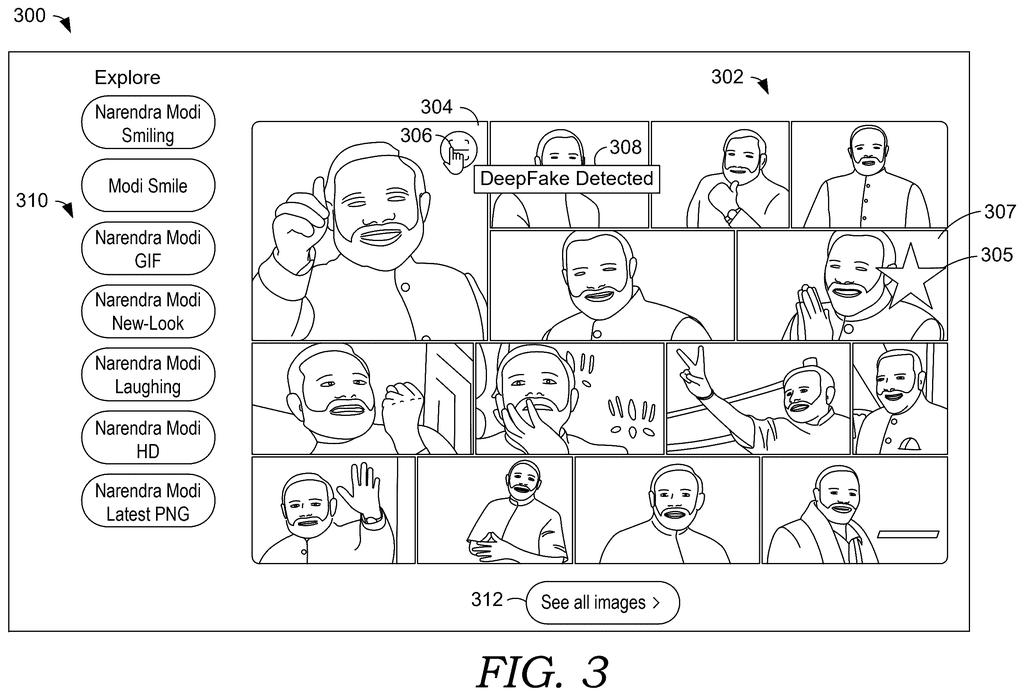
How Microsoft's physics-based fake detector works
Imagine you see a viral photo of a celebrity in an impossible spotlight, where the shadows fall in two different directions at once. Your brain might not catch it, but the laws of physics say it can't happen that way.
Microsoft is building a system designed to catch exactly those kinds of slips. It uses a machine-learning model trained to understand how light bends, how objects fall, how surfaces reflect, and how things physically interact. When an image or video breaks any of those rules even slightly, the system flags it and assigns an authenticity score that says how likely the content is to be AI-generated or manipulated.
The key insight is that AI image generators are good at making things look plausible to a human eye, but they still struggle to keep every physical relationship consistent across an entire image. Microsoft's approach tries to exploit that gap.
… generating an authenticity metric based on a difference between the output image and the input image; determining that the authenticity metric is in a range associated with an inauthentic image; and associating the input image with an indication that the input image is inauthentic.
Translation: It flags a picture as fake by measuring how much it differs from a physically realistic version.
Inside the VAE-cGAN pipeline that spots physics violations
The detection pipeline has two main components working in sequence.
First, the input image is fed into a physics-constrained encoder that is part of a VAE (Variational Autoencoder). A VAE is a type of neural network that compresses an image down into a compact internal description called a latent space (think of it as a very dense summary of what the image contains). The twist here is that this encoder is specifically trained to pay attention to physics-based properties rather than just visual patterns.
The physics constraints the model watches for include:
- Optics awareness: does light reflect and refract the way it should?
- Gravity awareness: are objects oriented and positioned as gravity would require?
- Material property awareness: do surfaces look like the materials they claim to be?
- Conservation of energy: does nothing appear or disappear in ways that violate physical laws?
- Physical interaction awareness: when objects touch, do they behave correctly?
Second, that compressed physics-aware summary is handed to a cGAN (Conditional Generative Adversarial Network), which reconstructs a version of the image from that summary. A GAN is a network that generates images; the "conditional" part means it builds the output based on specific inputs, in this case the physics-constrained summary. If the original image was real, the reconstruction should closely match it. If it was AI-generated or manipulated, the difference between the original and the reconstruction should be larger, and that gap becomes the authenticity metric.
Physics-based constraints may include optics-awareness, gravity awareness, material property awareness, conservation of energy, and physical interaction awareness.
Translation: The system checks if lighting, gravity, and object interactions obey real-world physics.
What this means for AI-generated media and trust online
Deepfake detection has been an arms race for years, with detectors trained on visual artifacts that generators quickly learn to hide. Anchoring detection to physics constraints is a different bet: the laws of physics don't change, so a model trained on them has a more stable target than one chasing the latest generation artifacts.
For everyday users, this kind of system could eventually appear as a trust indicator inside tools like Microsoft Teams, Outlook, or Bing Image Search, flagging suspicious images before they spread. The approach could also be useful for newsrooms, social platforms, or content-moderation pipelines. AI-generated media detection is one of the more contested spaces in the newest Big Tech patents, and Microsoft's physics-grounding angle puts it in a distinct position relative to purely pixel-pattern approaches.
Microsoft's 13th filing we've tracked in our AI guardrails race since July adds to a pattern that includes one catching AI voices and one checking facts against sources.
The physics-anchoring idea is genuinely clever as a long-term stability play, but it carries a real cost: physics violations in AI imagery are often subtle and ambiguous, and a model trained to treat them as ground truth for inauthenticity will produce false positives on legitimate photos with unusual lighting, composite editing, or optical distortion from lenses. That error rate on real content could undermine user trust in the score itself. The trade reads as worth pursuing at the research level, but the bar for production deployment, where a mislabeled press photo or a falsely flagged video call frame carries real consequences, is much higher than this filing addresses.
There are more where this came from
We read every patent application Big Tech publishes and send you the ones worth knowing. Plain English, free, every week.
The drawings
8 drawing sheets from US 2026/0245390 A1 · click any drawing to enlarge


Want this weekly breakdown for a company we don't cover? Patentlyze Pro →
Be the first to weigh in