
Sony Semiconductor Patents a Way to Keep Camera Sensors and Chips on the Same Encryption Key
When a camera sensor and its host processor disagree on which encryption key to use, you get corrupted or unreadable frames. Sony's new patent describes a clean handshake mechanism so both sides always know exactly which key is active — frame by frame.
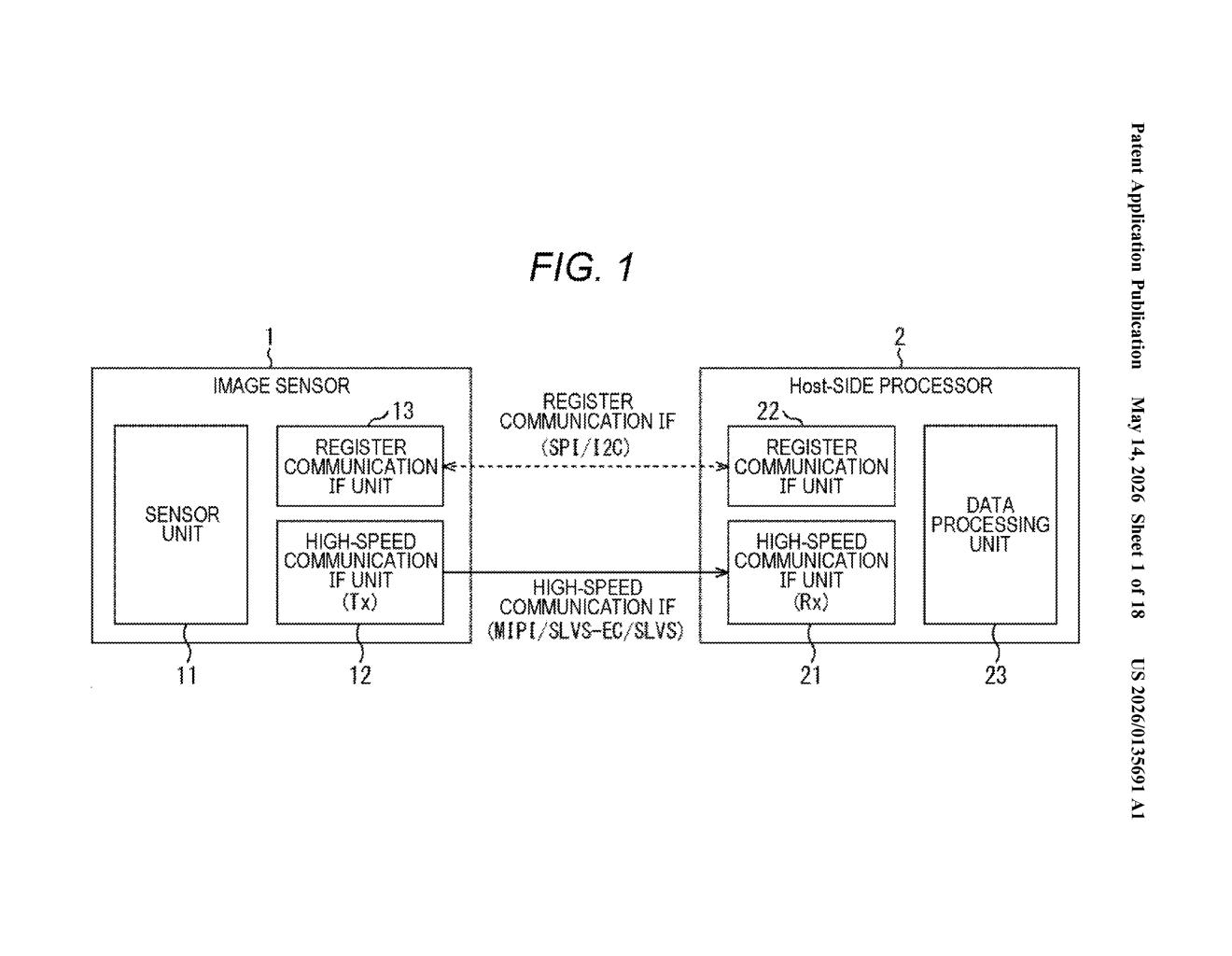
How Sony keeps camera frame encryption in sync
Imagine a security camera that scrambles its video feed so only the right processor can unscramble it. Now imagine the scrambling password changes periodically for extra safety — like rotating your Wi-Fi password. If the camera and the processor aren't perfectly in sync on when that password changed, every frame in between becomes unreadable garbage.
Sony's patent tackles exactly that timing problem. When the host processor decides it's time to use a new encryption key, it sends that key to the image sensor over a dedicated control channel. From that point on, every frame the sensor sends out includes not just the encrypted image data, but also a small label — a key ID — that tells the processor exactly which key was used to lock it.
The result is that both sides stay perfectly coordinated even during the switchover. The processor sees the key ID on each incoming frame and knows precisely which key to use to unlock it — no guesswork, no dropped frames.
How the sensor embeds key IDs inside each frame packet
The patent describes a two-interface architecture inside an image sensor (or similar output device). One interface is a control/register channel (think I2C or a similar low-bandwidth config bus) used to receive new cryptographic keys and their associated key IDs (short numeric labels that identify which key is which). The other is a high-bandwidth data channel (think MIPI CSI-2 or a similar video link) used to stream out the actual frame data.
Here's the flow step by step:
- The host processor decides to rotate the encryption key and pushes the new key + its key ID to the sensor over the control interface.
- The sensor's security processing unit applies the new key to encrypt outgoing frame data.
- Each outgoing frame is packaged in a predetermined format that bundles the encrypted pixel data together with the key ID that was used — so the receiver always knows which key to apply when decrypting.
- The host reads the key ID from the frame header and selects the correct key to decrypt, even if the switch happened mid-stream.
The separation of the two communication interfaces is deliberate: the control channel handles key negotiation quietly in the background, while the data channel carries a self-describing, tamper-evident stream that doesn't require any out-of-band coordination at decode time.
What this means for secure automotive and IoT cameras
This kind of per-frame key tagging is especially important in automotive and embedded vision systems, where image sensors feed safety-critical processors and the data link has to be both fast and secure. Standards like MIPI CSI-2 with link-layer security are already pushing encrypted camera streams into cars and industrial robots — but key rotation timing has been a known pain point. Sony's approach of embedding the key ID directly in the frame format is a pragmatic, low-overhead fix.
For you as a developer or systems architect, this matters because it removes the need for a separate synchronization signal or a complex state machine to track key transitions. The frame is self-describing — the metadata travels with the data, which simplifies the host-side decoder and reduces the risk of a security gap during key changeover.
This is focused, unsexy infrastructure work — the kind that quietly enables secure camera pipelines in cars and drones to actually function reliably. It's not a flashy AI patent, but key-rotation synchronization is a real engineering headache in encrypted video systems, and Sony's sensor division clearly has skin in the game here. Worth watching if you follow automotive vision or embedded security.
There are more where this came from
We read every patent application Big Tech publishes and send you the ones worth knowing. Plain English, free, every week.
Want this weekly breakdown for a company we don't cover? Patentlyze Pro →