
IBM Patents Software That Reads Crowd Movement to Stop Arena Dangers Early
IBM has patented a system that wraps a venue in nested digital boundaries, tracks where people are clustering, and uses predictive AI to trigger security responses before a threat fully materializes.
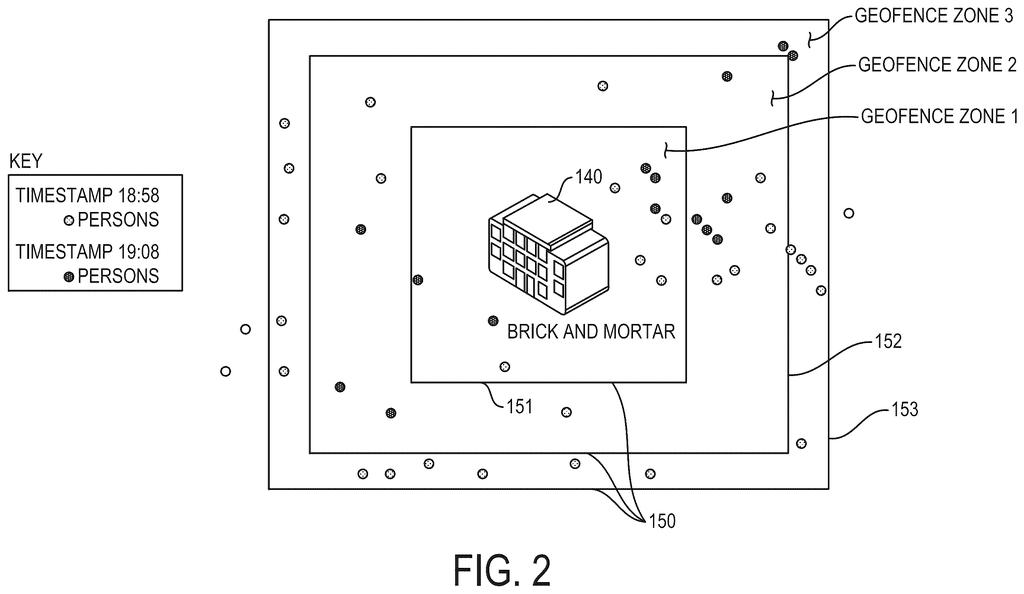
How IBM's geofence security system reads a crowd
Today's venue security mostly reacts: guards respond after something goes wrong, and cameras flag events after they happen. IBM wants to shift that toward prediction by tracking where crowds are building up before anyone sets foot inside.
The idea is to draw several invisible digital rings around a venue, each ring a separate zone. The system watches how people move through those zones in real time, then feeds that location data into AI models trained to recognize patterns that historically precede security problems. If the models spot something concerning, an alert or automated response fires off.
You never interact with this directly; it operates behind the scenes at the infrastructure level. But if you've ever attended a large event and wondered how staff seem to anticipate crowd surges or suspicious gatherings near entrances, this patent describes exactly how a software system would try to do that automatically.
obtaining location data of a plurality of persons in a geospatial region coinciding with a geofence array, wherein the geofence array includes a geofence disposed about a venue, the geofence array defining a plurality of geofence zones; …
Translation: The system tracks the positions of a crowd around and inside an arena using digital boundaries.
How the zone-classification and prediction pipeline runs
The patent describes a multi-layer geofence array: a set of concentric or adjacent digital boundaries drawn around a physical venue. Each boundary defines a named zone, and the system continuously pulls location data for every person detected within the combined area.
A classification step assigns each person to a specific zone based on where their device is. From that classification, the system generates geofence parameter values (essentially numerical snapshots of crowd density, distribution, movement speed, or similar measurements) for each zone at a given moment.
Those parameter values feed into one or more predictive models (AI trained on historical data to recognize conditions that correlate with security incidents). The models run inference, meaning they produce a risk score or classification based on the current numbers. If the output crosses a threshold, the system initiates remediation actions, which could mean alerting security staff, locking access points, or triggering surveillance cameras.
The claim is intentionally broad: it covers any venue, any type of location data, any predictive model, and any remediation action, as long as the core loop (classify by zone, generate parameters, infer risk, act) is present.
… initiating action for remediation of a security risk condition associated to the venue in dependence on result data resulting from the inferencing.
Translation: It triggers safety measures automatically when crowd data indicates a potential danger.
What this means for AI-driven physical security
Physical security at large venues has long depended on cameras and human judgment, both of which scale poorly when thousands of people are arriving at once. A system that automatically segments a crowd by location and runs continuous risk prediction could let a small security team cover a much larger perimeter more consistently than manual monitoring allows.
The claim language here is written at a very high level of abstraction, which means IBM's coverage, if the patent is granted, would extend well beyond any single implementation. Venue operators, smart-city platforms, and event-management software companies all sit within that theoretical scope, making this one of many AI-meets-physical-security filings tracked across Big Tech patent news as the industry pushes automated threat detection into public spaces.
This is the 17th IBM filing we've tracked in AI vision since May, joining earlier work like one on cognitive decline via VR and one on class mix for learning.
Claim 1 covers any system that locates people inside a set of defined zones around a venue, sorts them by zone, produces values from that sorting, and then runs a predictive model on those values. The claim places no limits on how the tracking happens, how the zones are shaped, or what the model actually predicts. That openness means the claim could reach a wide range of crowd-management tools, from sports stadium apps to festival security software, as long as they follow that same basic sequence.
The looser the language, the more existing products risk falling inside the boundary. Whether this holds up depends on whether that sequence, taken as a whole, is something no one had combined before, because location-based zone alerts and crowd prediction software have both been on the market for years.
Get our take in your Top Stories
Liked this breakdown? Add Patentlyze as a preferred source on Google, and our plain-English take shows up more often in your Top Stories the next time IBM patent news breaks.
There are more where this came from
We read every patent application Big Tech publishes and send you the ones worth knowing. Plain English, free, every week.
The drawings
9 drawing sheets from US 2026/0255175 A1 · click any drawing to enlarge


Want this weekly breakdown for a company we don't cover? Patentlyze Pro →
Be the first to weigh in