
Qualcomm Patents Technology That Keeps Smart Glasses Video Smooth and Uninterrupted
When you're wearing an AR headset, not all data needs to arrive at the same speed, and Qualcomm wants the device itself to figure that out automatically, without you ever noticing the difference.
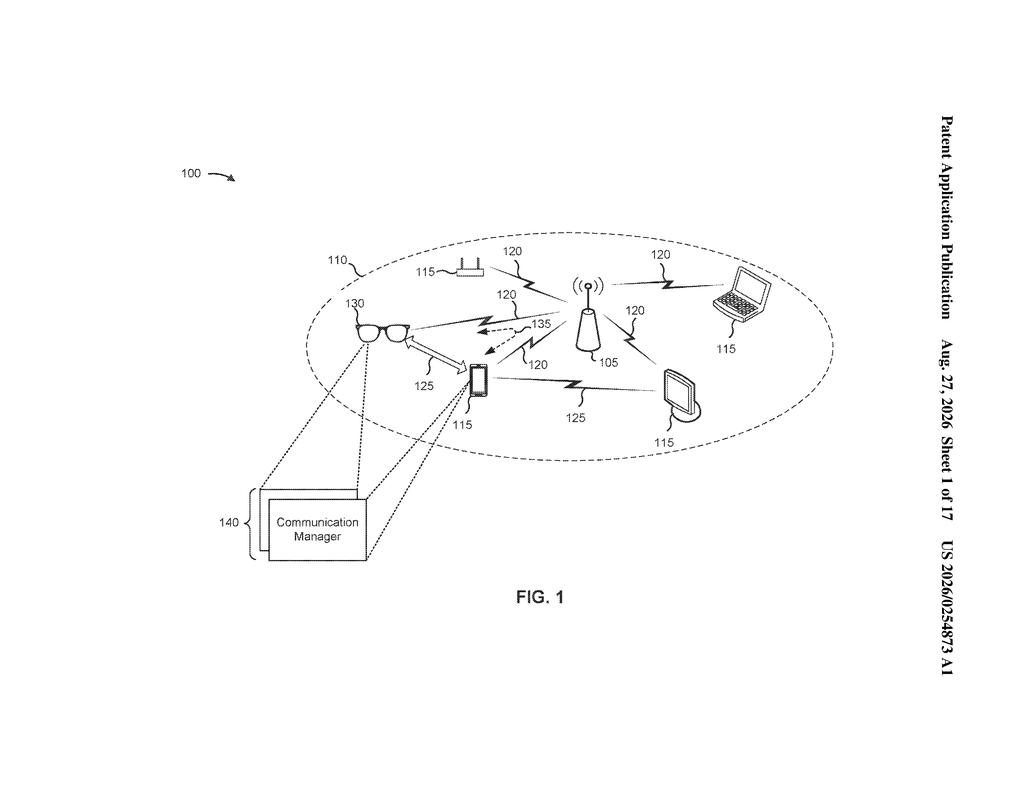
What Qualcomm's AR data-routing patent actually does
You're wearing an AR headset on a video call, and the overlay graphics keep stuttering every time the connection dips. The call audio freezes, the virtual annotations lag, and the whole experience falls apart, even though your connection is technically "good enough."
Qualcomm's patent describes a system where the headset recognizes, in the moment, whether the data it needs is part of a live stream (like that video call) or something that can be fetched a little early and buffered (like a 3D model loading in the background). Based on that, it adjusts how it moves that data over the wireless connection.
The practical result: live, time-sensitive content gets priority treatment, while background data fills in whenever there's headroom. You wouldn't see a settings menu or toggle, the device handles the sorting itself, in real time.
identify a trigger for a transfer of data on a wireless link that is associated with extended reality; and exchange the data on the wireless link using a data control action that is based at least in part on an application type of the transfer …
Translation: Smart glasses figure out when to send data and adjust their wireless connection based on what kind of app is running.
How the device picks a control action for each stream type
The patent describes a wireless device, most likely an AR headset or similar wearable, that monitors incoming data transfers and classifies each one as either real-time streaming (think: live video, voice, or interactive spatial audio that must arrive within milliseconds) or non-real-time streaming (think: pre-loading a 3D object or downloading an environment map before it's needed).
Once the device identifies the type, it applies a data control action specific to that category. The patent doesn't spell out every possible action, but the framework clearly separates how the wireless link is used depending on urgency. Real-time traffic presumably gets scheduling priority or a reserved slice of bandwidth, while non-real-time traffic is shaped around whatever capacity is left over.
The trigger that kicks off this classification can be anything the system detects: a new app opening, a handshake from an extended reality (XR) application, or a change in the type of content being streamed.
- Identifies the trigger for a new data transfer on the wireless link
- Classifies the transfer as real-time or non-real-time
- Applies a corresponding data control action to manage how that data moves
The claim is intentionally broad, covering the processing system inside the device rather than any single chip or radio protocol, which means Qualcomm is staking out the decision-making logic, not just one implementation of it.
Various aspects of the present disclosure generally relate to wireless communication. In some aspects, a wireless device may identify a trigger for a transfer of data on a wireless link that is associated with extended reality.
Translation: The system monitors when smart glasses need to transmit information over the air for augmented or virtual reality.
What this means for AR headset performance in daily use
For people using AR headsets today, the most common complaint isn't resolution or weight, it's unpredictable stuttering when the connection is busy. This patent targets exactly that failure. By letting the device automatically sort its own traffic, Qualcomm's approach could reduce the freezes that happen when a live video call and a background asset download compete for the same wireless bandwidth at the same moment.
Qualcomm supplies the wireless chips inside a wide range of devices, from Android phones to AR reference designs, so a patent like this has the potential to show up in products across multiple brands rather than a single piece of hardware. The XR chip market is one of the areas generating the most activity in Big Tech patent news, and this filing adds to Qualcomm's positioning there as the company builds out its Snapdragon XR platform.
This is the 28th Qualcomm filing we've tracked in our AR glasses race watchlist since July, adding to work like one on shared camera location clues and one on cloud AR frame timing.
The core idea here, treat live data differently from buffered data, is not a new concept in networking. Routers and mobile base stations have done traffic classification for decades. What's different is that Qualcomm is baking this logic into the wearable device itself, rather than relying on the network to sort it out.
For the person actually wearing the headset, that distinction matters. If a router drops the ball on prioritization, you still suffer. If the headset handles its own traffic shaping at the device level, you get a more consistent experience regardless of what the network around you is doing.
The claim is written broadly, which is standard for early-stage filings, and it will face scrutiny over how much it actually differs from existing traffic-management techniques. But the direction Qualcomm is pushing, moving XR-aware intelligence closer to the user's face, is a concrete bet on where wearable computing is heading.
Get our take in your Top Stories
Liked this breakdown? Add Patentlyze as a preferred source on Google, and our plain-English take shows up more often in your Top Stories the next time Qualcomm patent news breaks.
There are more where this came from
We read every patent application Big Tech publishes and send you the ones worth knowing. Plain English, free, every week.
The drawings
17 drawing sheets from US 2026/0254873 A1 · click any drawing to enlarge


Want this weekly breakdown for a company we don't cover? Patentlyze Pro →
Be the first to weigh in