
Meta Patent Would Let Wearables Amplify Sound Based on Where You Look
Crowded room, one conversation you actually want to hear. Meta is filing patents for wearables that use your own head movements to figure out which sounds to amplify and which to push aside.
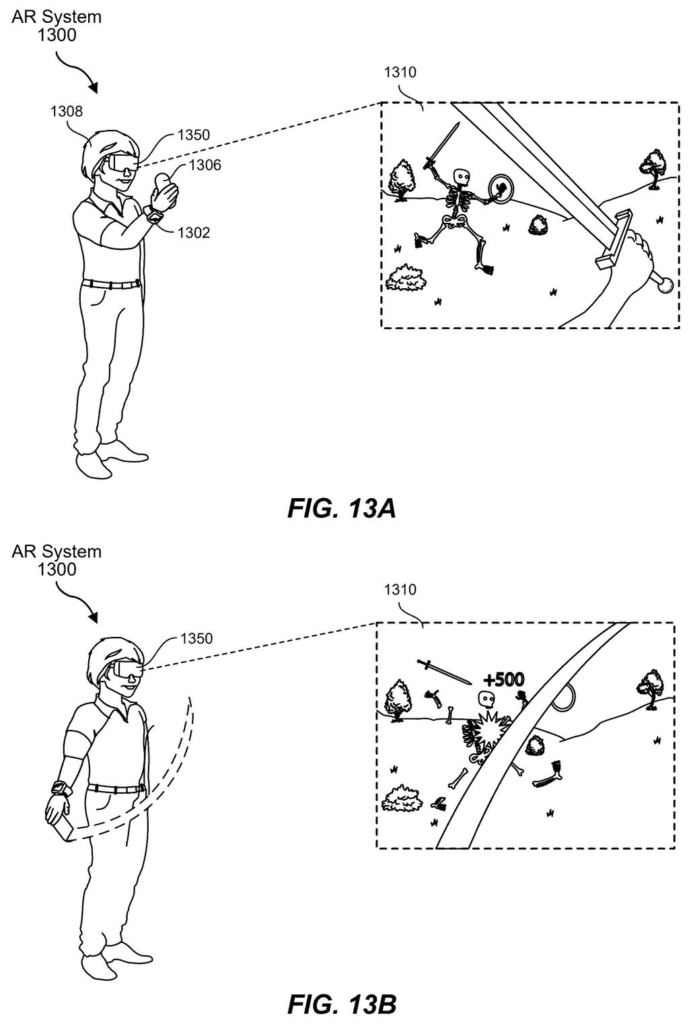
How Meta's focus-based audio boost actually works
You're at a loud party, trying to follow what one person is saying while a dozen other conversations compete for your ears. Your brain does a rough job of tuning the rest out, but it costs effort, and it fails when the noise gets bad enough.
Meta's patent describes a wearable device (think smart glasses or earbuds) that tracks how you move your head and body, then uses that motion data to figure out the direction or area you're paying attention to. Once it identifies that zone of interest, the device amplifies sounds coming from there while keeping everything else at a lower volume.
The whole thing happens automatically, without you pressing a button or opening an app. The device's microphones capture the full audio scene around you, and the processing decides in real time which slice of it deserves the boost based purely on where you seem to be directing your attention.
… determining, from the motion data, an auditory zone of interest within an acoustic scene; capturing, via an audio transducer of the wearable device, audio signals of the acoustic scene; and rendering audio to the user with selective enhancement …
Translation: The device tracks your head movements to figure out where you are looking and turns up the volume on sounds from that area.
How motion data maps to an auditory zone of interest
The patent describes a motion-driven audio enhancement pipeline built into a wearable device. Here's how the pieces connect:
- Motion sensing: The device reads data from onboard motion sensors (accelerometers or gyroscopes) that track how the user is moving their head or body. This motion data acts as a proxy for where the user's attention is directed.
- Zone inference: From that motion data, the system infers an auditory zone of interest, essentially a region within the surrounding acoustic environment that the user is most likely focused on. Think of it as drawing an invisible cone of attention in front of the user.
- Audio capture: Microphones on the wearable record the full acoustic scene, picking up sounds from all directions simultaneously.
- Selective rendering: The device then processes and renders audio so that sounds originating from the identified zone are amplified relative to sounds coming from outside it. The rest of the scene isn't deleted, just de-emphasized.
The claim is device-agnostic enough to cover glasses, earbuds, or any other wearable form factor that combines a microphone array with motion sensing. No explicit machine-learning architecture is named in the core claim, but the motion-to-zone inference step implies some form of spatial signal processing or learned model running on-device.
Audio is rendered to the user with selective enhancement of at least one audio signal of the acoustic scene from the auditory zone of interest relative to other audio signals of the acoustic scene.
Translation: The system makes the specific sound you are focusing on louder while keeping background noise at a lower volume.
What this means for Meta's AR glasses lineup
For anyone with hearing difficulty, this kind of technology could be meaningful in everyday situations where hearing aids and standard earbuds fall short. Cocktail-party noise has always been one of the hardest problems for audio technology because the challenge isn't volume, it's separation. A system that uses the listener's own body cues rather than voice-keyword triggers to decide what to enhance is a practical approach to that separation problem.
For Meta specifically, this fits squarely into the Ray-Ban smart glasses line and any future AR headset work. Meta's devices already carry microphones and motion sensors, so this would be a software-and-processing layer on existing hardware rather than a new product category. The interesting tech patents covering AR audio from Meta and its rivals show a consistent push to make spatial sound a differentiator for wearables, and this filing adds a user-motion angle that most competitors have not made central to their public filings.
That makes this Meta's 57th filing we've tracked since May in the AR glasses race, joining one on hearing controls and one on faster device pairing.
Background noise shuts people out of conversations every day, and for anyone with mild hearing loss or auditory processing differences, a loud restaurant or crowded room can make normal social interaction effectively impossible. That is a large, underserved population, and the daily cost is real.
Meta's approach here is to track where the listener's head is pointing and use that as a signal for which sounds to amplify. Your body already does this naturally when you lean in or turn toward someone, so tying the audio system to that motion has a certain logic to it.
The open question is how reliably head direction maps to actual listening intent, because people turn toward things for reasons unrelated to wanting to hear them. That gap between where you're looking and what you're trying to follow is where this technology either earns its value or falls short, and the patent does not address it.
Get our take in your Top Stories
Liked this breakdown? Add Patentlyze as a preferred source on Google, and our plain-English take shows up more often in your Top Stories the next time Meta patent news breaks.
There are more where this came from
We read every patent application Big Tech publishes and send you the ones worth knowing. Plain English, free, every week.
The drawings
23 drawing sheets from US 2026/0255124 A1 · click any drawing to enlarge


Want this weekly breakdown for a company we don't cover? Patentlyze Pro →
Be the first to weigh in