
WhatsApp Patents a System That Moves Your Most-Used Stickers to the Front
WhatsApp is patenting a way to track how often each sticker or emoji gets used in a specific conversation thread and then reorder them so the popular ones show up first. The twist is that it works per thread, not across your whole account.
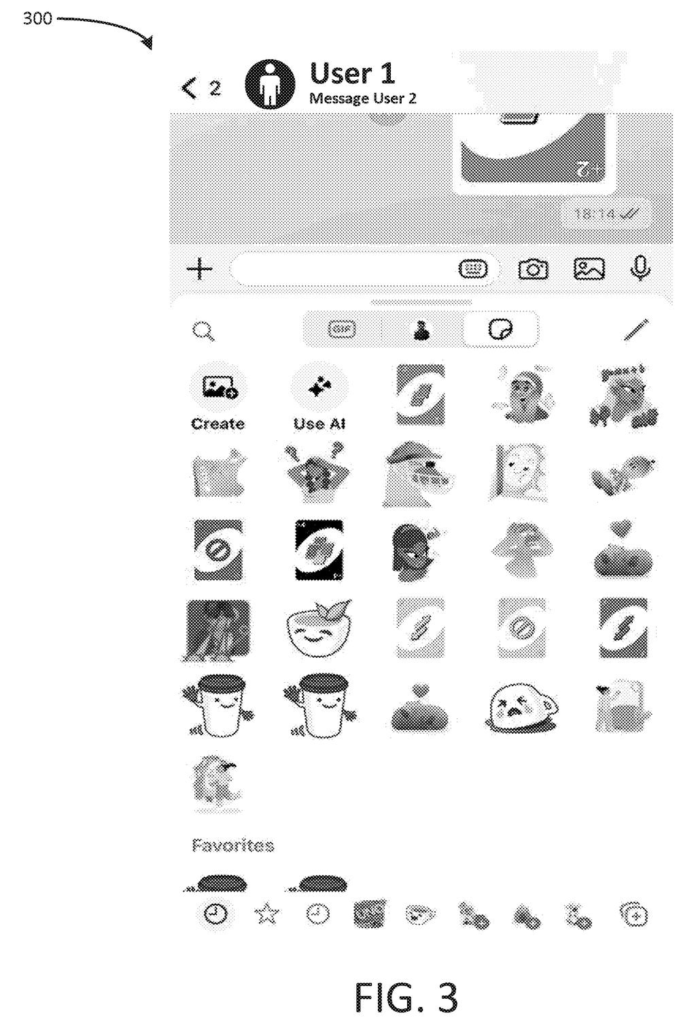
How WhatsApp ranks stickers inside a group chat
Right now, the sticker and emoji panels in most messaging apps list graphics in a fixed or only loosely personalized order. You scroll past dozens of options you rarely touch to find the one reaction your group has been using all week.
WhatsApp's patent describes a system that watches how often each sticker gets posted inside a particular conversation and when those posts happened. It then uses both numbers together to assign a ranking, and the panel reorders itself so your most-relevant picks rise to the top. Recency matters too, so a sticker that was popular last month but hasn't appeared since wouldn't unfairly crowd out whatever your group is currently obsessed with.
The end result is that each conversation thread gets its own dynamic sticker shelf, shaped by the history of that specific chat rather than a one-size-fits-all popularity list.
… determining, for a first graphic element of the plurality of graphic elements, a timestamp for each posting of the first graphic element in the conversation thread; determining, for the first graphic element of the plurality of graphic elements, a frequency of postings of the first graphic element in the conversation thread …
Translation: The app tracks exactly when and how often you use a specific sticker in your chats.
How timestamps and frequency combine into a ranking score
The patent describes a computer-implemented method with five main steps that run inside a messaging application's conversation thread:
- Display a panel of graphic elements (stickers, emojis, GIFs) for the user to pick from.
- Record timestamps for every time a specific graphic element is posted in that thread (so the system knows not just how many times, but when).
- Count posting frequency for that same graphic element within the thread.
- Calculate a ranking by combining the timestamp data with the frequency count. Weighting both means a graphic posted many times recently scores higher than one posted many times a year ago.
- Update the element's position in the display panel based on that ranking, moving it closer to the front or back accordingly.
The key technical detail is that the ranking is per conversation thread, not per user account globally. A sticker might rank first in your family group chat because you all use it constantly there, while sitting near the bottom in your work chat where it has never appeared.
This per-thread scoping is what separates it from a simple "recently used" shelf. The system builds a localized usage profile for each individual conversation, updating positions dynamically as new posts come in.
The computer-implemented method may include determining a ranking of the graphic element based on the timestamp for each posting and the frequency of the postings. The computer-implemented method may include updating, based on the ranking, a position of the graphic element in the display.
Translation: The system uses your usage history to automatically move your favorite stickers to the front of your menu.
What this means for WhatsApp's emoji and sticker panels
For everyday WhatsApp users, this would be a small but tangible quality-of-life fix. Group chats often develop their own inside-joke stickers or reaction emojis, and right now there is no automatic way for the app to surface those specific picks without manual favoriting. A thread-aware ranking system would let the panel adapt to each conversation's personality on its own.
From a product-strategy angle, sticker and emoji engagement is a real retention lever for messaging platforms. Making reactions easier to reach keeps people expressive inside the app rather than copy-pasting from elsewhere. Meta owns a broad portfolio of interesting tech patents across messaging UX, and this filing adds to a pattern of WhatsApp iterating on the small friction points that determine whether a chat feels fluid or clunky.
This is the 132nd Meta filing we cover since May, adding to our Meta coverage that includes the cross-device login patent and the finger-rub scroll patent.
Claim 1 is deliberately broad. It covers any system that takes a graphic element, measures how often it has been posted in a thread, logs when those posts happened, combines those two signals into a ranking, and then moves the element's position in a display. That description would cover an enormous range of implementations, from a simple weighted average to a complex decay function. The breadth matters because it could give WhatsApp a claim on the general concept of per-thread graphic ranking inside a messaging app, not just one particular algorithm.
Any competitor building the same feature would have to design around both the timestamp-plus-frequency combination and the per-thread scoping to stay clear. That said, prior art in recommendation systems and "recently used" panels is dense. Patent offices regularly push back on broad UX-sorting claims when the underlying math is well established. The grant likelihood here depends heavily on whether the examiners find earlier filings that already rank interactive elements by time and frequency in a per-context way.
There are more where this came from
We read every patent application Big Tech publishes and send you the ones worth knowing. Plain English, free, every week.
The drawings
6 drawing sheets from US 2026/0252210 A1 · click any drawing to enlarge


Want this weekly breakdown for a company we don't cover? Patentlyze Pro →