
Disney Files Patent for AI That Predicts Water Conditions at Specific Locations
A regional weather forecast can tell you a storm is coming, but it won't tell you what the water feels like at a specific lagoon, pool, or river bend. Disney is patenting a system that bridges that gap using a machine learning model trained on localized water environments.
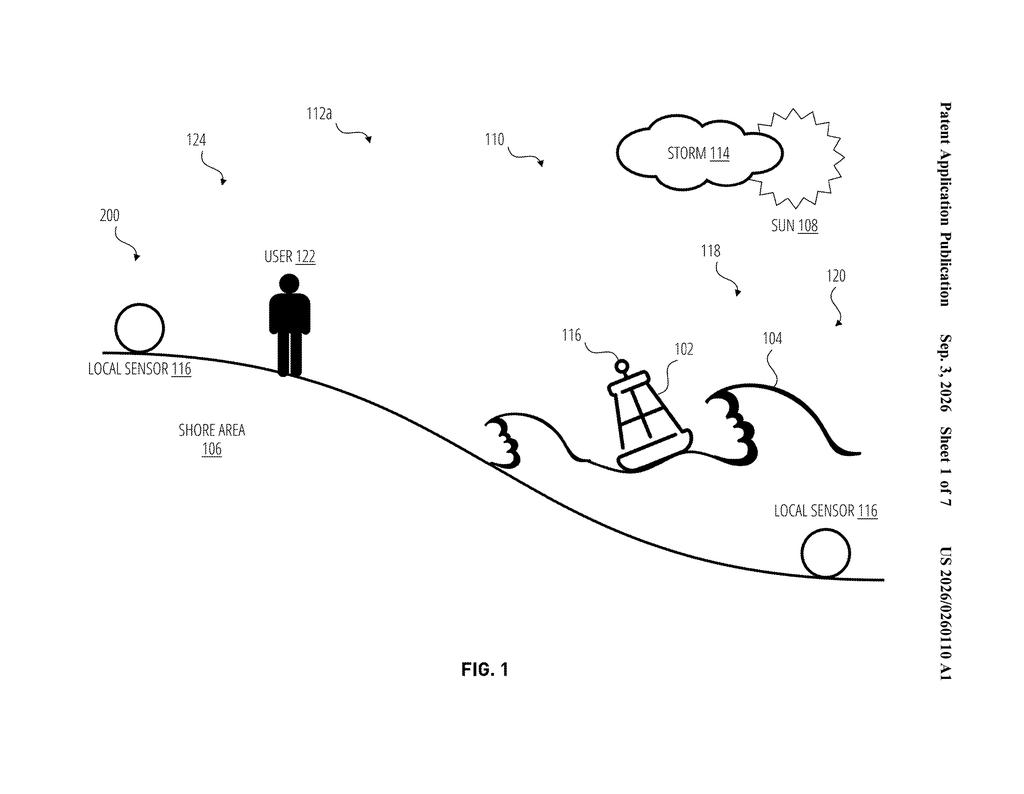
What Disney's water-condition prediction system actually does
Ever tried to figure out whether the water at your local beach is actually safe to swim in, even though the weather app says it's fine? Broad weather forecasts cover large areas, and conditions at one specific spot can be very different from the regional average.
Disney's patent describes a system that takes wide-area environmental data, things like regional weather readings and atmospheric conditions, and feeds it into a machine learning model trained specifically on water environments. That model translates the broad data into a prediction for a specific location, then automatically sends out an alert based on what it finds.
The practical upshot: instead of someone manually checking whether a lagoon or water attraction is safe and comfortable, a system could flag issues automatically, potentially before guests or staff even notice something is off.
… translating, by the processing element by utilizing a water environment machine learning model, the regional environmental data into the localized climate condition …
Translation: An AI model processes regional weather details to figure out conditions at a specific spot.
How the ML model turns regional data into local alerts
The patent describes a three-step method. First, a processing system receives regional environmental data, the kind of broad climate and weather information available from meteorological sources. Second, it runs that data through a water environment machine learning model, an AI trained to understand how large-scale conditions translate to small-scale, localized ones near or in bodies of water. Third, the system generates an alert based on whatever localized condition the model predicts.
The key idea is the middle step: the machine learning model acts as a translation layer. Regional data tells you what the atmosphere is doing over a wide area; the model infers what that means for a particular pond, pool, wave pool, or waterway. This is sometimes called downscaling in climate science, moving from coarse data to fine-grained predictions.
The patent is intentionally broad at this stage. It does not specify:
- Which environmental inputs the model uses (temperature, wind, humidity, water flow)
- What kinds of alerts are generated (safety warnings, operational flags, guest-facing notifications)
- Where or how the model was trained
That breadth is typical for early-stage filings, but it means the actual capability depends entirely on implementation details not disclosed here.
… generating, by the processing element, an alert based to the localized climate condition …
Translation: The system automatically creates a warning notice using the predicted weather data.
What this means for Disney's water-based attractions
Disney operates a significant number of water-based attractions, from wave pools and lazy rivers to outdoor lagoons and waterparks. Conditions at those locations can shift quickly, and monitoring them manually takes staff time and introduces delays. A system that automatically converts regional forecast data into a site-specific alert could speed up safety decisions or operational calls.
Disney's run of environmental and safety-tech filings suggests the company is building infrastructure for more automated park management. For guests, the most direct impact would be fewer surprise closures and faster responses when conditions change, though how any alerting system surfaces to the public depends on decisions well beyond what this patent covers.
Disney's 35th filing in our Disney coverage since June follows patents like auto-tagging content and matching voice performances.
A model that predicts local water conditions from regional weather data is only as good as the examples it learned from. If Disney trained it on a few specific parks, it may give unreliable alerts at any location with different geography or water features.
Regional weather data also arrives with a delay, sometimes hours old, which means the alert could fire after conditions have already shifted at the actual site. For broad safety planning that lag is probably acceptable, but it rules out any real use for fast, on-the-ground decisions.
The trade still reads as worth it for the obvious goal: replacing slow, manual environmental checks at park water features with something automatic and consistent. The patent just cannot tell you whether the model is actually trained well enough to be trusted when it matters most.
Get our take in your Top Stories
Liked this breakdown? Add Patentlyze as a preferred source on Google, and our plain-English take shows up more often in your Top Stories the next time Disney patent news breaks.
There are more where this came from
We read every patent application Big Tech publishes and send you the ones worth knowing. Plain English, free, every week.
The drawings
7 drawing sheets from US 2026/0260110 A1 · click any drawing to enlarge


Want this weekly breakdown for a company we don't cover? Patentlyze Pro →
Be the first to weigh in