
Disney Patents a Way to Train Theme Park Robots to Act Without a Human Puppeteer
Disney's theme park robots are often controlled by hidden human operators, but a new patent describes a training system that could let them interact with guests entirely on their own, by learning to mimic the operator's moves.
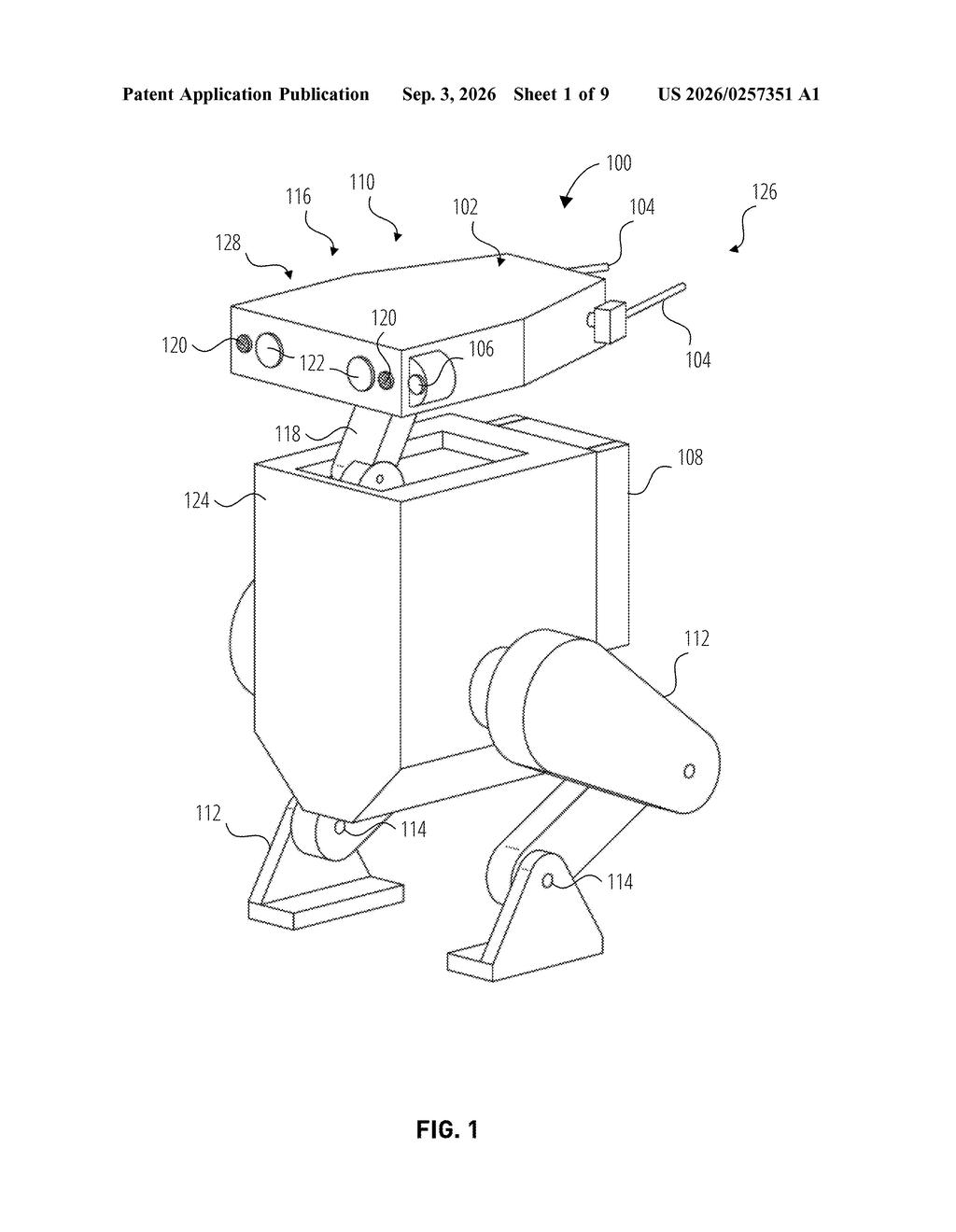
How Disney's robots learn to perform on their own
Imagine you're at a Disney park and a life-size robot character walks up, looks you in the eye, and reacts to your movements as if it actually knows you're there. That experience currently requires a skilled human operator somewhere nearby, steering every gesture and response in real time.
Disney's new filing describes a way to teach a robot to handle that job itself. The process works by recording how human operators control the robot, then training an AI model to reproduce those same decisions automatically. The AI watches the robot's position, tracks what commands the operator has been sending, and figures out what the next move should be.
The goal is a robot that can carry on a convincing, natural interaction with a guest, adapting moment to moment, without anyone at the controls.
… applying, via the processing element, noise to the operator command to generate a noisy operator command; encoding, via the processing element, the noisy operator command, the pose data, and a history operator commands into a plurality of input tokens; …
Translation: It scrambles the human's past instructions with random noise and turns them into data tokens.
How the diffusion model converts operator moves into robot actions
The system is built around a diffusion model, a type of AI originally made famous by image generators like Stable Diffusion. Instead of generating pictures, this one generates robot movement commands. The training trick: the model starts with a correct operator command, adds random noise to scramble it, then learns to "denoise" it back into something useful. That back-and-forth teaches the model what a good command looks like given the current situation.
During training, the system ingests three streams of information:
- Operator commands: the actual inputs a human puppeteer sends to the robot
- Pose data: a running history of the robot's physical position and orientation (where its head is pointing, how its arms are angled, and so on)
- Command history: what the operator told the robot to do over the past few moments
All three are encoded into tokens (small numerical packages) and fed into a transformer encoder, the same architectural backbone behind large language models. The encoder weighs the relationships between past and present data to predict the right next command.
Once trained, the model runs on the robot itself. It reads the guest's movements (the pose data), checks what it has been doing recently, and generates its own commands, no operator required.
… training the model to perform denoising to generate an autonomous command from the noisy operator command based on the pose data and command history.
Translation: The system learns to clean up the scrambled data so the robot knows what to do next on its own.
What autonomous robot performers mean for Disney parks
For Disney, the practical upside is significant. A single skilled operator can only run one robot at a time, and keeping a human in the loop at scale is expensive. A robot that can perform autonomously for even stretches of a guest interaction could let operators step in only for the moments that need a human touch.
Disney's push into autonomous character robotics has been building for years, and this filing fits a pattern of trying to make robotic characters cheaper and more consistent to operate. For park visitors, the promise is a character that feels genuinely responsive rather than canned. The practical bar, though, is high: guests expect the magic to hold up across thousands of different people, lighting conditions, and unscripted moments.
Disney's second filing in the AI training & infrastructure topic we've tracked since September follows one predicting water conditions.
A skilled human puppeteer reads a child's mood, recovers from an awkward silence, and improvises in ways that make a moment feel magical. This system learns from recordings of those operators and produces behavior that reflects their average, which means it will likely handle typical interactions well and unusual ones poorly.
That gap carries a real cost. Theme park memories are made in unscripted moments, and a model trained to produce statistically plausible behavior may land as slightly flat to guests who have experienced the best performances, even if they cannot articulate why.
The trade probably makes sense for high-volume settings where consistency matters more than peak artistry. For an intimate, close-up character moment with a child, losing a skilled human in the loop is a loss guests will feel without being able to name it.
Get our take in your Top Stories
Liked this breakdown? Add Patentlyze as a preferred source on Google, and our plain-English take shows up more often in your Top Stories the next time Disney patent news breaks.
There are more where this came from
We read every patent application Big Tech publishes and send you the ones worth knowing. Plain English, free, every week.
The drawings
9 drawing sheets from US 2026/0257351 A1 · click any drawing to enlarge


Show the other 1 sheets

Want this weekly breakdown for a company we don't cover? Patentlyze Pro →
Be the first to weigh in