
Microsoft Patent Shows Two AI Models Collaborating to Enhance Chat Support
Microsoft is patenting a system where one AI reads your conversation to figure out what kind of help you need, then hands that judgment to a second AI that figures out what to say. It's a division-of-labor approach to chatbots, and it could change how automated assistants handle messy, multi-turn conversations.
What Microsoft's two-AI chat assistant actually does
Ever tried explaining your problem to a chatbot, only to get a generic response that completely missed the point? That's usually because the bot is trying to read, categorize, and respond all at once.
Microsoft's patent describes a system where two separate AI models each do one job. The first reads your conversation thread and figures out what's going on: are you complaining, asking a question, or trying to get a task done? It labels the situation. The second AI takes that label and produces a reply that actually fits.
A third step tags parts of the conversation for later, so the system can learn or report on how things went. Think of it like a triage nurse who reads your symptoms and hands a summary to the doctor, rather than making you repeat yourself twice.
… formulating a plan execution prompt based on the first thread classification, sending the plan execution prompt to a second large language model, receiving a second thread portion generated and output by the second large language model based on the plan execution prompt …
Translation: The system uses the first model's output to guide a second AI model in generating the next part of the conversation.
How the two language models split the work
The system works by breaking the job of an AI assistant into distinct stages, each handled by a different model.
Stage one: A thread classification prompt is built from the current portion of an ongoing conversation and sent to a first large language model (LLM). That model's only job is to output a classification: a structured label describing what kind of conversation is happening and what the user appears to need.
Stage two: That classification is used to build a plan execution prompt, which is sent to a second LLM. This model has access to both the classification and the full conversation history, and it generates the actual response. Because it receives a pre-analyzed summary of the situation, it can focus on producing a useful reply rather than re-reading everything from scratch.
Stage three: The system generates a label for another portion of the thread. This is likely used for quality tracking, training data, or routing decisions downstream.
The patent's claim centers on online dialogs (multi-turn conversations, not single-shot queries), which suggests the design is aimed at customer support, help desks, or assistant-style products where conversations span many exchanges.
What this means for AI-powered customer support
For everyday users, this kind of architecture could mean AI assistants that stop asking you to re-explain yourself mid-conversation. If the first model correctly identifies that you're stuck in a loop with a billing problem, the second model can skip the pleasantries and go straight to a resolution path.
Microsoft's run of AI assistant filings suggests the company is building out the plumbing for Copilot and related products to handle complex, real-world support conversations, not just single-turn Q&A. A two-model pipeline is more expensive to run than a single model, but it could deliver meaningfully better results in high-stakes contexts like enterprise help desks, where a wrong answer costs real time.
That makes this Microsoft's 18th filing we've tracked since May in our AI teams working together watchlist, which already includes applications like giving AI agents a visual presence and AI that fixes chip code.
The core design choice here is specialization: one model classifies, one model responds. That split trades efficiency for accuracy. Running two LLMs per conversation turn is roughly twice the compute cost of running one, and in a high-volume support setting that cost adds up fast.
The question is whether the classification step earns its keep. If the first model frequently mislabels the conversation, the second model gets a bad briefing and produces a worse answer than it would have with no briefing at all. The whole system's quality ceiling is set by how good that first classification is, and the patent doesn't specify how that model is trained or validated.
That said, the architecture makes sense for a specific class of problems: long, ambiguous conversations where context drift is the main failure mode. For short, direct queries, this is overkill. For multi-turn enterprise support threads, it might be exactly the right call.
Get our take in your Top Stories
Liked this breakdown? Add Patentlyze as a preferred source on Google, and our plain-English take shows up more often in your Top Stories the next time Microsoft patent news breaks.
There are more where this came from
We read every patent application Big Tech publishes and send you the ones worth knowing. Plain English, free, every week.
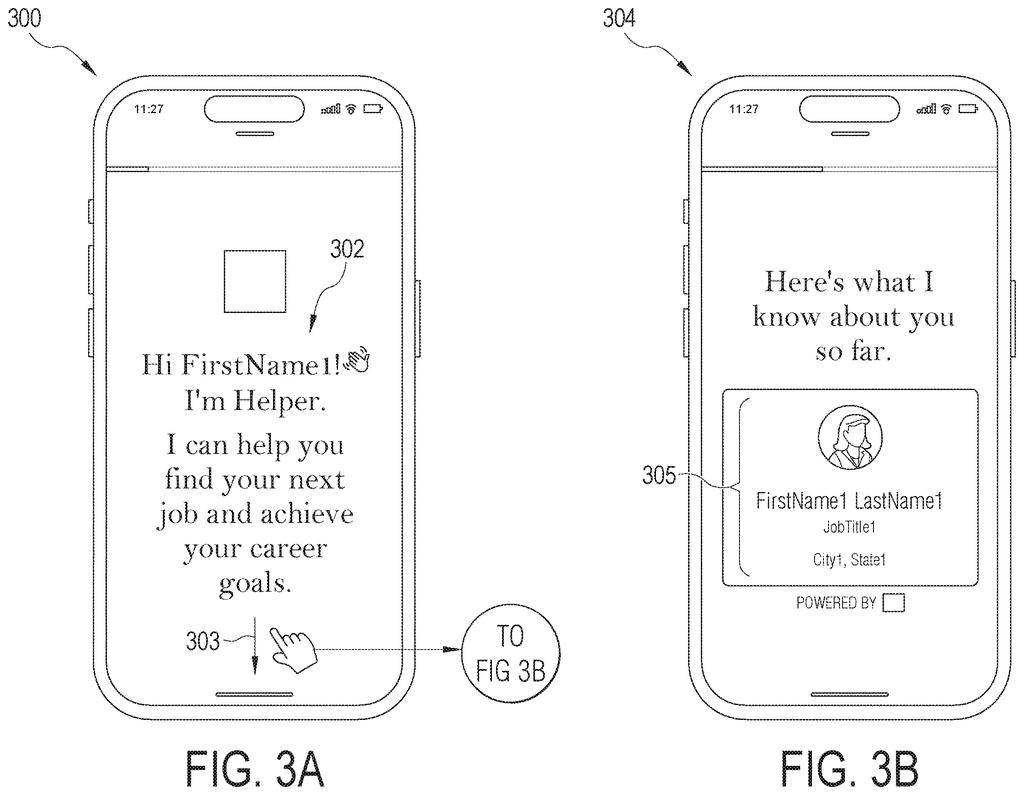
The drawings
23 drawing sheets from US 2026/0260076 A1 · click any drawing to enlarge


Show the other 15 sheets


Want this weekly breakdown for a company we don't cover? Patentlyze Pro →
Be the first to weigh in