
Sony Patent Covers Training AI Models on Approximate Data Over Private Sets
Sony has filed a patent for a method that trains AI models on publicly available data instead of the sensitive, real-world datasets those models ultimately need to work with. It's a workaround for one of AI's biggest headaches: getting your hands on enough legitimate data.
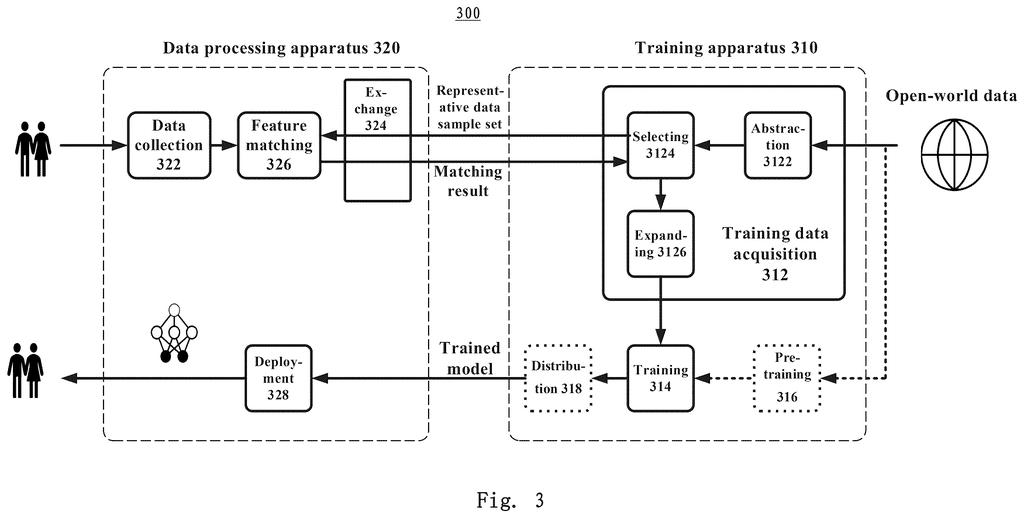
What Sony's open-world data training approach actually does
Every time a company builds a new AI model, its engineers face the same wall: the data they need is locked up. Medical records, financial transactions, private user behavior, all of it is either legally restricted, too sensitive to share, or simply too expensive to collect and license.
Sony's patent describes a way around that. Instead of using the real, restricted dataset, you train the AI on a lookalike dataset made from freely available public information. The idea is that if the public data is similar enough to the real thing, the model picks up roughly the same lessons without ever touching anything it shouldn't.
Think of it like a chef who can't taste the dish they're supposed to recreate, so they practice on a very similar recipe instead. The final dish might not be perfect, but the chef arrives far better prepared than if they'd never cooked at all.
acquiring an approximate dataset composed of open-world data, which is similar to an actual dataset; and training a model using the approximate dataset.
Translation: Sony's system trains artificial intelligence using public data that resembles private information.
How the approximate dataset substitutes for real data
The patent describes a three-part process at a high level. First, you identify the actual dataset, the real data your model eventually needs to understand. Then you source or construct an approximate dataset built from open-world data, meaning publicly available information that shares meaningful statistical or structural properties with the real thing. Finally, you run model training on that approximate dataset instead of the real one.
The core technical claim is that the similarity between the approximate and actual datasets is close enough that a model trained on the former will generalize usefully to the latter. In machine-learning terms, the model learns a distribution (a sense of what the data looks like and how its parts relate) that transfers across the gap between public proxy data and private real data.
The patent does not specify how that similarity is measured or guaranteed, which is a notable gap. It also does not pin down a particular domain: the method is described broadly enough to apply to image recognition, text, audio, sensor data, or anything else Sony might want to train a model on.
The practical upshot is a training pipeline that could let Sony build AI systems in regulated or privacy-sensitive domains without needing direct access to the sensitive data itself, potentially cutting legal and logistical barriers at the data-acquisition stage.
What this means for AI privacy and training at scale
For you as a consumer, this kind of technique is what sits behind AI features in cameras, televisions, or headsets that needed to learn from real-world usage patterns without anyone at Sony having to store or process your personal data directly. If the approach works reliably, products could get more capable faster, and with fewer privacy compromises along the way.
Sony's run of privacy-aware AI filings suggests the company is thinking carefully about how to build AI in markets where data regulations are tightening, especially in Europe and Japan. Whether this specific method is accurate enough to be useful in practice is another question, but the direction is clear: find ways to build capable AI without depending on data you're not allowed to have.
Sony's fifth filing we've tracked since July in the on-device AI privacy push follows earlier applications including one routing AI through radio links and one keeping personal data on-device.
The core trade here is accuracy for access. Sony's approach lets you train a model on freely available lookalike data instead of expensive or restricted real-world data, which lowers the cost of entry but removes any guarantee that the training material actually reflects the problem you are trying to solve.
That gap matters enormously depending on what the model is for. The patent offers no way to measure how close "close enough" really is, which means a model could learn the wrong lessons and nobody would know until it fails in the field.
For casual applications, that risk is probably acceptable. For anything where a wrong answer carries real consequences, like reading a medical scan or flagging financial fraud, the absence of a rigorous similarity check makes this a promising starting point rather than a finished solution.
Get our take in your Top Stories
Liked this breakdown? Add Patentlyze as a preferred source on Google, and our plain-English take shows up more often in your Top Stories the next time Sony patent news breaks.
There are more where this came from
We read every patent application Big Tech publishes and send you the ones worth knowing. Plain English, free, every week.
The drawings
5 drawing sheets from US 2026/0260154 A1 · click any drawing to enlarge


Want this weekly breakdown for a company we don't cover? Patentlyze Pro →
Be the first to weigh in