
Sony Patents Smarter Robot Navigation That Learns to Dodge Obstacles Faster
Sony wants to shrink the AI brain guiding a robot around obstacles down to the bare minimum. The idea is that a smaller, faster model can make navigation decisions in real time without the bloat that usually slows training and deployment.
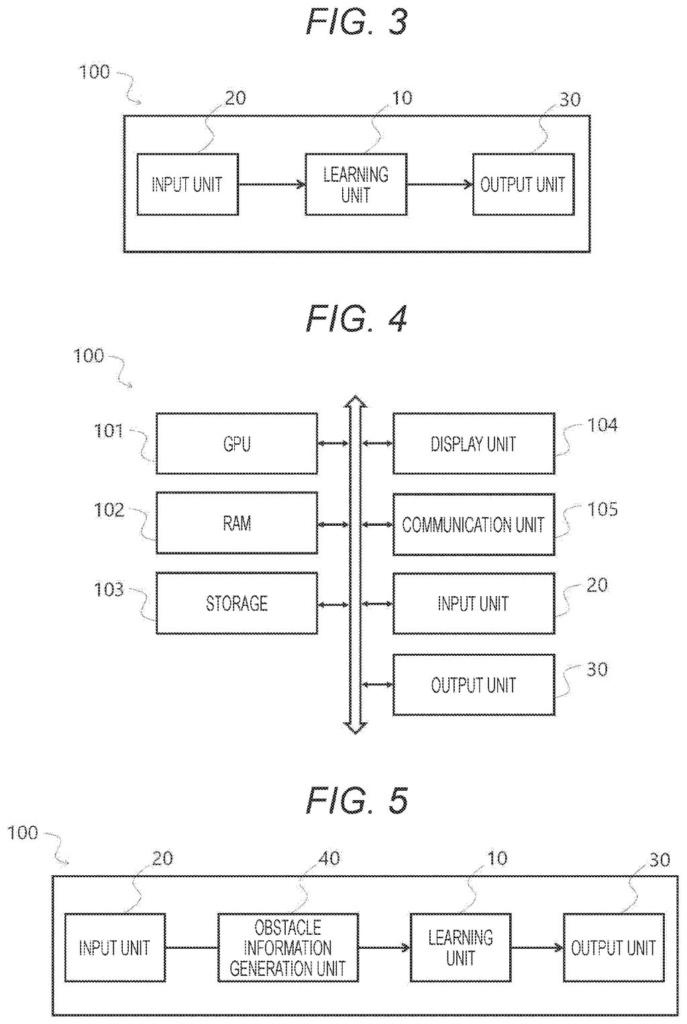
How Sony's obstacle-avoidance model actually works
You're watching a warehouse robot move toward a shelf, and every few milliseconds it has to decide: is the path clear, or does it need to swerve? That decision usually runs through a large, power-hungry AI model that takes a long time to train and even longer to respond. Sony's new patent proposes a stripped-down version that keeps only what the robot truly needs.
The model takes in just three things: where the robot is right now, where it needs to go, and the distance and direction to the single nearest obstacle. From those three inputs it spits out an updated position, essentially a tiny nudge in the right direction, repeated over and over until the robot reaches its target.
The pitch is speed. A smaller network trains faster and responds faster, which matters a lot when a robot is moving through a real environment and can't afford to wait. Sony is betting that knowing only about the closest obstacle is enough to keep things safe.
… current position information of a controlled device, target position information including position information of a movement destination of the controlled device, and obstacle information including a distance and a direction from the controlled device to a closest obstacle …
Translation: The AI system looks at where the robot is, where it wants to go, and what is blocking its path.
Inside Sony's three-input learning model for navigation
The patent describes a learning model (a trained neural network) that handles motion planning for a robot or other controlled device. Instead of feeding the AI a full map of the environment or data about every object nearby, Sony's design trims the inputs to three signals:
- Current position of the robot
- Target position where the robot needs to go
- Closest obstacle only (its distance and compass direction from the robot)
The model then outputs an updated position, meaning a small adjustment to where the robot should move next. That output feeds back in as the new current position, and the loop repeats until the robot arrives at its destination without hitting anything.
The core engineering argument is that neural networks used for obstacle avoidance are often over-specified, taking in far more sensor data than necessary. By reducing the input size, Sony claims both training time and inference time (how long it takes the trained model to produce an answer during actual use) shrink substantially. The patent does not name a specific robot or product; it describes the architecture at a general level that could apply to industrial arms, autonomous vehicles, or consumer devices.
A learning time and an estimation time are shortened by reducing a size of a neural network.
Translation: Making the AI brain smaller helps the robot learn and make decisions much faster.
What this means for Sony's robotics ambitions
For Sony, which has been building out robotics and automation hardware, a fast and lightweight navigation model is a practical building block rather than a flashy research result. Smaller models cost less to run on embedded chips, meaning the same hardware can handle more decisions per second, or cheaper hardware can handle the same workload. That matters most in products where the processor is physically small and battery-powered.
The tradeoff baked into this design is also its biggest question mark: the model only ever looks at the single nearest obstacle. In a cluttered space with several objects close together, ignoring the second-nearest could cause problems. Sony's bet is that the loop runs fast enough to catch the next obstacle on the very next cycle. Whether that holds in chaotic real-world environments is an open question, and it sits alongside other new Big Tech patents in robotics navigation that are each making their own tradeoffs between sensor richness and processing speed.
That makes this Sony's fifth filing we've tracked since July in our robot grasping and movement watchlist, after one on self-correcting grip and one on artificial robot skin.
Sony's design feeds the robot only one piece of obstacle information at a time: the single closest thing in its path. That choice makes the system faster and leaner, but it means a robot navigating a cluttered hallway is, in effect, ignoring everything except the nearest object.
The real cost shows up in tight, busy spaces. If three objects sit at nearly the same distance, the system sees only one of them, trusting that the robot will update its picture of the world faster than new dangers appear. That assumption holds in a controlled warehouse and starts to break down in a living room.
For predictable industrial environments, this reads as a sensible and honest scope decision. For messy home settings, the single-nearest-obstacle rule is a genuine limitation the design does not resolve, and deployment context will determine whether Sony's trade was worth making.
Get our take in your Top Stories
Liked this breakdown? Add Patentlyze as a preferred source on Google, and our plain-English take shows up more often in your Top Stories the next time Sony patent news breaks.
There are more where this came from
We read every patent application Big Tech publishes and send you the ones worth knowing. Plain English, free, every week.
The drawings
4 drawing sheets from US 2026/0249451 A1 · click any drawing to enlarge


Want this weekly breakdown for a company we don't cover? Patentlyze Pro →
Be the first to weigh in