
IBM Patents an AI System That Picks Its Own Quantum Error-Correction Settings
Quantum computers make a lot of mistakes, and fixing those mistakes currently requires a lot of expert guesswork. IBM has filed a patent for a machine learning system that handles that guesswork automatically.
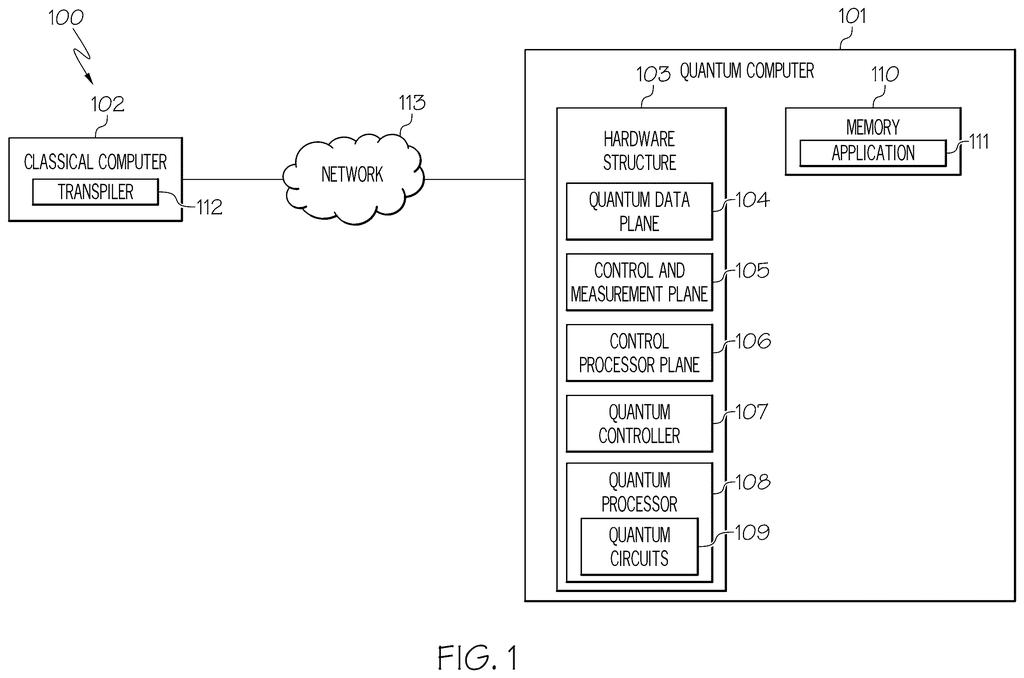
What IBM's self-tuning quantum error fix actually does
A quantum computer stares at a problem and spits out answers riddled with errors caused by the noise of the physical hardware it runs on. Right now, the people trying to clean up those errors have to manually pick the right settings for doing so, and a wrong guess wastes time and produces bad results.
IBM's patent describes a system that learns from past quantum circuits and hardware configurations to predict the best cleanup settings on its own. You feed it the structure of your quantum program and tell it which machine you're running it on, and it figures out the rest.
The goal is to make quantum error correction less of an art form and more of an automated step, so researchers and engineers spend less time tuning dials and more time getting answers they can actually trust.
training a machine learning model to predict noise factors and an extrapolator to be used in said quantum error mitigation based on structures of quantum circuits and selections of different quantum hardware …
Translation: The system learns how to fix quantum calculation errors by studying circuit layouts and specific computer hardware.
How the ML model selects noise factors and extrapolators
Quantum computers don't run perfectly. The physical qubits (the quantum equivalent of a computer's bits) are sensitive to temperature, electromagnetic interference, and dozens of other real-world disturbances that introduce errors into every calculation. A technique called zero-noise extrapolation tries to correct for this by running the circuit at several artificially increased noise levels, then mathematically projecting back to what the result would have been at zero noise.
The catch is that this process requires choosing two things: the noise factors (how much to amplify the noise at each run) and the extrapolator (the mathematical formula used to project back). Bad choices for either can make the corrected answer worse than the raw error-filled one.
IBM's patent trains a machine learning model on a library of quantum circuits and their associated hardware noise profiles. The model learns which combinations of noise factors and extrapolators worked best for which types of circuits on which machines. When you give it a new circuit and a target machine, it predicts the optimal pair automatically.
Error mitigation then runs on the completed circuit output using those predicted settings, producing a cleaner result without requiring an expert to manually experiment with different configurations first.
What this means for quantum computing reliability
For the people who use quantum computing today, mostly researchers and enterprise teams running chemistry simulations or optimization problems, the quality of results depends heavily on how well the error mitigation is tuned. A misconfigured run doesn't just give a slightly off answer; it can give a completely wrong one that looks plausible. Automating the selection of mitigation settings means fewer wasted compute cycles and more trustworthy outputs.
IBM's steady investment in quantum error work reflects a broader challenge the field faces: raw qubit counts keep climbing, but usable accuracy hasn't kept pace. A system that removes one of the biggest manual bottlenecks in the error-correction pipeline is the kind of incremental fix that makes quantum hardware more practical to use, even before fully fault-tolerant machines arrive.
That makes this IBM's 19th filing we've tracked since May in our quantum computing buildout watchlist, adding to work like their modular error-free architecture and their noise-reduction method.
When you run a quantum computing job today, getting accurate results requires manually tuning a set of configuration choices that most users don't have the background to make well. IBM's approach hands that tuning decision to a trained model, so the system picks the right settings automatically based on your specific program and the specific machine you're running it on.
The practical difference shows up before your job even runs. Instead of discovering mid-experiment that your configuration was wrong and repeating expensive compute time, you get a reasonable setup from the start. That matters most for teams without a dedicated quantum physicist on staff.
Whether the model holds up across the full messiness of real-world programs is a question only published results will settle. But the failure it prevents is concrete: wasted runs, wasted time, and conclusions drawn from results that were misconfigured.
There are more where this came from
We read every patent application Big Tech publishes and send you the ones worth knowing. Plain English, free, every week.
The drawings
5 drawing sheets from US 2026/0268197 A1 · click any drawing to enlarge


Want this weekly breakdown for a company we don't cover? Patentlyze Pro →