
IBM Patents a Modular Architecture for Running Error-Free Quantum Programs
Quantum computers are famously error-prone, and that flaw has kept them out of serious use for decades. IBM's new patent describes an architecture designed to run quantum programs reliably, by separating the jobs of storing quantum information and performing calculations into distinct layers.
How IBM wants quantum computers to stop making mistakes
A quantum computer makes a calculation, and somewhere in the middle, a stray vibration or a tiny bit of heat flips one of its fragile memory units in the wrong direction. The answer comes out wrong, and the machine may not even know it happened. That is the central problem blocking quantum computing from practical use today.
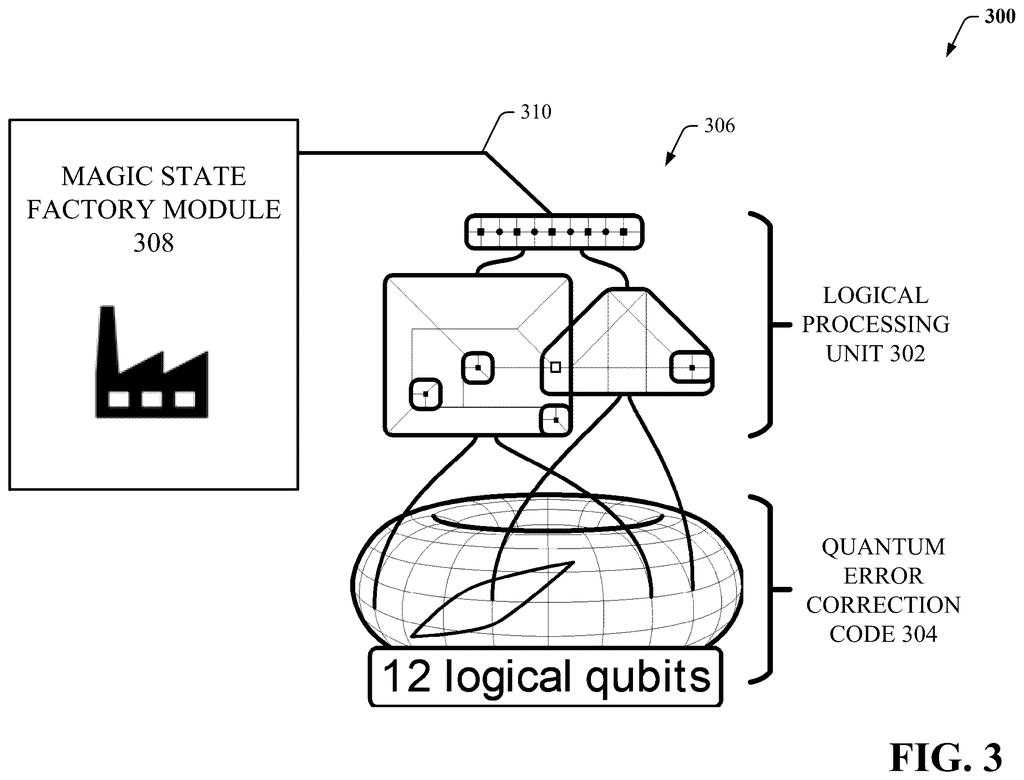
IBM's patent describes a system that tackles this by encoding information across many physical units at once, so that small errors can be caught and corrected before they spread. Think of it like writing a message with so many built-in redundancies that a few garbled letters don't change the meaning. The system uses a class of operations called stabilizer operations to maintain that error-resistant state, and then draws on carefully prepared resources, called magic states, whenever it needs to perform the kinds of calculations that go beyond simple error-checking.
The goal is a modular design: individual quantum processing units handle specific tasks, and the architecture knits them together into something that can run a universal quantum program, meaning any calculation a quantum computer could theoretically perform.
an operation component that performs, on a quantum processor, stabilizer operations on logical qubits encoded in a quantum error correction code; and an execution component that performs, on the quantum processor, universal quantum operations on the logical qubits using the stabilizer operations, wherein the stabilizer operations consume magic states.
Translation: The system runs error-protected quantum operations using a special resource called magic states.
How stabilizer operations and magic states power the system
The patent centers on a concept called fault-tolerant quantum computing, which means building a quantum machine that can catch its own errors as it runs. Today's quantum processors are noisy enough that most calculations degrade before they finish; fault tolerance is the engineering discipline aimed at fixing that.
At the core of the system are logical qubits (the error-corrected, reliable versions of quantum bits) encoded using a quantum error correction code. The raw physical qubits are grouped together so that errors on individual units can be detected and reversed without disturbing the underlying logical information.
The architecture splits the workload into two layers:
- Stabilizer operations: a family of quantum gates (the basic operations of quantum computing) that are relatively easy to perform in a fault-tolerant way. These handle memory, error checking, and a large subset of computational steps.
- Magic state consumption: for operations that can't be done with stabilizers alone, the system uses pre-prepared quantum resources called magic states. These are injected into the computation at the moment they're needed, extending the system's reach to universal quantum computation (the full range of things a quantum computer can do).
The modular framing means the processor, memory, and error-correction layers can be separated and scaled independently, which is important as quantum hardware grows from dozens of qubits toward thousands.
What fault-tolerant quantum computing means for real problems
Fault tolerance is widely considered the single biggest engineering obstacle between today's experimental quantum hardware and machines that can solve real problems in chemistry, materials science, or cryptography. IBM's sustained filing activity around quantum error correction reflects how seriously the industry treats this barrier.
For anyone watching quantum computing's slow march toward practical use, this patent represents IBM staking out a specific architectural philosophy: that Clifford-based stabilizer circuits, combined with on-demand magic state resources, are the right skeleton for a scalable fault-tolerant machine. Whether that proves correct is a long-horizon question, but the modular design gives IBM room to upgrade individual components as physical qubit quality improves.
That makes this IBM's 18th filing we've tracked since May on our quantum computing buildout watchlist, following earlier applications like one on quieting circuit noise and one using reinforcement learning for compiling.
The core tradeoff here is between correctability and overhead. To get error-free logical qubits, you have to spend a lot of physical qubits encoding each one, and you have to spend even more generating the magic states that enable full computation. At current qubit counts, that overhead is enormous, often requiring hundreds of physical qubits to protect a single logical one.
IBM is betting that the overhead is worth it because it's the only credible path to trustworthy quantum computation. That's probably right in the long run, but the architecture described here only makes sense at scales the industry hasn't reached yet. Filing the patent now is less about protecting a shipping product and more about staking a claim on the design vocabulary of future machines.
The modular framing is the most interesting part of the design. Separating memory from execution from error correction means individual pieces can be swapped out as hardware improves, without redesigning the whole system. That's a pragmatic insurance policy for a field where the underlying physical technology is still changing fast.
There are more where this came from
We read every patent application Big Tech publishes and send you the ones worth knowing. Plain English, free, every week.
The drawings
15 drawing sheets from US 2026/0268200 A1 · click any drawing to enlarge


Want this weekly breakdown for a company we don't cover? Patentlyze Pro →