
Qualcomm Patents a Way to Use Radio Signals to Sharpen What a Camera Focuses On
Cameras already know where to look, but Qualcomm wants them to know where to look more precisely, by pulling in radio signal data to refine exactly which part of a scene deserves attention.
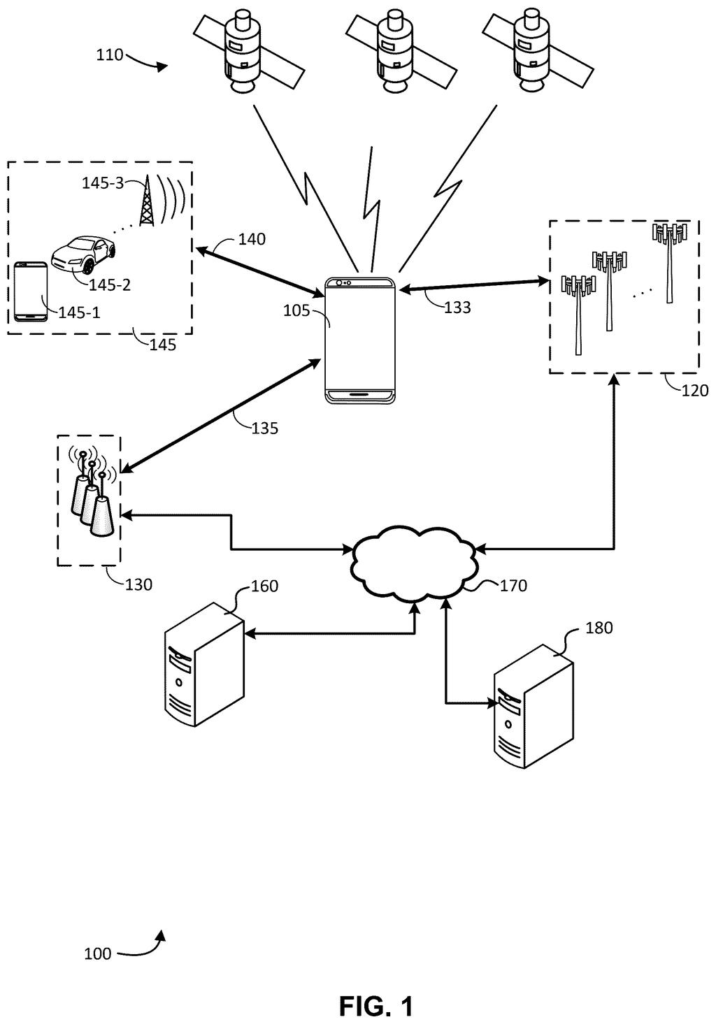
What Qualcomm's RF-guided camera targeting actually does
Imagine a security camera watching a crowded parking lot. A car with a connected sensor tag pulls in, and instead of scanning the whole frame, the system instantly focuses just on that car's license plate area, because the car's own wireless device told the camera where to concentrate.
That's the core idea here. Qualcomm's patent describes a way to combine what a camera (or other sensor) sees with information coming from a nearby radio frequency device, like a Wi-Fi chip, a cellular modem, or a Bluetooth tag. The radio device shares details about itself or the object it's attached to, and the system uses those details to shrink or shift the portion of the image it actually cares about.
The result is a tighter, more accurate region of interest: the slice of the image the system analyzes, stores, or acts on. Less wasted processing power, more accurate targeting of the right object in a busy scene.
obtaining, from one or more sensors, sensor data corresponding to a scene associated with at least a portion of a target object, wherein the RF device is associated with the target object …
Translation: The camera captures visual data of a specific subject that carries a radio transmitter.
How radio signal data narrows the camera's region of interest
The patent describes a three-step process running inside a device that combines sensor input with radio frequency data.
- Sensor data capture: One or more sensors (a camera, radar, lidar) scan a scene and identify a broad region tied to a target object.
- RF status pull: The system fetches status information from the RF device associated with that object (think: signal strength, device ID, location estimate from the radio) or retrieves stored object information (size, shape, category of the thing the RF device is attached to).
- Region refinement: The system combines both inputs to compute a tighter, more accurate bounding area, then performs an action based on it, such as cropping, tracking, or triggering an alert.
The key insight is that the radio device already knows things about itself and its host object that a camera cannot easily infer from pixels alone. A 5G modem embedded in a vehicle, for example, can report the vehicle's class or dimensions. The camera feed then only needs to confirm position, and the system narrows its focus accordingly.
The claim is written broadly: it does not specify the type of sensor, the type of RF device, or the type of action taken. Any sensor plus any RF-associated object plus any downstream action could fall under its scope.
… performing an action with respect to the target object based on a region of interest associated with the sensor data, the region of interest corresponding to the RF device and at least a portion of the target object …
Translation: The system adjusts camera focus on the target using data combined from the visual scene and the radio signal.
What this means for security cameras and connected devices
For everyday users, this could mean security or monitoring cameras that waste far less processing power staring at irrelevant parts of a frame, which matters when those cameras run on battery or transmit over slow networks. A camera that already knows a tracked device is roughly car-sized, for instance, can skip analyzing the sky and focus only on the road surface where the car actually appears.
Qualcomm's steady investment in combining RF sensing with computer vision points toward a future where connected chips do more than transmit data. If this approach makes it into commercial camera systems or automotive sensing rigs, the same chip handling your wireless signal could also be improving what the lens pays attention to.
This is the 18th Qualcomm filing in our Camera topic we've tracked since May, adding to earlier applications like choosing how photos are read and sharing camera clues for location.
Claim 1 covers any system that collects sensor data about a scene, gets information from a nearby radio device, and uses that combination to decide which part of the scene receives attention or action. The claim names no specific sensor type, no specific radio technology, and no specific action, so its boundaries are as wide as the plain words suggest.
That width has real consequences. A security camera zooming toward a doorway because a Bluetooth tag triggered nearby, a car's vision system narrowing focus to a pedestrian because their phone broadcast location data, a drone locking onto a package because a wireless chip inside reported its status: all of these fit the claim as written, without adjustment.
If this claim passes examination unchanged, any manufacturer combining a camera with a radio signal to guide where that camera focuses could face legal exposure, covering ground that products already on store shelves occupy today.
There are more where this came from
We read every patent application Big Tech publishes and send you the ones worth knowing. Plain English, free, every week.
The drawings
10 drawing sheets from US 2026/0268629 A1 · click any drawing to enlarge


Want this weekly breakdown for a company we don't cover? Patentlyze Pro →