
Qualcomm Patents a System for Tracking Visual Features Across Camera Frames
Knowing where an object was in one camera frame is useful. Knowing where it will appear in the next frame, before you even search for it, is a lot more efficient. That's the core idea behind this Qualcomm filing.
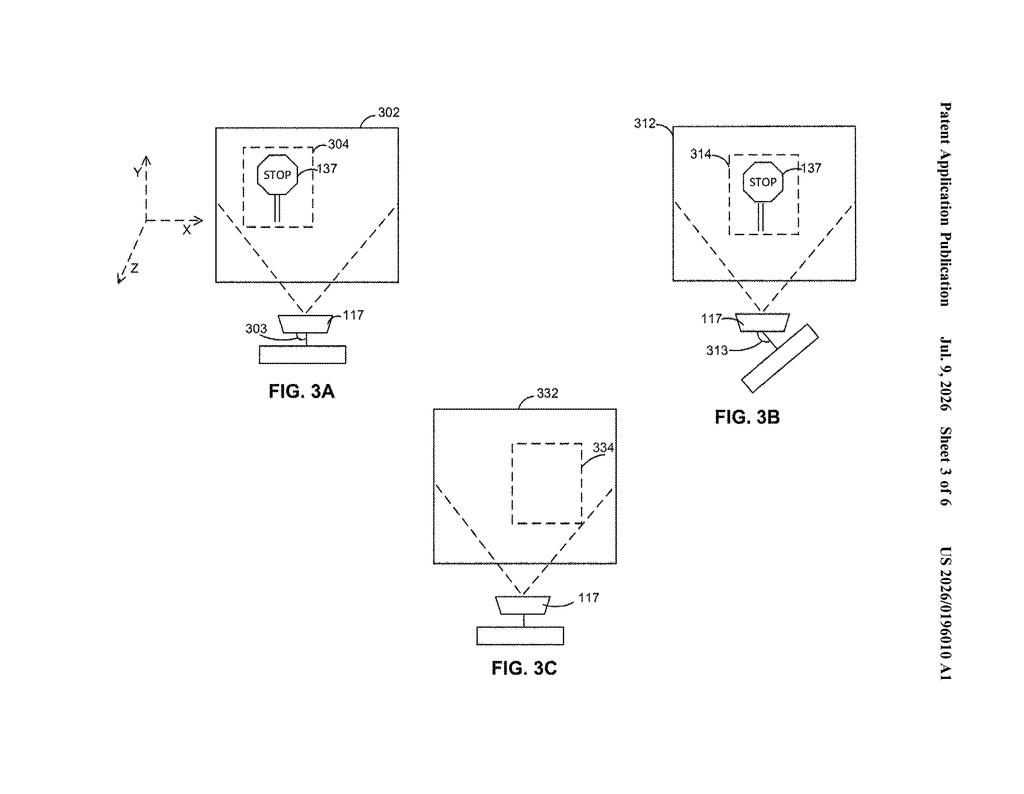
How Qualcomm's camera feature tracker actually works
Imagine your phone's camera is trying to keep track of a specific point on a table as you slowly walk around it. Every time the camera moves, that point shifts around the screen, and the phone has to figure out where it went. Doing that search across an entire image is slow and burns through processing power.
Qualcomm's patent describes a shortcut. Instead of searching the whole next image, the system uses data about how the camera moved between shots to predict where the feature is likely to show up. It narrows the search down to just a small portion of the incoming image, which is much faster.
This kind of tracking shows up in augmented reality (where virtual objects need to stay glued to real surfaces), in robotics (where a device needs to follow landmarks to understand its position), and in computational photography. It's a behind-the-scenes efficiency fix, not a flashy new camera mode.
How sensor pose data guides the feature search
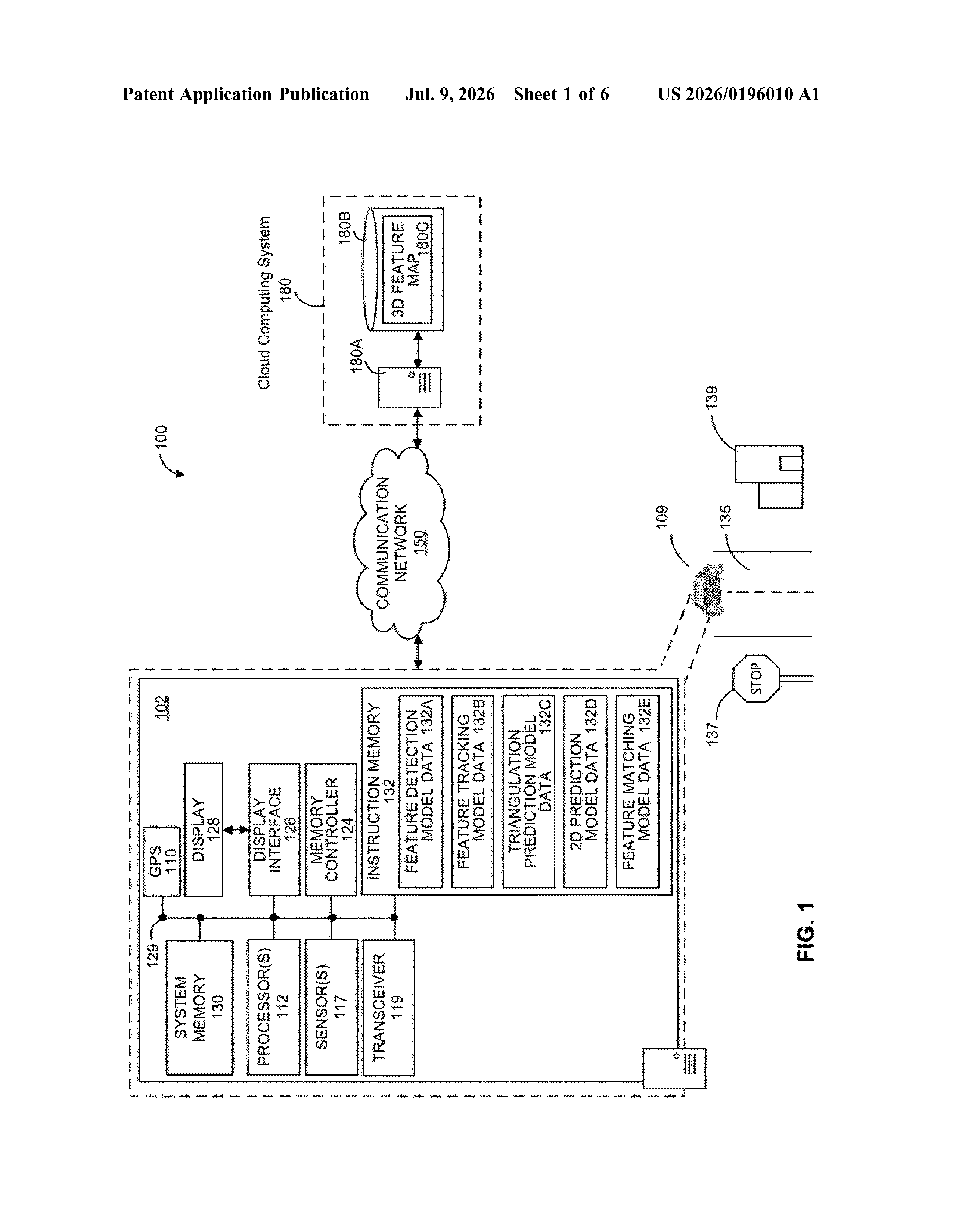
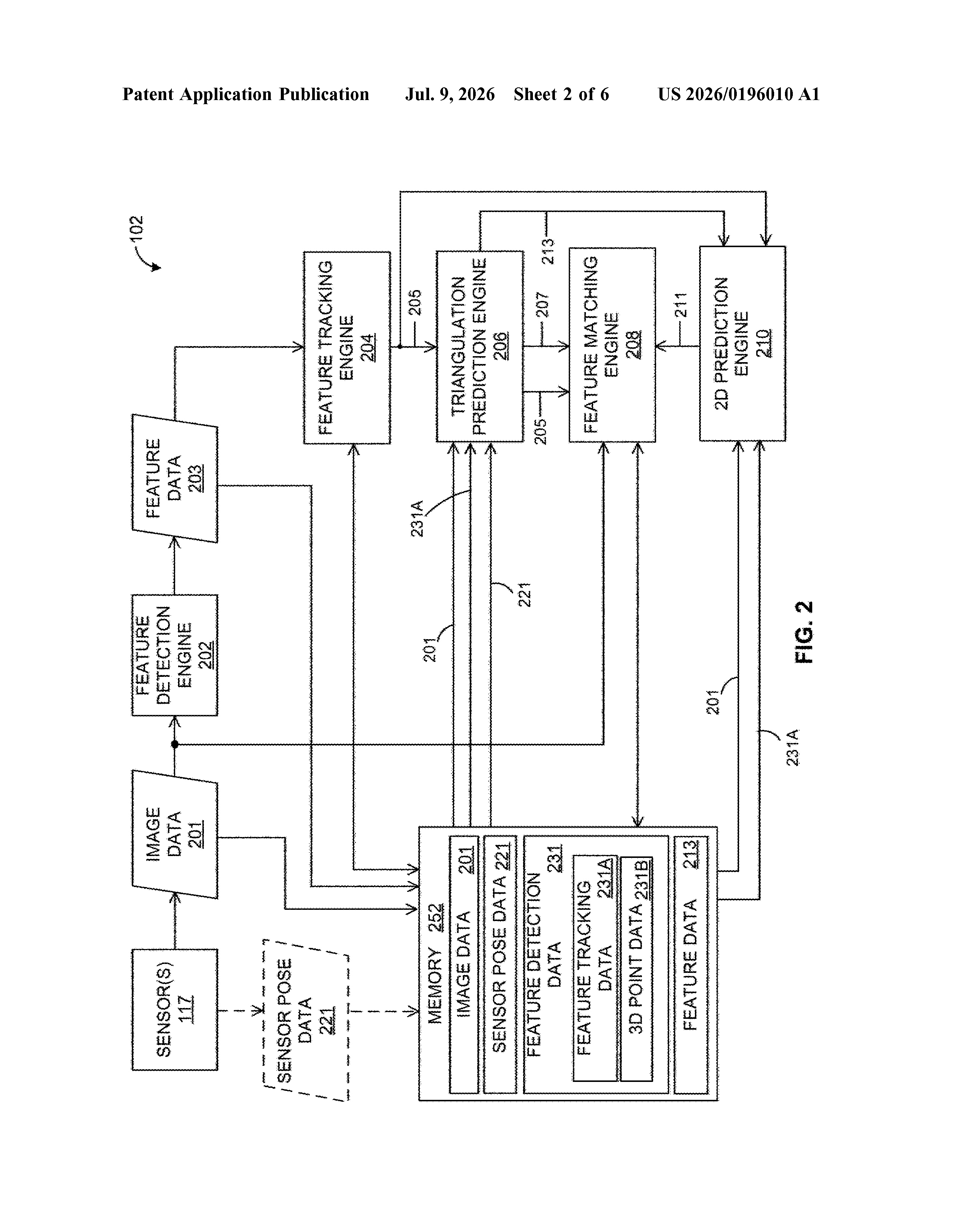
The patent describes an apparatus (likely a chip or processor block) that takes in at least two images from a camera and locates a specific visual feature, like a corner, edge, or textured surface point, in both of them.
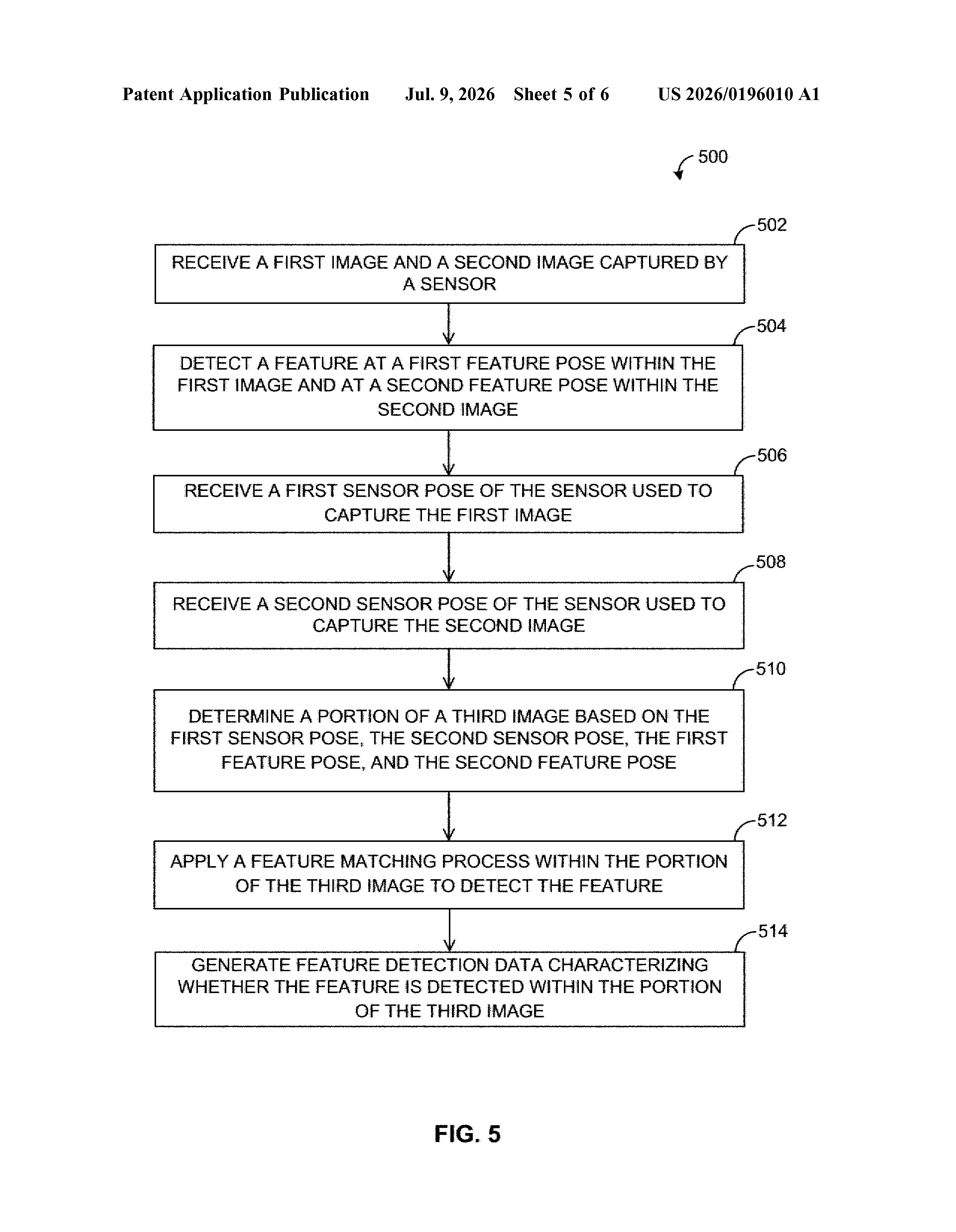
Alongside those images, the system receives sensor pose data for each shot. A "pose" here means the camera's position and orientation in 3D space at the moment the photo was taken. Think of it as a GPS-plus-compass reading for the camera at each frame.
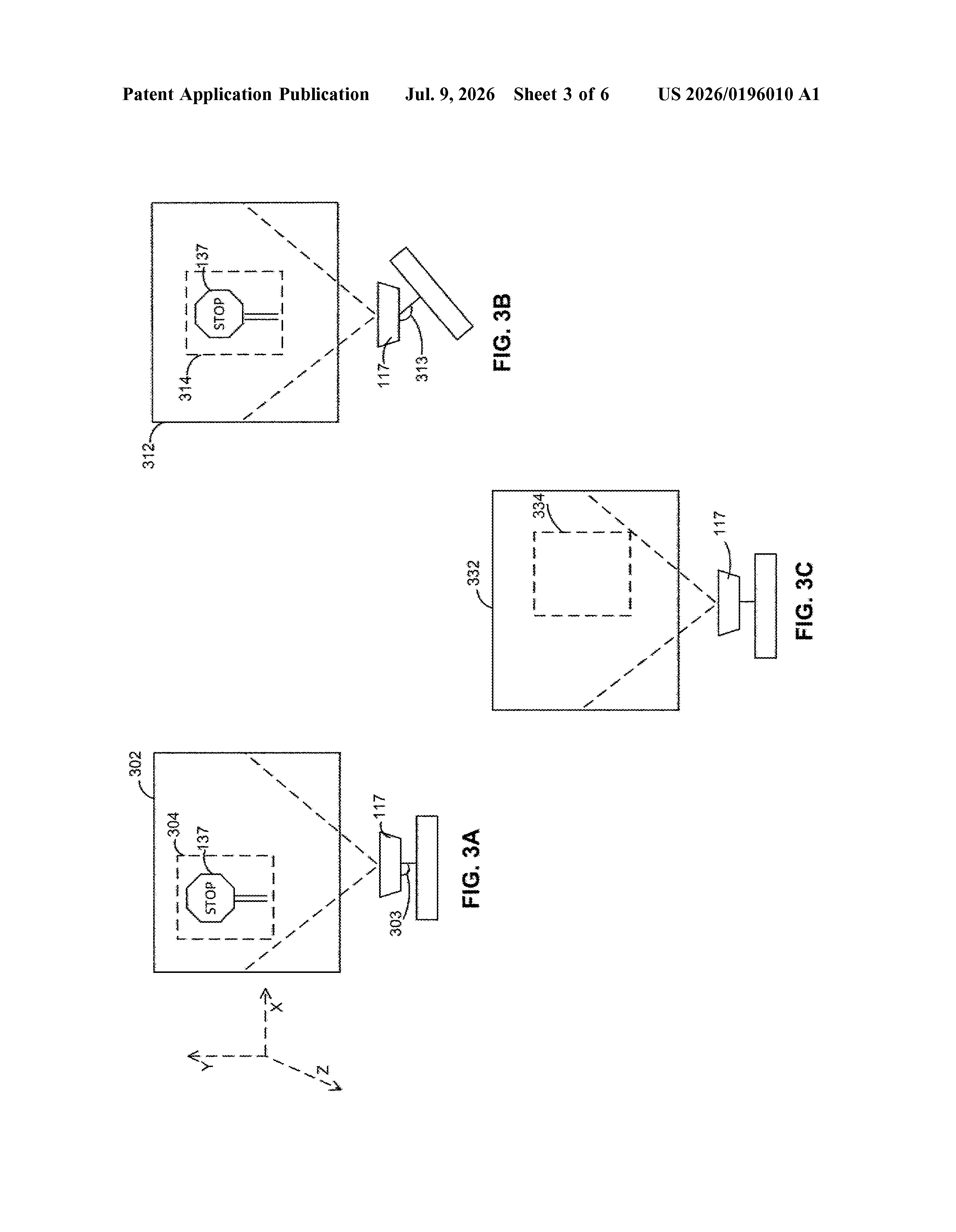
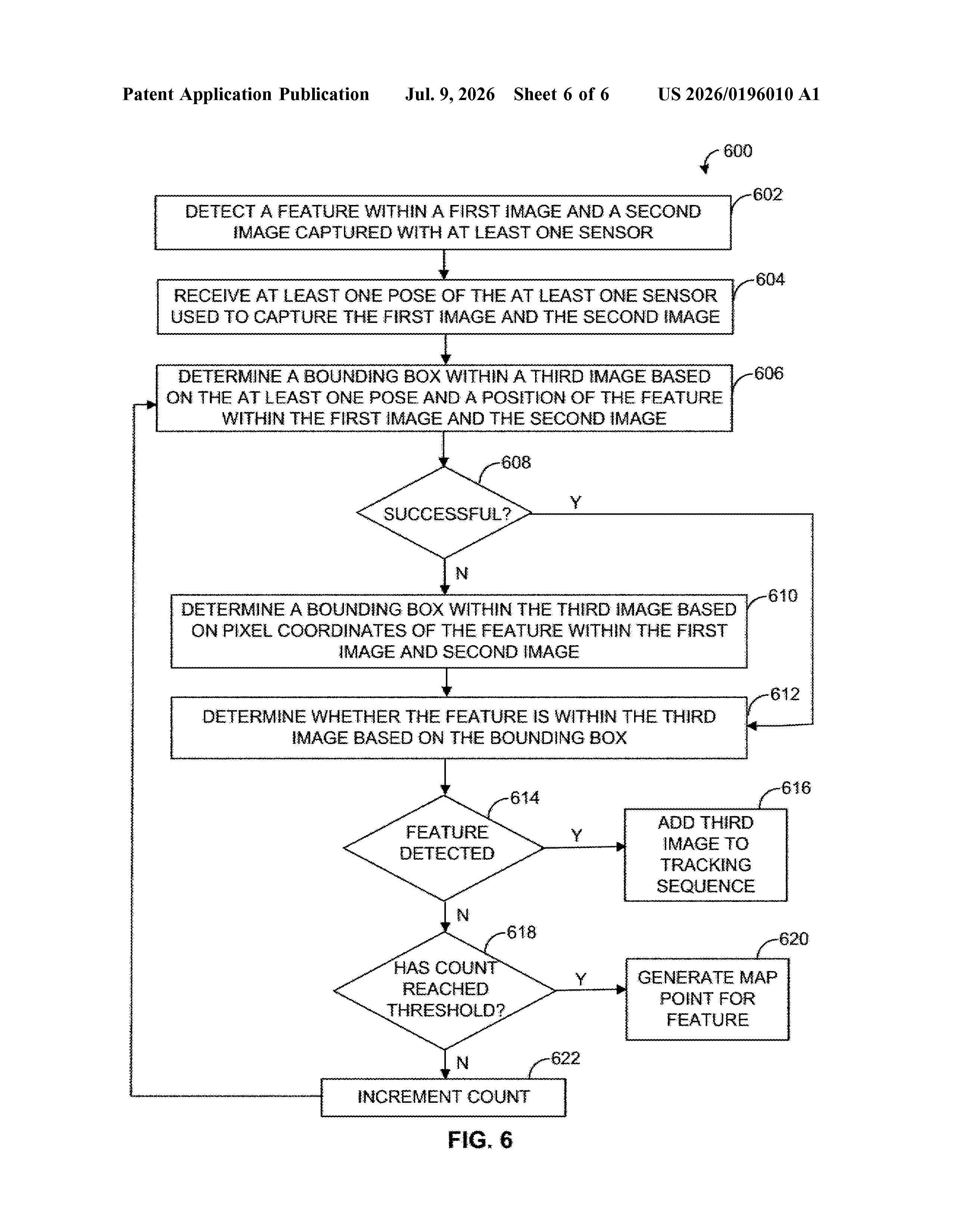
- Frame 1 is captured, and the feature is found at a specific pixel location.
- Frame 2 is captured from a slightly different angle or position.
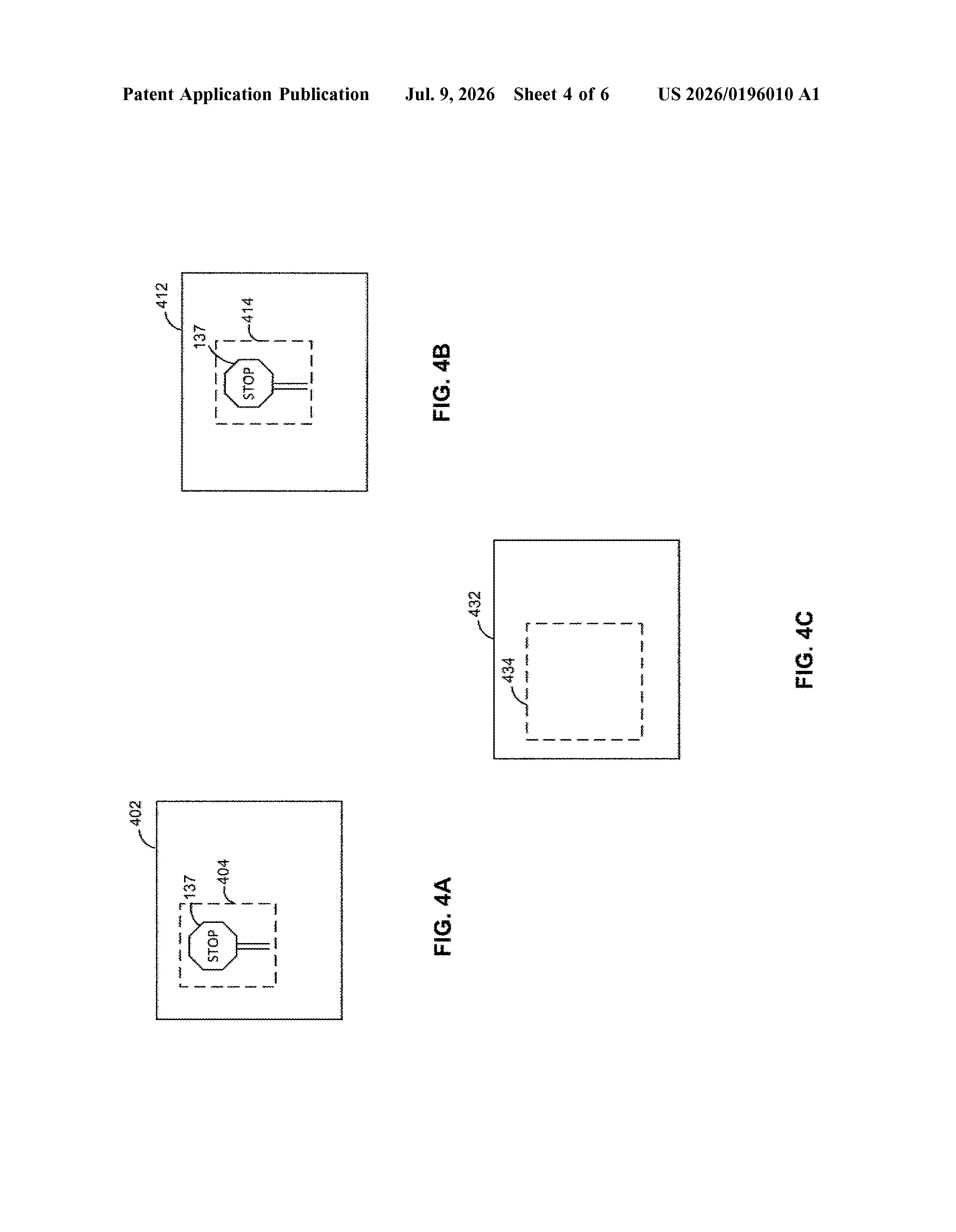
- Using both poses and both feature positions, the system calculates a small predicted region inside a third image where the feature is expected to appear.
- It then runs feature detection only on that narrow region, rather than scanning the full image.
The output is feature detection data that confirms whether the feature was found, and where. This is the kind of work that happens inside visual-inertial odometry systems (the technology that lets a device understand its own movement by watching the world through a camera, often combined with gyroscope data).
What this means for AR, robotics, and mobile cameras
Feature tracking is one of the most compute-heavy parts of anything that needs to understand a camera feed in real time. AR headsets, self-driving cameras, and drone navigation all depend on it. By using pose data to shrink the search area, Qualcomm's approach could meaningfully reduce how much work a processor needs to do per frame, which translates to lower power draw and better performance on battery-powered devices.
Qualcomm makes the chips inside a large share of the world's Android phones and XR (extended reality) headsets. A more efficient feature tracker would benefit any application running on those platforms, from camera apps to AR navigation to robotics controllers built on Snapdragon hardware.
This is a competent, focused engineering patent on a genuinely important problem. Feature tracking efficiency is a real bottleneck in mobile AR and robotics, and using camera pose to shrink the search window is a sensible approach. It's not a conceptual leap, but it's the kind of incremental, well-targeted optimization that ends up shipping in real products.
Get our take in your Top Stories
Liked this breakdown? Add Patentlyze as a preferred source on Google, and our plain-English take shows up more often in your Top Stories the next time Qualcomm patent news breaks.
There are more where this came from
We read every patent application Big Tech publishes and send you the ones worth knowing. Plain English, free, every week.
The drawings
6 drawing sheets from US 2026/0196010 A1 · click any drawing to enlarge
Want this weekly breakdown for a company we don't cover? Patentlyze Pro →