
Nvidia Patents an AI System That Decides Which Phone Requests Get Network Priority
Every time your phone touches a cell tower, it sends a connection request. Nvidia has filed a patent for an AI that predicts, before that request even arrives, whether it's something you actually care about or just background noise your phone generates on its own.
What Nvidia's connection-priority AI actually does for you
Why does a video call sometimes stutter when you're not even on a crowded street? Part of the answer is that your phone is constantly sending connection requests to the network for background tasks, things like checking email, syncing photos, or fetching app updates. Those requests compete for the same resources as the video you're actively watching.
Nvidia's patent describes an AI system that a cell tower can run to predict what kind of connection request your phone is about to make. If the system expects the request is a background task, the tower can reject or deprioritize it before it causes congestion. If it expects you're about to do something you'll actually notice, like streaming or browsing, it sets up a proper connection ahead of time.
The key word is predict: the system looks at your device's history of connection requests and makes a call before the traffic even arrives, rather than reacting to the mess after the fact.
… generating, by one or more neural networks, a prediction of whether one or more next connection requests from the user equipment device will be a background or foreground request …
Translation: An AI tries to guess if your phone is doing something important right now or just syncing data in secret.
How the neural network sorts foreground from background traffic
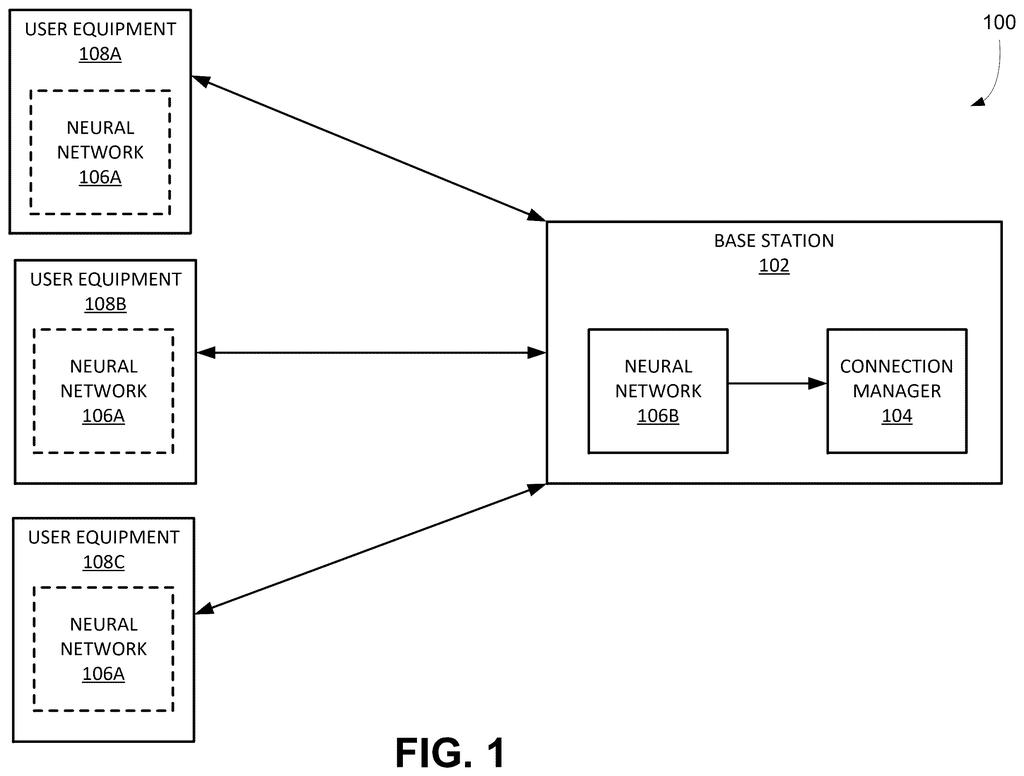
The patent describes a method running inside a base station (the cell tower hardware your phone connects to). The base station holds historical data about a specific device's past connection requests and feeds that data into one or more neural networks (AI models trained to spot patterns).
The neural network's job is to classify the next expected request as either foreground (something the user is actively doing and will notice) or background (an automated task running without the user's attention). Based on that prediction, the base station takes one of two actions:
- If a foreground request is predicted, it pre-establishes a connection so the data moves quickly when the request actually arrives.
- If a background request is predicted, the system rejects or skips it, freeing up network capacity for higher-priority traffic.
The system fits inside what telecom engineers call the radio access network (RAN), the part of a cellular system between your phone and the internet backbone. Running the AI at the tower level means the decision happens close to the device, which keeps response times low.
… processing circuitry uses one or more neural networks to indicate priority of one or more next connection requests within one or more radio access network (RAN) networks …
Translation: The cell tower uses AI to figure out which phone traffic gets to go first.
What this means for 5G network congestion and your apps
For you as a phone user, the practical promise is fewer dropped video calls and faster response times in crowded areas. The theory is that cell towers waste a lot of capacity on background requests from millions of devices, and an AI that filters those out before they hit the network could free up meaningful bandwidth during peak hours.
Nvidia's steady investment in AI-for-networking filings suggests the company is interested in bringing its AI hardware and model expertise into the 5G infrastructure layer. Whether carriers would adopt a system like this depends on how well it performs in practice. A misclassified foreground request (one the AI wrongly tags as background) could mean a broken call or a failed transaction, which is a high-stakes error for a prediction system.
That makes this Nvidia's 458th filing in our Nvidia coverage since May, a corpus that spans work like multiplying robot videos and predicting eye movement.
The reader-impact case for this patent is clear enough to take seriously. If you've ever had a video call drop because the network was busy, and later found out your phone had been syncing a photo backup in the background at the same time, you've already run into the exact problem this system targets.
The harder question is whether predicting individual devices' traffic patterns at the tower level is practical at scale. A cell tower serves hundreds or thousands of devices simultaneously, and building reliable behavioral histories for each one introduces real complexity. The failure mode, where the AI confidently rejects a request you actually needed, carries a direct cost you would notice immediately.
This is an interesting idea applied to a real and persistent problem in cellular networks, but it sits closer to early-stage research than to something shipping in next year's 5G equipment.
There are more where this came from
We read every patent application Big Tech publishes and send you the ones worth knowing. Plain English, free, every week.
The drawings
34 drawing sheets from US 2026/0270721 A1 · click any drawing to enlarge


Want this weekly breakdown for a company we don't cover? Patentlyze Pro →